

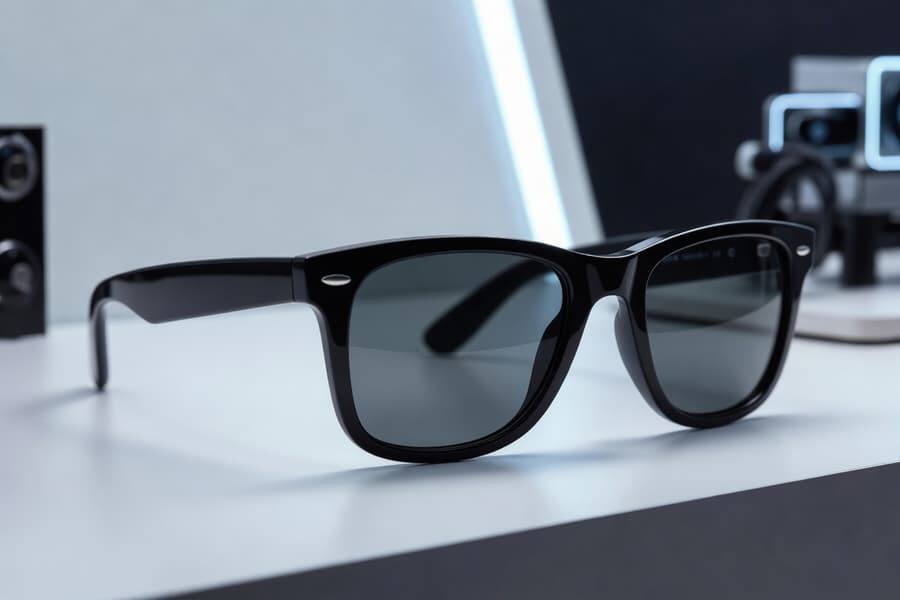
Apple’s first pair of smart glasses appears to be headed for an odd but very Apple-like compromise: no display, no fancy depth sensors, just two cameras and a lot of faith in Siri. The goal is to take on Meta’s Ray-Ban-style smart glasses without turning the first version into a battery-hungry science project.
According to MacRumors, the glasses are being built around voice and gesture control rather than a visual interface. That is a sensible starting point if Apple wants the device to feel light and wearable instead of looking like a prototype that escaped from a lab.
Apple smart glasses: two cameras, two very different jobs
The hardware split is the interesting part. One camera is expected to handle photos and video in higher quality, with quick sharing through a smartphone. The second will be a wider, lower-detail camera aimed at recognizing hand movements, so users can control functions through gestures and Siri.
That setup suggests Apple is treating the glasses less like a miniature phone replacement and more like an input device. It also fits a broader industry pattern: the smartest early wearables tend to do one or two things well, while the ”do everything” approach usually ends up heavy, expensive, and forgettable.
Why Apple is leaving out the obvious hardware
There will reportedly be no display, no LiDAR, and no 3D sensors in the first version. That is not a sign of hesitation so much as restraint, because every extra component is another hit to battery life and another reason for the frame to bulk up.
Apple is also said to be experimenting with gesture control across other products, including Vision Pro and future AirPods models with cameras. If that work holds up, the company may be trying to build a shared interaction layer for devices that do not depend on screens at all. Meta has already pushed hard into camera-equipped glasses, so Apple’s first move looks less like a head start and more like a careful late entry with stricter design rules.
The first version will live or die on usefulness
A screenless glasses product sounds elegant right up until the software gets awkward. Apple will need gestures that feel natural, voice control that actually understands people, and a camera experience that is good enough to justify wearing the thing in public.
If it works, the company gets a clean on-ramp into AI wearables without making the frame too ambitious. If it doesn’t, it risks shipping a very polished pair of glasses that can do a lot of talking about the future while still needing your iPhone for the heavy lifting.