• 3 min read
Jibo’s successor wants to turn life into AI memories
Lingverse’s iKairos revives Jibo’s legacy as a wearable AI journal that captures moments and turns them into generated images.
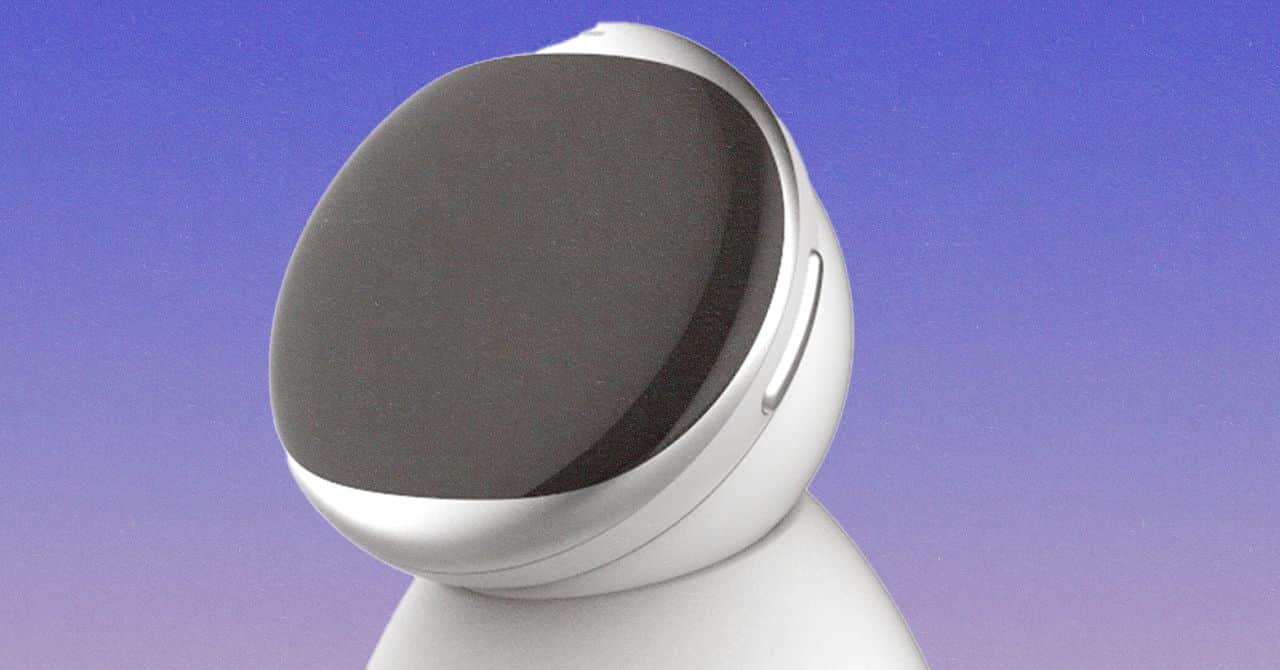
Image: Wired
Jibo’s successor is not another stationary social robot. Lingverse, formerly known as Ling AI, is developing iKairos, a wearable camera that can also sit in a table mount and turn captured moments into AI-generated images.
Jibo launched in 2014, before smart-home devices had become mainstream and ahead of Amazon’s Echo speakers. The small robot could not move around or manipulate objects, but it could talk and wiggle in an appealingly expressive way. It became beloved without becoming capable or commercially sustainable, and the company eventually shut down.
Lingverse says it has raised $29 million to develop iKairos. The device can be worn as a pendant or clipped to clothing, then placed in a home mount where it observes its surroundings from a fixed position. The company says it will likely cost $199 to $249, probably with a subscription for additional AI features.
What iKairos captures and creates
Specific capabilities remain limited. Lingverse says users will be able to ask questions, delegate tasks and perform functions similar to those offered by current AI voice assistants. Its press release also describes iKairos as continuously observing the user and their surroundings before acting as a “personal AI guardian.”

Recommended reading
MANGOS is only the opening move in AI
The company’s website now calls the product an “AI journal” with the slogan: “Every starred moment becomes a capsule. iKairos watches for what matters, then seals it.” Based on the site’s imagery, the device will capture moments in the home and convert them into AI-generated images intended to serve as memories.
Courtesy of Lingverse
A Lingverse representative told WIRED that iKairos will capture a user’s day and generate a reflection at the end of each day. The company says its system will compare each image with the audio context—such as where the user was, who was present and what was said—before adding it to the journal.
“Every image comes from real moments the device actually captured. Before anything enters your journal, it passes a quality gate that cross-references the visual scene with the audio context of that moment — where you were, who was with you, what was said.”
Lingverse is already known for AI-generated content through its Luka AI Reading bot. At CES 2026, it presented the Luka AI cube, a camera-equipped children’s device that answers questions about the world and turns artwork into talking AI videos.
Jibo’s legacy and privacy claims
Lingverse CEO Jiawei Gu was a Jibo board member before the company went under, although he was not part of Jibo’s founding team. Lingverse says iKairos is being developed with “the blessing of Jibo’s founding team,” but it does not own Jibo’s intellectual property rights, despite listing Jibo as a product on its website. The company says it owns several of Jibo’s core patents but would not identify them.
Gu framed iKairos as an attempt to continue Jibo’s original ambition:
“It’s the right time to combine all the stuff. With iKairos, we are carrying forward Jibo’s original dream.”
On privacy, Lingverse says iKairos will not continuously record video. Its camera will take environmental snapshots and later delete them, while audio recording will begin only when the device detects a human voice. The company also says the device will include a physical camera shutter, process data on-device or encrypt it in transit, and avoid using the data to train AI models.
Presales are planned for later this year. Lingverse will enter a growing market that includes anticipated AI home devices from Apple, Amazon and Google, an expected home assistant from OpenAI and Jony Ive, and a rumored iPad-like Apple home hub. Existing AI journal and capture products include the Bee AI wearable and Looki L1 AI bodycam—while Google Photos already offers ways to transform family images with AI.

AI Editor
Ava covers the rapidly evolving world of artificial intelligence, from foundational models and research labs to the real-world economics of intelligence. With a background in computational linguistics, she cuts through the hype to find out what actually works. She firmly believes that benchmarks are just marketing until reproduced in the wild.
via Wired