• 2 min read
Hyundai robot fears fuel strike pressure at Metaplant
Hyundai’s Georgia Metaplant already runs more than 850 robots, and plans to add Atlas humanoids in 2028 are sharpening labor concerns.
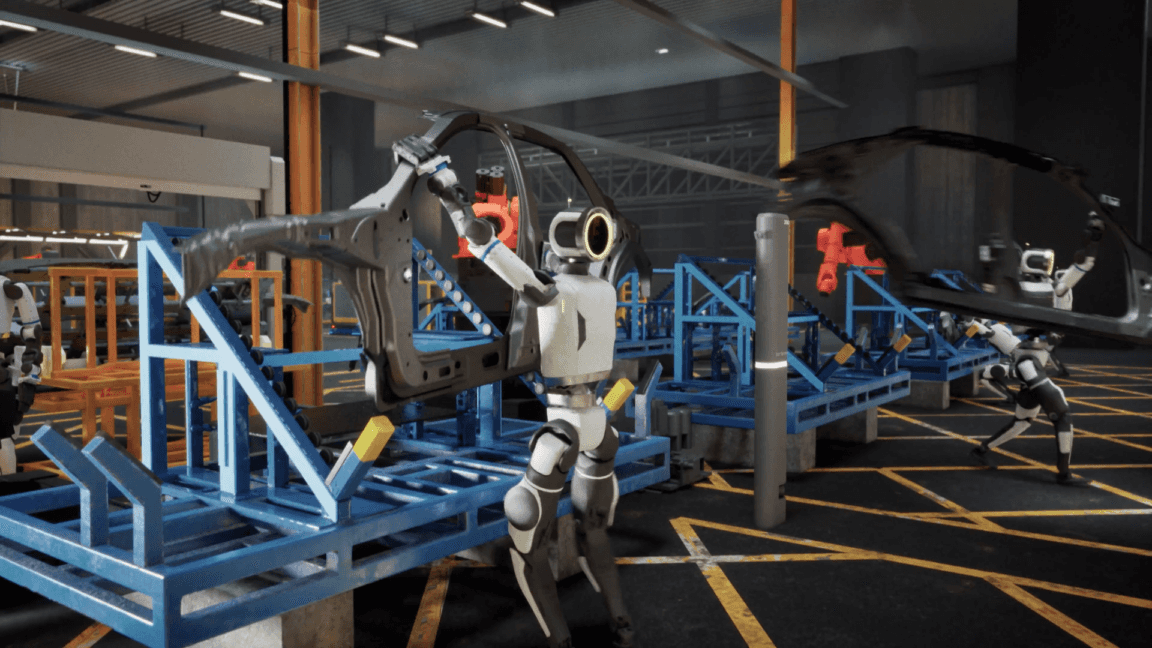
Image: Ars Technica
Hyundai’s Metaplant America in Georgia is already one of the most automated auto factories in the US, and its plans to add humanoid robots are intensifying labor tensions around the plant.
According to IEEE Spectrum, the facility uses more than 850 robots for tasks including unloading parts, stamping steel components, assembling car frames, and installing doors. It also relies on 300 automated guided vehicles to move parts around the factory while avoiding human workers. Boston Dynamics' Spot is already in use for “exterior quality inspection” in the weld shop.
An Atlanta Journal-Constitution reporter who visited the site in July 2026 described watching the Spot “robotic dogs probe their sensor-embedded noses to sniff out defects.”
Hyundai plans to start deploying Atlas humanoid robots at Metaplant America in 2028, initially for sorting and organizing automotive parts. But Jerald Roach, a general assembly executive at Hyundai’s Metaplant, told The AJC that the machines are not a threat to human jobs. He said human hands remain necessary for handling soft components such as hoses, wires, carpets, and trim panels.

Recommended reading
TSMC’s $265B US fab push still lacks a schedule
That reassurance has not settled broader union concerns. Hyundai has committed to employ 8,100 full-time workers at Metaplant America by 2031 under its economic development agreement with Georgia, a deal backed by an estimated $2.1 billion in state and local incentives. The AJC reported that the site already had more than 3,800 workers by the end of 2025.
Still, unions in both South Korea and the United States are pushing for firmer guarantees as automakers automate more work. The United Auto Workers recently criticized General Motors for adding about 50 new robot arms at its main Detroit EV factory after laying off more than 1,300 workers in what the company described as a temporary move. At the UAW Constitutional Convention in Detroit in June 2026, UAW President Shawn Fain warned about “the threat of humanoid robotics and mass automation” to jobs and pay.
The next few years will determine whether humanoid robots can actually beat both specialized industrial machines and human labor on cost.

Enterprise Editor
Marcus follows the money. He covers enterprise software, cloud architecture, and the tectonic shifts in Big Tech strategy. He translates dense earnings calls and complex M&A activity into actionable insights about where the industry is actually heading. If a tech giant makes a silent pivot, Marcus is usually the first to notice.
via Ars Technica