

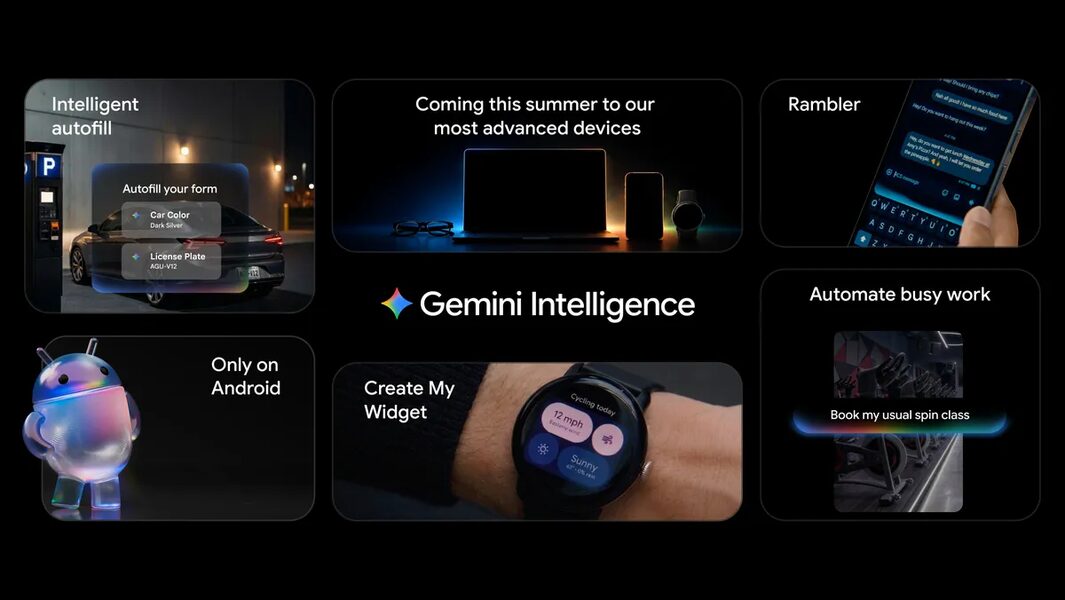
Google is giving Android a far more ambitious job than answering questions. With Gemini Intelligence, the company is turning the operating system into an AI agent that can act inside apps, fill out forms, shop, book, and generally do the tedious stuff people keep postponing until later. The first wave arrives on the Samsung Galaxy S26 and Google Pixel 10 this summer, before spreading to more Android devices.
The pitch is simple: let the phone do the clicking. That is useful, but also exactly where mobile AI has to earn trust, because the moment software starts making purchases or booking services, ”helpful” becomes ”please don’t mess this up.” Google says users will still see progress updates and confirm the final step before payment, which is the right kind of brakes to put on a system that wants access to your chores.
Gemini Intelligence on Samsung Galaxy S26 and Pixel 10
Google is treating flagship launches as the staging ground for the new system. That is a familiar playbook: start with the devices that get the most attention, then fan out once the software is less likely to embarrass itself in public. The company has not exactly been shy about pushing Android toward a tighter Google-led experience, and this move goes one step further by making the phone act on instructions instead of merely interpreting them.
- automatic app actions, including orders and sign-ups
- shopping basket creation from a screenshot or list
- user confirmation before payment
Chrome, Autofill and Gboard get AI upgrades
The changes do not stop at app automation. Chrome for Android is getting a navigation helper for repetitive web tasks such as booking parking or making appointments, while Autofill will try to handle more complex forms using context from apps. That matters because the dull, repetitive parts of Android are where people still waste the most time, and Google clearly wants Gemini to become the layer that smooths those friction points before rivals do.
Google is also targeting the keyboard, which is where mobile AI can feel genuinely useful instead of merely decorative. Gboard will get a voice feature called Rambler that cleans up pauses and filler words, turning spoken thoughts into neater messages. Google says the audio is used only for real-time transcription and is not stored, which is exactly the kind of privacy line it will need to repeat often if it wants people to let the phone listen for more than a joke.
Privacy controls and optional features
Google says every new function will be optional, and Android will add a privacy panel that shows what the AI is doing. There will also be a persistent notification when the system is working in the background. That is sensible, because if an operating system is going to act on your behalf, users need a visible trail rather than a black box with a cheerful logo.
The final test is not whether Gemini Intelligence sounds impressive in a demo. It is whether it can save enough taps to feel indispensable without making people nervous about handing over control. If Google gets that balance right, Android gets smarter; if it does not, users will do what they always do with over-eager assistants: turn them off and go back to doing it themselves.