

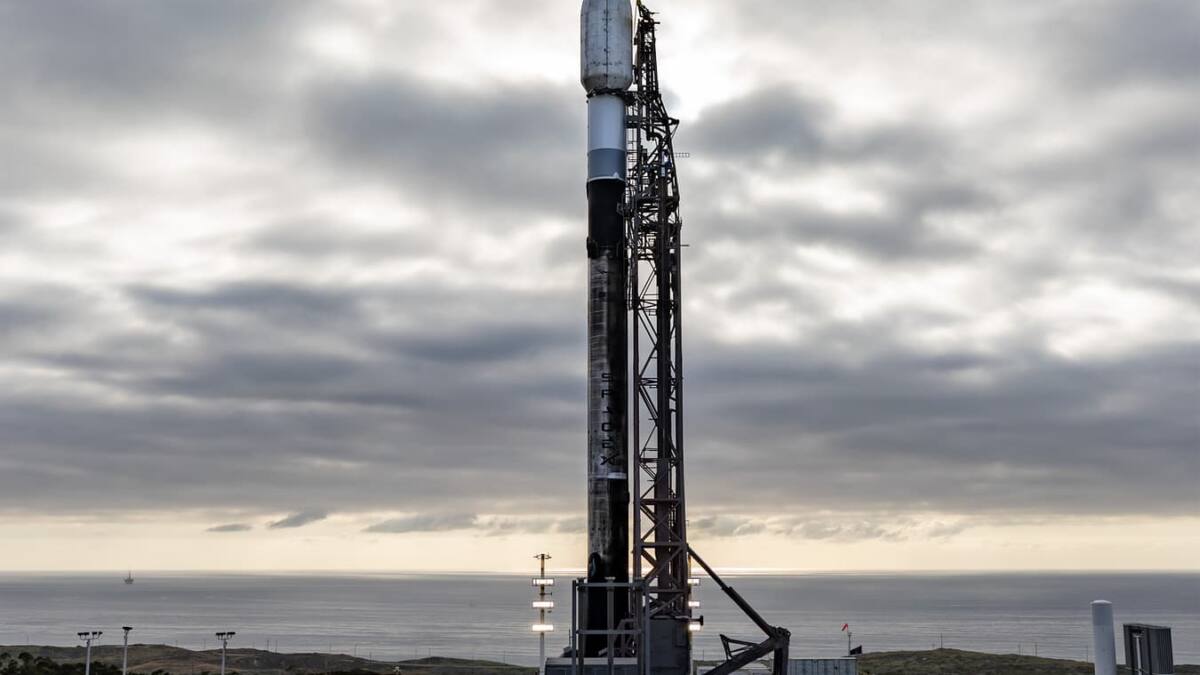
SpaceX is lining up another busy Falcon 9 launch from Vandenberg Space Force Base, with the rocket set to carry 45 payloads for a mix of commercial and space-tech customers. The mission, CAS500-2, is scheduled to lift off on Sunday, 3 May, from Space Launch Complex 4E in California, and the booster on duty is already a veteran: this will be its 33rd flight. The Falcon 9 launch is another reminder of how far SpaceX has pushed reusable rockets.
That booster’s résumé is the kind of thing only SpaceX can make sound normal. It has previously supported missions including NROL-87, NROL-85, SARah-1, SWOT, Transporter-8, Transporter-9, NROL-146, Bandwagon-2, NROL-153, NROL-192, Transporter-14, Transporter-15, and 20 Starlink launches. After separation, it is expected to land at Landing Zone 4 at Vandenberg.
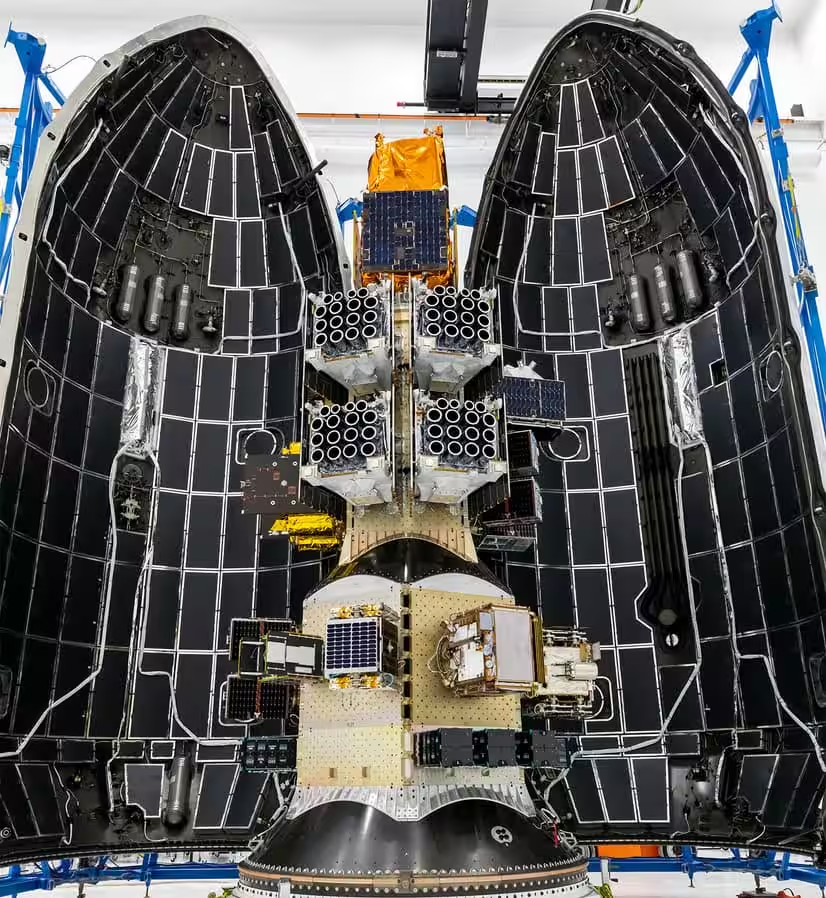
45 payloads from a crowded customer list
The cargo list includes KAI, Argotec Srl, Exolaunch, Impulso.Space, Loft-EarthDaily, Lynk Global, True Anomaly, and Planet Labs. That is a very SpaceX-looking manifest: lots of small satellites, multiple integrators, and a launcher that can keep squeezing more rides onto the same hardware. In a market where rivals are still trying to prove cadence and reuse, Falcon 9 has turned both into a business model.
Falcon 9 reuse keeps setting the pace
Falcon 9 is a two-stage heavy-lift rocket designed by SpaceX for delivering people and cargo to low Earth orbit, and it helped normalize reusable orbital launches long before most competitors could match the pace. That matters here because the economics of a mission like CAS500-2 depend as much on reusing hardware as they do on the satellites themselves. SpaceX has spent years turning that advantage into routine.
If the launch goes as planned, it will be another reminder that the company’s real edge is not just lift capacity. It is repetition. And in launch-business terms, repetition is where the money – and the market share – lives.