

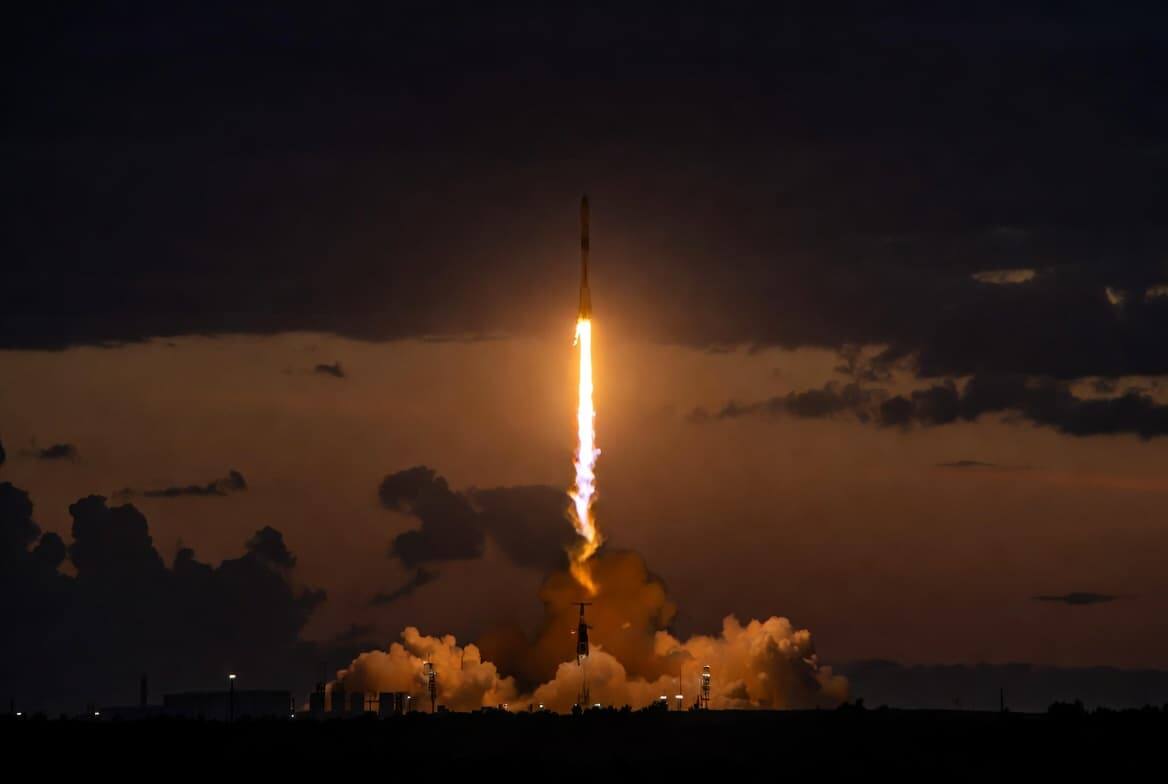
The Exploration Company has kicked off work on a reusable heavy-lift rocket that could eventually match Falcon Heavy-class performance, with a first-stage stack built around nine new Storm engines burning liquid oxygen and biomethane. The European startup unveiled the project at ILA Berlin, alongside a scaled model of the engine, and is aiming for a full demonstrator test campaign by the end of 2028 and a complete rocket by 2033.
This Europe reusable heavy rocket bet is ambitious for a company that is still building its spaceflight credentials. Instead of taking the safer route of a smaller launcher first, it is going straight after the high end of the market, where the real prize is not just lift capacity but reusability, cadence, and independence from non-European launch providers.
Storm engine details and first-stage plans
Storm is designed as a full-flow staged combustion engine, a demanding architecture that can offer strong performance but is not exactly a beginner’s project. The target thrust is up to 180 tonnes at sea level, and development has already been underway for about two years.
The first stage of the rocket will use nine Storm engines. In its initial configuration, the launcher is expected to place 15 to 20 tonnes into orbit. The company then wants to push that figure to 40 tonnes with a reusable first stage and 60 tonnes in expendable mode.
- Propellants: liquid oxygen and biomethane
- Engine layout: full-flow staged combustion
- Sea-level thrust target: up to 180 tonnes
- First stage: nine Storm engines
Aiming past the small-launcher detour
That all-in approach is also a bet on time. The company says skipping a lighter rocket program could save five to seven years, a reasonable argument in a launch market where long development cycles often kill momentum before first flight. It also avoids fighting for the wrong end of the market while bigger players keep consolidating the small-satellite segment.
There is recent history behind that logic. European launch efforts have often been slowed by incremental steps, while SpaceX has shown how quickly a reusable architecture can reset expectations. The catch, of course, is that building Falcon Heavy-class capability is much easier to announce than to deliver.
European backers and the 2033 target
The project has support from the European Space Agency, France’s CNES, and Germany’s DLR, and the company says funding for the next development phase has already been secured from private investors. That mix matters: public backing gives credibility, while private money is what keeps a hardware-heavy program moving without endless committee tours.
The Exploration Company is also continuing work on its returning cargo capsule, with about 95% of its systems expected to reach TRL 6 by the end of June. The new rocket is the bigger gamble, though, and the market will be watching whether Europe’s latest heavy-lift promise becomes an actual vehicle or just another impressive model on a trade-show stand.