

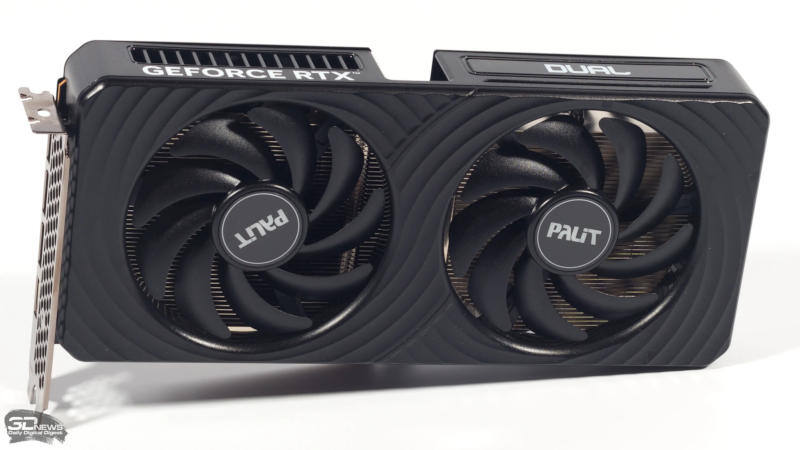
Microsoft has quietly relaxed one of the sharpest rules around Copilot+ PC. Local AI features in Windows 11 are no longer tied only to a built-in NPU, because compatible Nvidia graphics cards can now run them too – specifically GeForce RTX 30-series GPUs and newer, with at least 6GB of VRAM.
That looks like a small documentation tweak, but it hints at a bigger shift in how Microsoft wants Windows AI to work. The company spent much of the Copilot+ rollout treating the NPU as the gatekeeper, even though GPUs have long been able to do this kind of work efficiently, if less efficiently per watt than an NPU.
Nvidia GPUs now get Copilot+ AI API access
In updated documentation and a GitHub note, Microsoft confirmed that developers can now call the API for local language models on PCs that do not meet Copilot+ PC requirements, as long as they have supported Nvidia hardware. The company’s line is still cautious: this is framed as developer access, not a full rewrite of the Copilot+ badge.
The supported range starts with GeForce RTX 30-series cards and requires 6GB of memory or more. That matters because Microsoft is no longer pretending that a dedicated neural processor is the only serious way to run on-device AI. Rival PC makers have already pushed AI features through different hardware paths, and Microsoft’s move acknowledges the obvious: Windows should not care where the silicon sits if the job gets done.
Phi Silica still powers the local features
The local AI stack is built around Phi Silica, which loads through Windows Update when an app asks for it. The current feature set is text-first: summarizing content, rewriting text, converting it into structured formats, and generating prompts. Those are the kinds of tasks cloud assistants usually handle, but running them on the PC means faster responses and less data leaving the device.
- Supported GPUs: Nvidia GeForce RTX 30-series and newer
- Minimum memory: 6GB of VRAM
- Model used: Phi Silica
- Still NPU-only: Windows Recall and Click to Do
The NPU is no longer the only path
Microsoft has not fully broken with its Copilot+ PC hardware recipe. The original class still called for an NPU, 16GB of RAM, and an SSD, and some features remain locked to the NPU for now. But the direction is clear enough: the company is opening the door to mixed hardware support, which is often how ”strict” platform rules soften before they disappear.
The next question is whether this stays a developer-facing exception or becomes the beginning of a broader, more honest definition of what an AI PC can be. If Nvidia GPUs can do the work today, Intel and AMD will not be eager to watch Microsoft leave them out of the fun for long.