• 3 min read
Chip’s 25-Mph EV Wants to Park for You
Chip Motors' $15,000 low-speed EV can park remotely and targets short trips, with deliveries planned for 2027.
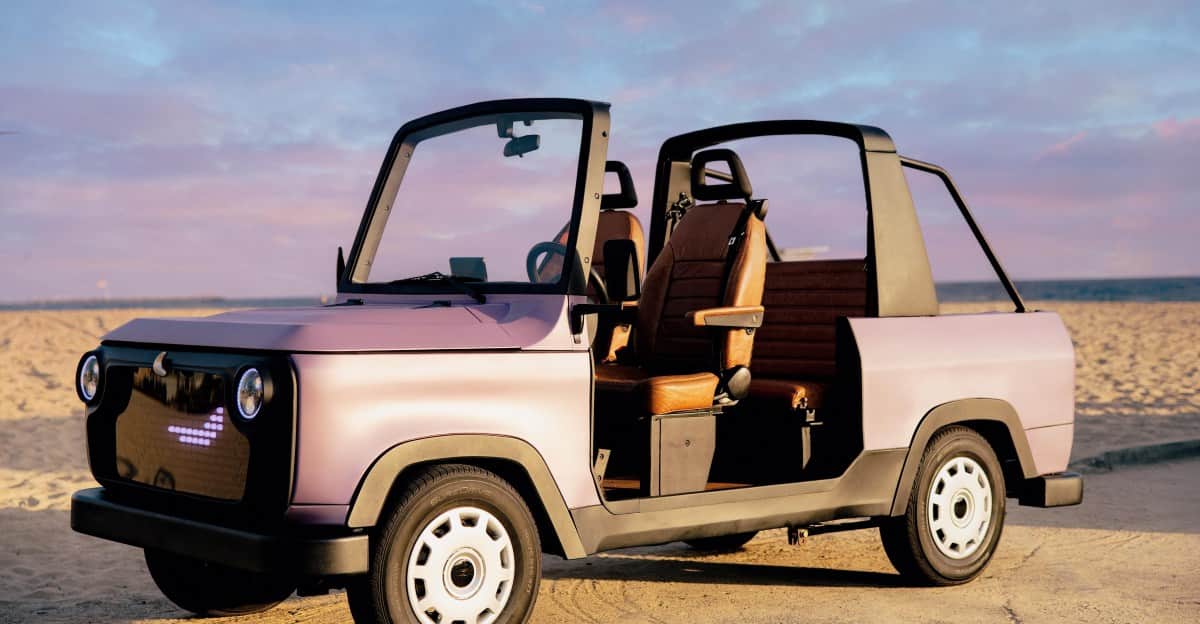
Image: The Verge
A 25-mph electric vehicle from Miami startup Chip Motors is designed for grocery runs, school pickups, and one task most drivers hate: parking. The boxy, open-air Chip looks part golf cart and part shrunken Jeep Wrangler, but the company calls it a “life utility vehicle,” or LUV.
More precisely, Chip is a low-speed vehicle (LSV), similar to neighborhood EVs from Gem and Wink. Its top speed limits it to roads with speed limits of 35 mph or below, making it a second vehicle rather than a highway-capable car. A roll bar and a flat battery pack under the floor are designed to protect occupants, while an LED display on the front bumper serves as a digital “face” that can smile and respond to verbal commands.
Chip EV specifications and pricing
Chip uses in-wheel motors and a 15 kWh lithium iron phosphate battery. The company says it can recharge overnight from a standard 110-volt household outlet, or in four hours using a Level 2/240-volt charger connected through a NACS port. Its estimated range is 100 miles, though Chip says both the range and charging times are illustrative pending final specifications.
The vehicle will be available in four- and six-seat configurations:
- Four seats: starting at $15,000
- Six seats: starting at $18,000
Reservations are open for $250, with deliveries planned to begin in 2027.
Recommended reading
Zoox Recalls Software After Smoke Confuses Robotaxi
Chip CEO Jameson Detweiler said golf cart sales have grown steadily since the pandemic, even as microcar sales remain small in the US. He argues that Chip is more than a dressed-up golf cart: it is meant to provide the freedom of a scooter or bicycle while reducing the “mental overhead” of owning a conventional car.
“It’s not small, —it’s light. And it’s designed to be, like, hyper functional. And then also, like, it’s cool!”
Detweiler sold his camera technology company to one of Europe’s largest e-scooter operators in 2022. He says he has worked on Chip for nearly 15 years, beginning with conversations about cities and transportation while living in a San Francisco hacker house.
Remote parking and Chip Go!
The most unusual feature is Chip Go!, a remote-driving system that will initially let operators move vehicles for owners. Chip says drivers will eventually be able to summon the EV through an app or voice command, have it park itself, or send it out to run errands without anyone inside.
The system will require remote operators at launch. Detweiler said low-speed neighborhood driving makes teleoperation easier than controlling vehicles on highways, and argued that cellular networks can manage latency spikes. He declined to provide further details about the system, but said Chip intends to take legal responsibility while its vehicles are being remotely operated.
The company ultimately aims for Level 4 autonomy. Its launch video shows Chip responding to conversational commands, and Detweiler said the production system is intended to connect with family group chats and calendars, monitor traffic, and remind owners when they should leave earlier.
“I believe that we are going to be the first mass market American robot. It’s just not gonna be on two legs in the kitchen chopping tomatoes, which is a little bit terrifying to me. It’s gonna be out there rolling around in a form factor that we’re all used to.”
Detweiler said Chip’s research indicates that the US microcar segment has grown roughly 50 percent annually since 2021, though the company still faces a market dominated by larger vehicles. Chip is also exploring more weatherproof models for colder climates and versions capable of highway travel. For now, its pitch is narrower: a distinctive, low-cost second car that may never need to reach 60 mph.

Frontier Editor
Dan is our resident futurist, covering electric mobility, space exploration, and the smart home. He's interested in atoms just as much as bits. Whether it's a new battery chemistry, a reusable rocket, or a protocol that finally makes IoT devices talk to each other, Dan breaks down the engineering that pushes humanity forward.
via The Verge