

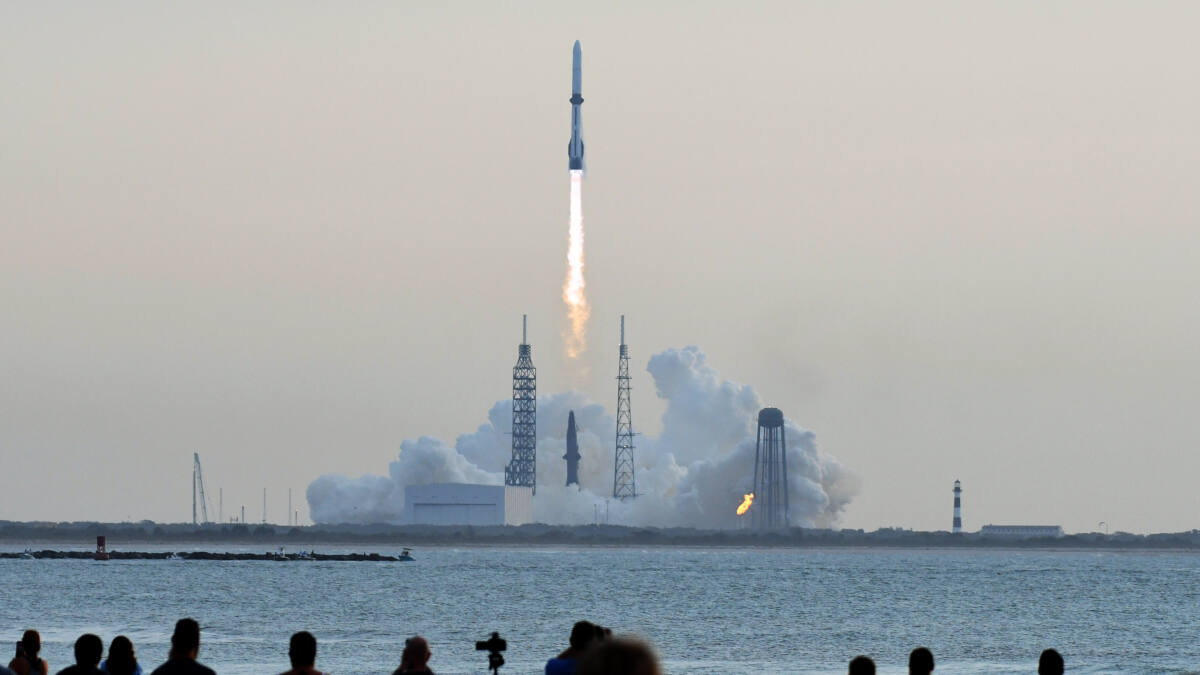
Blue Origin just checked off the reusable rocket milestone that matters most to investors and competitors alike: New Glenn landed safely after launching AST SpaceMobile’s BlueBird 7. The catch is almost comic in a dark, aerospace-y way – the satellite made it to space, but not to the right orbit, leaving AST’s ”cell tower in orbit” unable to do the job it was built for.
The second-stage delivery error turned what should have been a clean commercial debut into a split verdict. Blue Origin gets to say its heavy-lift rocket now has a reusable first stage; AST SpaceMobile gets to explain why a satellite that separated, powered on, and still failed its mission will be de-orbited.
New Glenn’s landing gives Blue Origin a real reusable launcher
The booster touched down on its landing pad without incident, making this the second launch and landing for New Glenn’s first stage. That is the kind of hardware repetition rocket companies chase for years, because reuse is what turns a spectacular launch into something closer to a business. SpaceX built its dominance on that logic; Blue Origin has now moved from theory to an actual landed booster.
Jeff Bezos also gets a bragging right he has been waiting on: a reusable launch vehicle that has now done the round trip more than once. It does not erase Blue Origin’s slow climb compared with SpaceX, but it does put New Glenn into the ”serious rocket” category instead of the ”promising someday” drawer.
AST SpaceMobile’s BlueBird 7 never got high enough
AST’s problem was not separation or power-up. The satellite was released and switched on, but Blue Origin’s upper stage placed it into a lower orbit than planned, and AST said that altitude is too low for operations with its onboard thruster technology. The company said it will de-orbit the satellite instead, which is a polite aerospace way of saying the mission is over before it really started.
That is a painful outcome for a company trying to build a space-based cellular network, because these missions live or die on precision. A launch can be ”successful” in the broad sense and still leave a customer with an expensive piece of metal in the wrong place.
The launch business is unforgiving
This split result is a neat reminder that rocket launches are really two products in one: the launcher and the payload delivery service. Blue Origin nailed the first, AST lost the second, and both outcomes matter because buyers do not care which stage gets the blame when the satellite is unusable.
It also underlines a broader trend in commercial space: reusability is becoming table stakes, but precision orbital delivery is still the expensive part of the job. The companies that can do both reliably will own the premium contracts. The rest get applause, then paperwork.
What happens after the win and the loss
Blue Origin will spend the next stretch trying to turn this into routine, because one landed booster is a milestone and a system is what counts. AST SpaceMobile, meanwhile, has to figure out whether the satellite failure changes how it books future launches or how much risk customers are willing to absorb when the final orbit matters more than the fireworks on liftoff.