• 2 min read
Apple canceled its M2 and M3 Extreme chips
Apple reportedly canceled M2 Extreme and M3 Extreme chips, which were designed with roughly twice the CPU and GPU cores of Ultra versions.
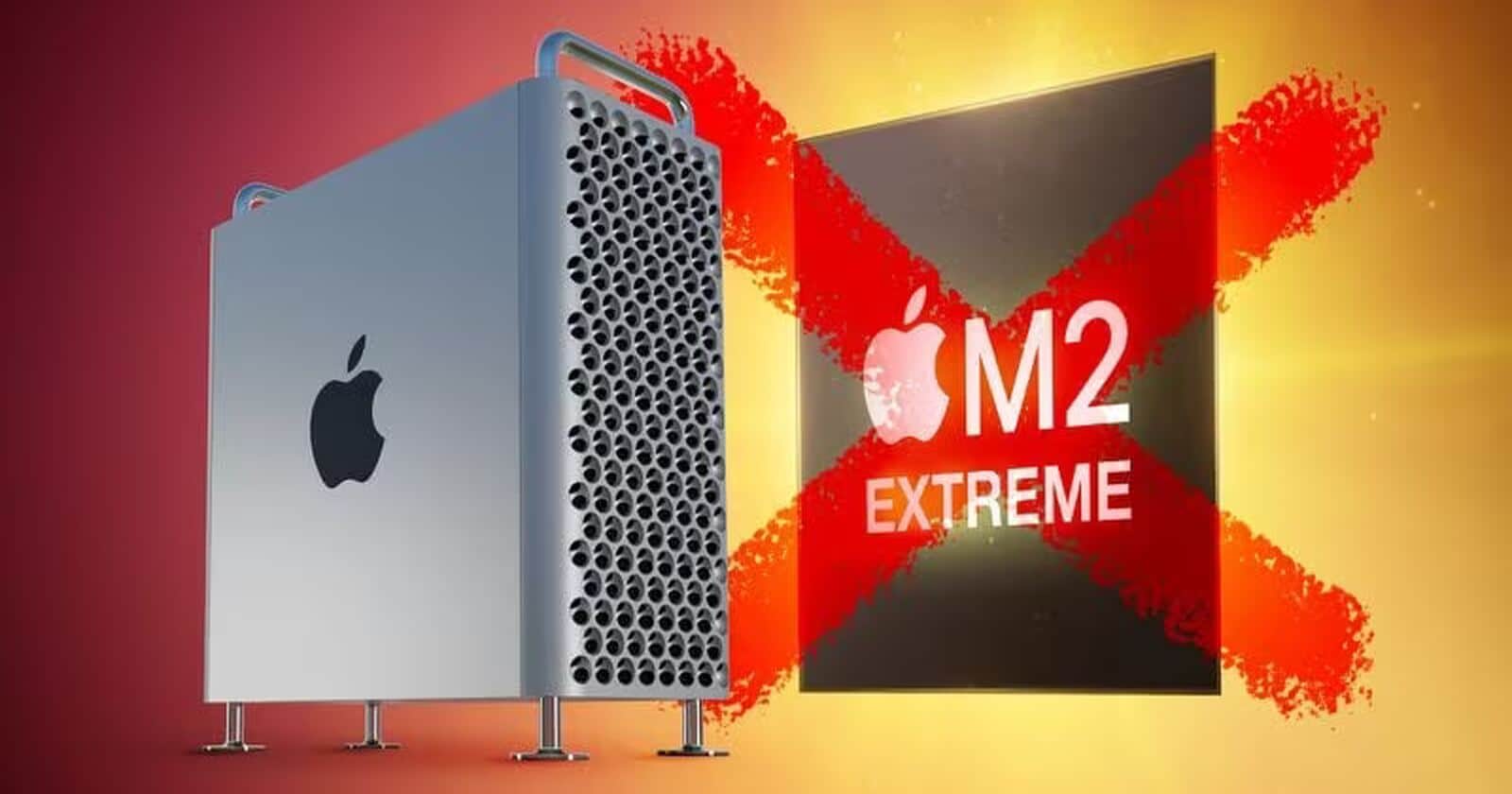
Image: ITzine
Apple designed processors above its Ultra lineup, but the work never moved beyond the planning stage. According to Bloomberg, the company prepared the M2 Extreme and M3 Extreme—chips intended to become Apple’s most powerful silicon for professional machines. Both projects were canceled before release.
The planned Extreme chips
Based on Mark Gurman’s description, Extreme processors would have had roughly twice as many CPU and GPU cores as their Ultra counterparts. That could have created an even more expensive and specialized product—closer to a demonstration of Apple’s capabilities than a broadly useful workstation.
The concept followed Apple’s existing strategy of combining dies in a single package. That approach produced the Ultra chips, which sit between mainstream laptop SoCs and the high-end systems used for video editing, software development, and 3D graphics.
Recommended reading
Yeston gives RTX 5060 an RTX 5070 makeover
An Extreme chip would have extended that progression for a narrow audience focused on rendering times, compiling large projects, and running several demanding workloads at once. But increasing the size of the CPU and graphics blocks also raises manufacturing complexity, thermal requirements, and the final price of the computer.
Why Apple canceled the projects
The decision helps explain why Apple did not create a new tier above Ultra for the Mac Pro. The company already offered highly capable Ultra-based configurations, while demand for high-end desktop systems was too limited to support an even more expensive development effort.
Apple also faces competition from its own smaller machines. The Mac Studio can handle some of the work that previously justified buying a Mac Pro, making it harder for a separate flagship desktop line to establish a clear role when similar performance is available without a tower under the desk.
For Apple, Extreme may have been a logical technical step but not a compelling business proposition. The professional desktop market is smaller than the laptop market—and even smaller than the broader desktop market. Customers who need maximum performance may be willing to pay, but there may not be enough of them to justify a specialized chip.
The Mac Pro has already changed identity more than once. It was Apple’s defining premium professional desktop during the Intel era, before the company spent years searching for a format that did not feel like a compromise. The canceled Extreme projects suggest Apple currently sees more value in improving its existing Ultra solutions than in creating a far more expensive processor class with very limited demand.

Computing Editor
Tomas lives in the terminal. He covers chips, laptops, and operating systems with a focus on performance and efficiency. He reads kernel changelogs the way other people read fiction, and he's always on the hunt for the perfect mechanical keyboard switch. If it processes data, Tomas has an opinion on it.
via ITzine