

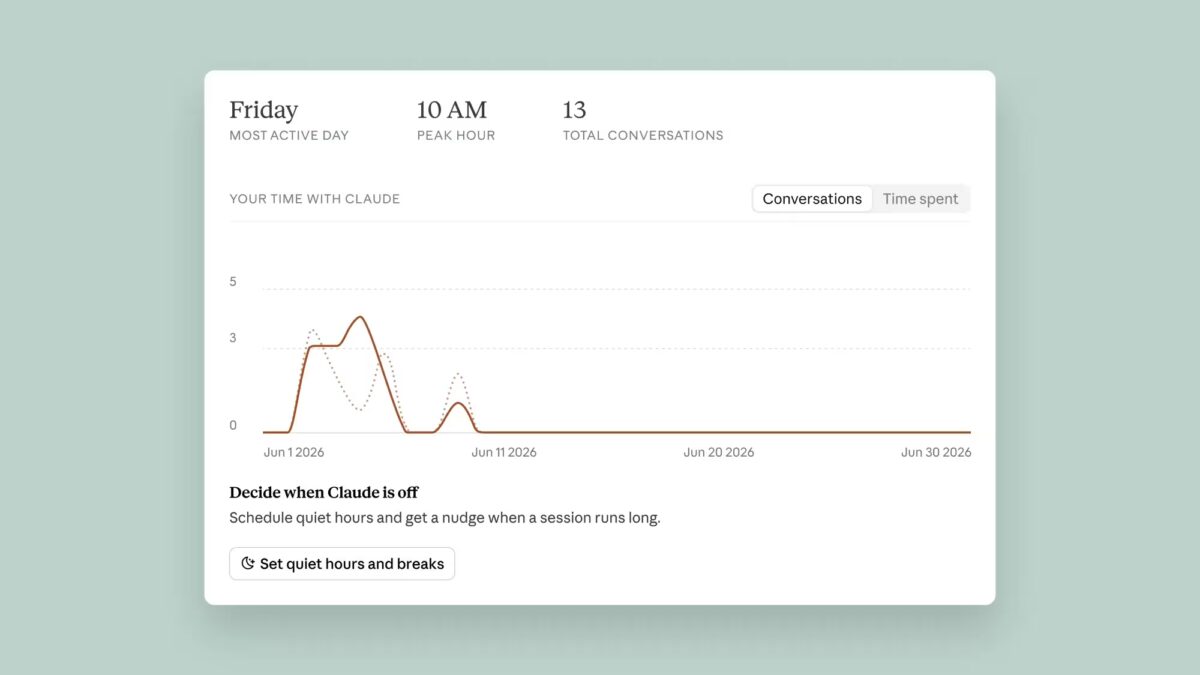
Anthropic has rolled out a beta feature for Claude AI that tracks how users interact with the AI and where their time goes. The new dashboard, available in the settings of both the web and desktop versions, aims to spotlight not only where Claude boosts productivity but also when users might want to stay hands-on instead of relying on autopilot.
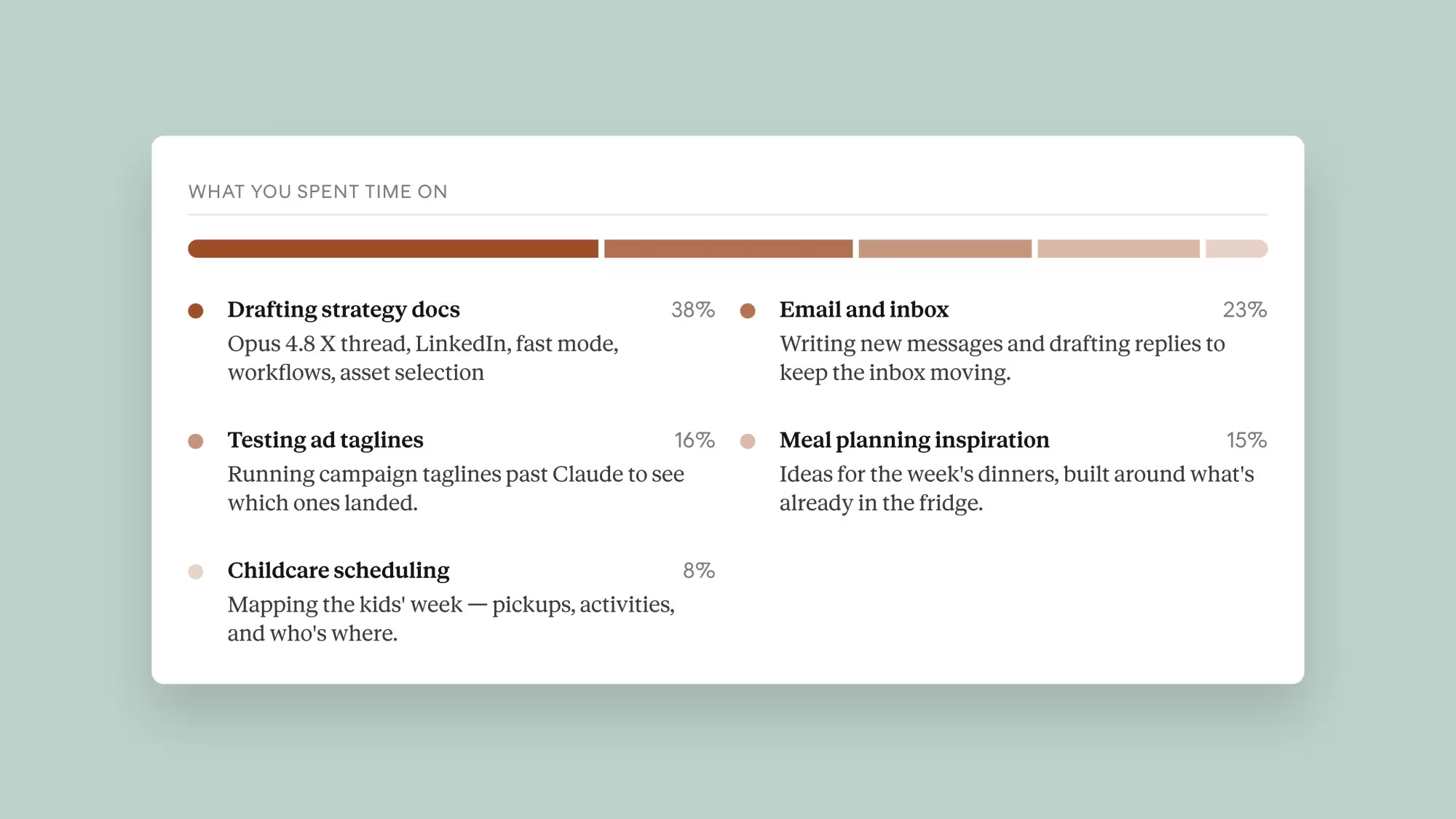
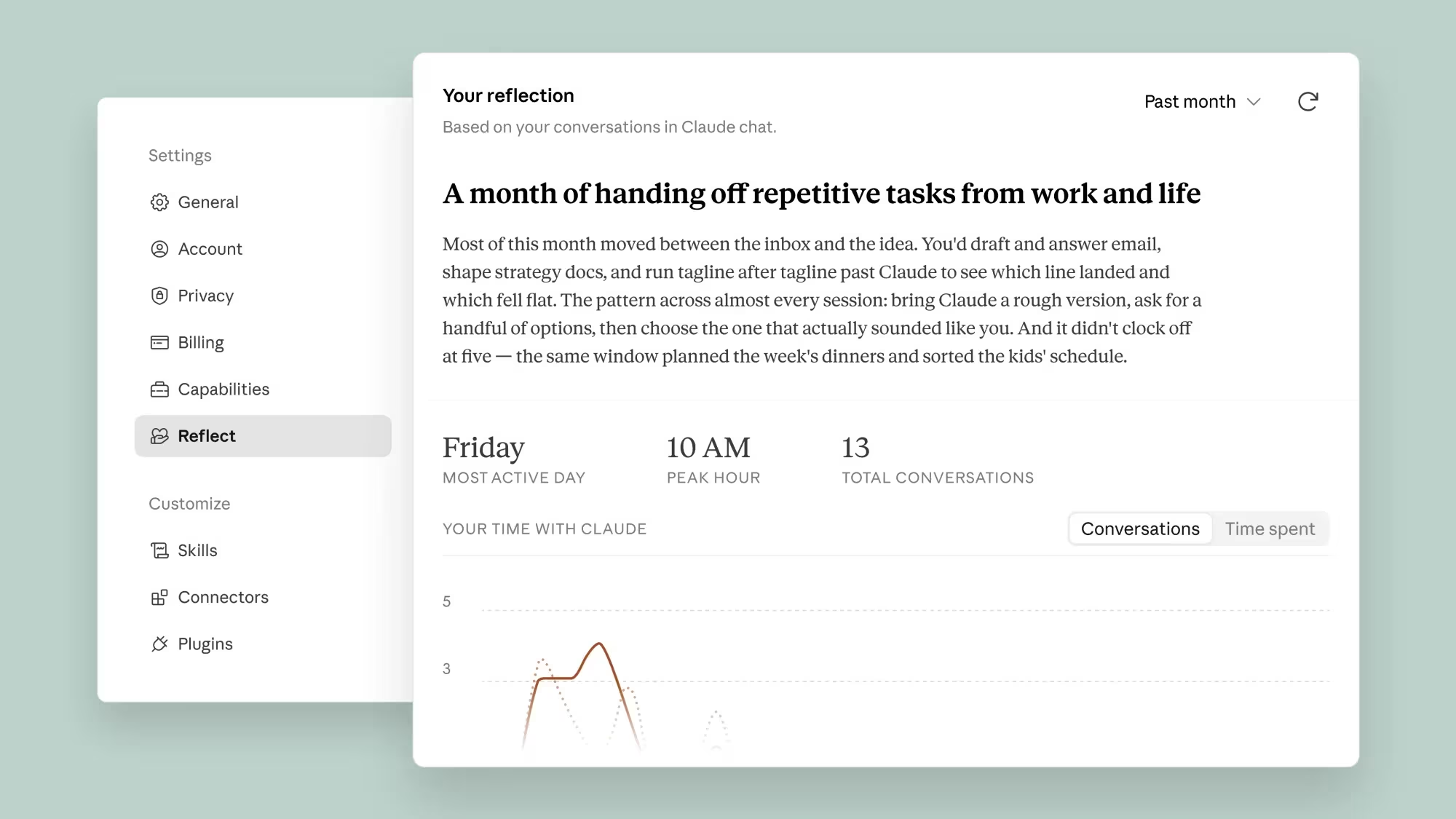
The Claude AI dashboard aggregates summaries across key topics, common use cases, and tasks over periods ranging from one to 12 months. Users can also see their peak hours using Claude and which projects receive the most attention. Anthropic plans to add a precise timer showing the total time spent in the app in an upcoming update.
Anthropic isn’t stopping at basic stats. Claude AI will occasionally prompt users to self-reflect, asking questions like which tasks they still prefer to do manually, even if the AI can handle them faster. These introspections can be discussed directly with the chatbot, creating a digital conversation about work habits.
Settings now also include ”quiet hours” and break reminders. All of this ties into Anthropic’s 4D AI Fluency Framework, which focuses on Delegation, Definition of goals, Data evaluation, and Duty-essentially how users manage AI collaboration. Similar activity dashboards exist with Microsoft, Google, and OpenAI, but Anthropic’s approach differs: the goal isn’t relentless productivity but helping users recognize where AI is a helpful assistant versus where it starts to replace valuable human skills.
This feature is gradually rolling out to Free, Pro, and Max plans with memory history enabled. Analysis of collaborative chats in Cowork mode will follow later. It’s a logical step for Anthropic amid the generative AI race, which increasingly prioritizes not just response quality but smooth integration into everyday workflows without ending up as just another tab counter.