

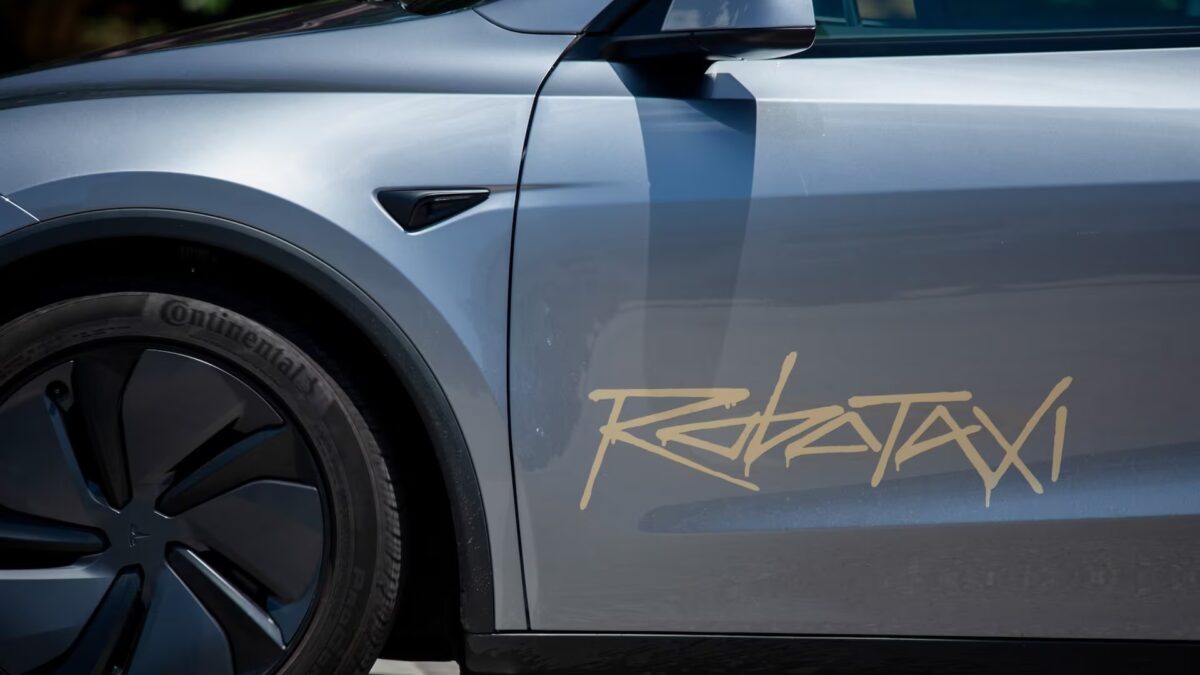
New Jersey’s proposed autonomous vehicle legislation could deal a serious blow to Tesla’s Robotaxi ambitions by requiring fully driverless cars to have LiDAR and radar sensors in addition to cameras. This hits directly at Tesla’s camera-only approach championed by Elon Musk, contrasting with competitors like Waymo and Zoox, which rely on multi-sensor setups including LiDAR and radar.
The bill outlines a three-year pilot program where companies must prove their self-driving vehicles can safely cover at least 50,000 miles on New Jersey roads with a safety operator onboard, avoiding major incidents. Even then, commercial deployment requires separate state approval, with certain crashes mandatorily reported to regulators.
New Jersey autonomous vehicle sensor requirements
New Jersey’s draft law mandates that fully autonomous vehicles feature cameras plus two additional sensor types-typically radar and LiDAR. Radar excels in adverse weather like rain and fog, while LiDAR creates a detailed 3D map around the car for precise navigation. Tesla’s strategy has long skipped LiDAR entirely, relying instead on cameras paired with neural networks and AI to achieve self-driving capability.
Elon Musk has publicly dismissed LiDAR as an unnecessary and costly distraction. In spring 2025, he wrote that ”humans don’t need lasers shooting out of their eyes to drive,” and last summer claimed that LiDAR and radar might even lower safety if they ”conflict” with camera data.
Tesla’s Robotaxi rollout and competition
Unlike early promises of fast expansion, Tesla’s Robotaxi service remains limited. When it debuted in Austin, Musk projected rapid growth to California, Nevada, Arizona, and Florida, with around half the U.S. population having access by year’s end. A year later, the service runs only in Texas and recently expanded to Florida, far behind initial expectations.
Meanwhile, Waymo operates in 11 cities with a fleet exceeding 3,000 robotaxis, and Amazon-backed Zoox uses the standard sensor mix-cameras, radar, and LiDAR-for its smaller but more sensor-diversified network. For driverless urban ride-hailing, this multi-sensor approach has become increasingly accepted as the norm.
Regulatory scrutiny of Tesla’s driver-assist and self-driving tech
U.S. regulators have scrutinized Tesla’s driver-assistance and Full Self-Driving (FSD) systems after crashes involving emergency vehicles and complex traffic situations. In this context, New Jersey’s insistence on sensor redundancy isn’t just bureaucratic red tape but an effort to add important safety margins through technical requirements.
Similarly cautious discussions are happening in New York, where autonomous ride-hailing progress is gradual and heavily regulated. If both Northeast states enforce these sensor mandates, Tesla could face a regional barrier that constrains Robotaxi growth amid dense traffic, challenging weather, and a significant rideshare market.
Tesla’s response to New Jersey’s autonomous vehicle bill
In response, Tesla has urged its customers to contact New Jersey lawmakers to oppose the bill. The company argues that the proposed rules would block Tesla’s autonomous technology from operating legally in the state, focusing more on sensor mandates than on demonstrated safety outcomes.
If the legislation passes unchanged by year’s end, Tesla must choose between redesigning its Robotaxi sensor setup to comply or abandoning New Jersey’s sizable market altogether. This challenge isn’t just local: with the global autonomous vehicle market valued at tens of billions of dollars, each state’s unique regulations threaten to slow industry-wide adoption and complicate companies’ plans for rapid national rollouts.
As Tesla doubles down on its camera-centric vision, the coming months will reveal whether regulators prioritize sensor diversity for safety or allow Tesla’s AI-first approach to drive the future of robotaxis in the U.S.