

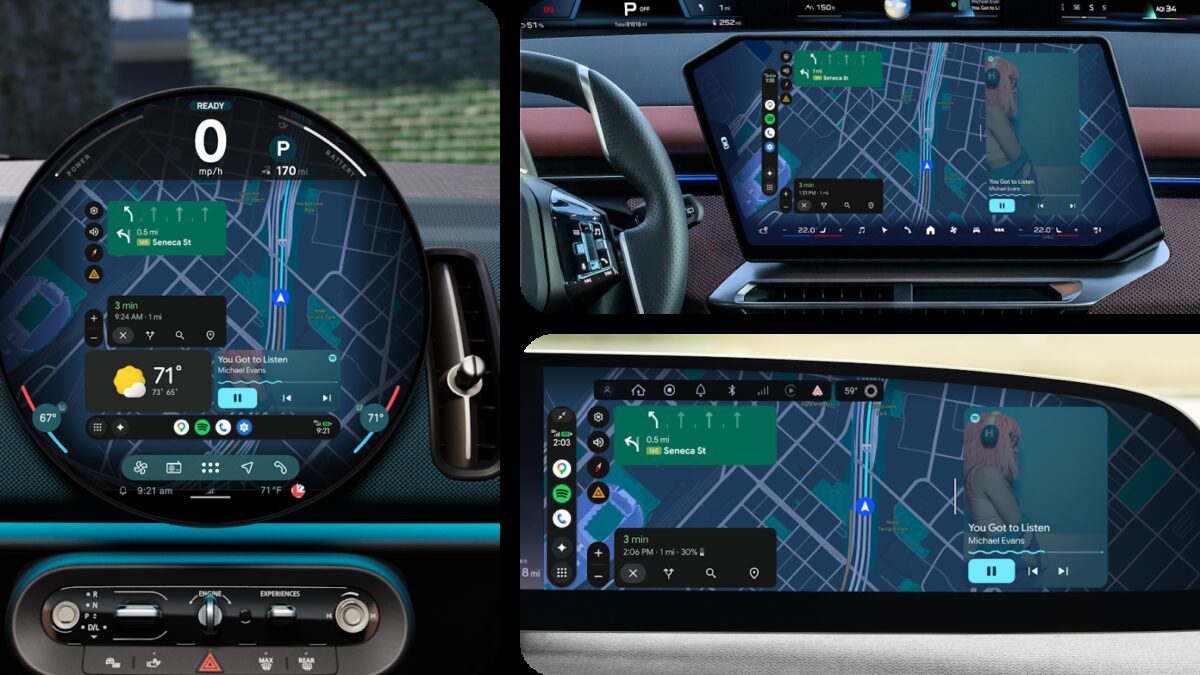
Google just gave Android Auto a much-needed reality check: cars no longer have polite, rectangular screens, so the software is getting smarter about the weird ones. At I/O, the company unveiled Android Auto updates that stretch across curved, panoramic, and even circular displays, while also adding YouTube video streaming, widget support, and more Gemini-powered features.
The headline change is a new ”full bleed” layout that lets apps use the whole display instead of sitting in a letterboxed box like an old movie on a flatscreen. That matters because automakers keep getting more creative with cabin hardware, and Google clearly does not want a Lucid Air or MINI Cooper stealing the spotlight with better screen geometry than its software.
Android Auto gets a full-bleed redesign
Patrick Brady, Google’s VP of Android Automotive, said the update is designed to match the full shape of each car’s display, including the BMW Neue Klasse’s oddly shaped dash screen. It is a sensible fix, and long overdue: the old Android Auto look was built for a simpler era, when ”car screen” basically meant ”rectangle, but bigger.”
Google is also bringing its Material Three Expressive design language to Android Auto, which should make the interface feel more like the phone in your pocket. Expect wallpaper-based color themes and a more personalized look, rather than the sterile dashboard UI automakers often ship when they think beige equals premium.
YouTube video playback arrives while parked
Later this year, Android Auto will let drivers stream YouTube video on the car display, but only while parked. Google says the feature supports 4K, 60-frames-per-second playback, and spatial audio with Dolby Atmos, with the content originating from the user’s phone rather than a built-in car system.
That parked-only rule is doing a lot of heavy lifting here, and for good reason. Google says people have been asking for something to watch while charging an EV or waiting in parking lots, and this keeps the feature from turning every commute into a terrible idea with surround sound.
Gemini, widgets and smarter shortcuts
Android Auto is also getting widget support, so users can surface sports scores, calendar details, smart home controls, garage door shortcuts, and similar bits from their phones. Gemini will be able to read that information back in natural language, which is much easier than poking around a dashboard UI that was clearly designed by someone who hates reaching.
- Sports scores and schedules
- Calendar and contact shortcuts
- Smart home and garage controls
- Natural-language access through Gemini
Google is also pushing Gemini into a more agentic role, including app actions such as placing a pickup order through Starbucks while the car handles the rest. A new feature called Magic Cue can scan incoming messages for requests like an address or a phone number, then pull the relevant detail from your phone and suggest a one-tap reply.
Google Maps becomes more car-like
The company’s Immersive Navigation mode in Google Maps is now coming to Android Auto, adding refreshed colors, 3D buildings, elevated roads, realistic terrain, and greenery during navigation. That is mostly visual polish, but it also tightens Google’s grip on the in-car experience: whether you are using phone projection or a built-in system, the Maps layer is increasingly the same.
And that is the real story here. Google is narrowing the gap between Android Auto and its embedded Android Automotive software, while rivals like Rivian, Chevy, and Cadillac already lean on Google’s native stack in the dash. Android Auto still cannot control HVAC, drive modes, or radio settings, but those boundaries are getting fuzzier as phones and cars get more software-capable – and as Google keeps showing up with another feature to make the distinction feel a bit academic.
The next question is whether automakers let Google keep expanding, or start pushing back once the software becomes the thing customers notice most. Judging by this week’s announcements, Google is betting the answer will be a shrug, followed by another login prompt.