• 2 min read
AMD claims Zen 6 leads Nvidia Vera by 20%
AMD says Zen 6-based EPYC Venice leads Nvidia Vera by about 20%, but its benchmark results remain estimates awaiting independent certification.
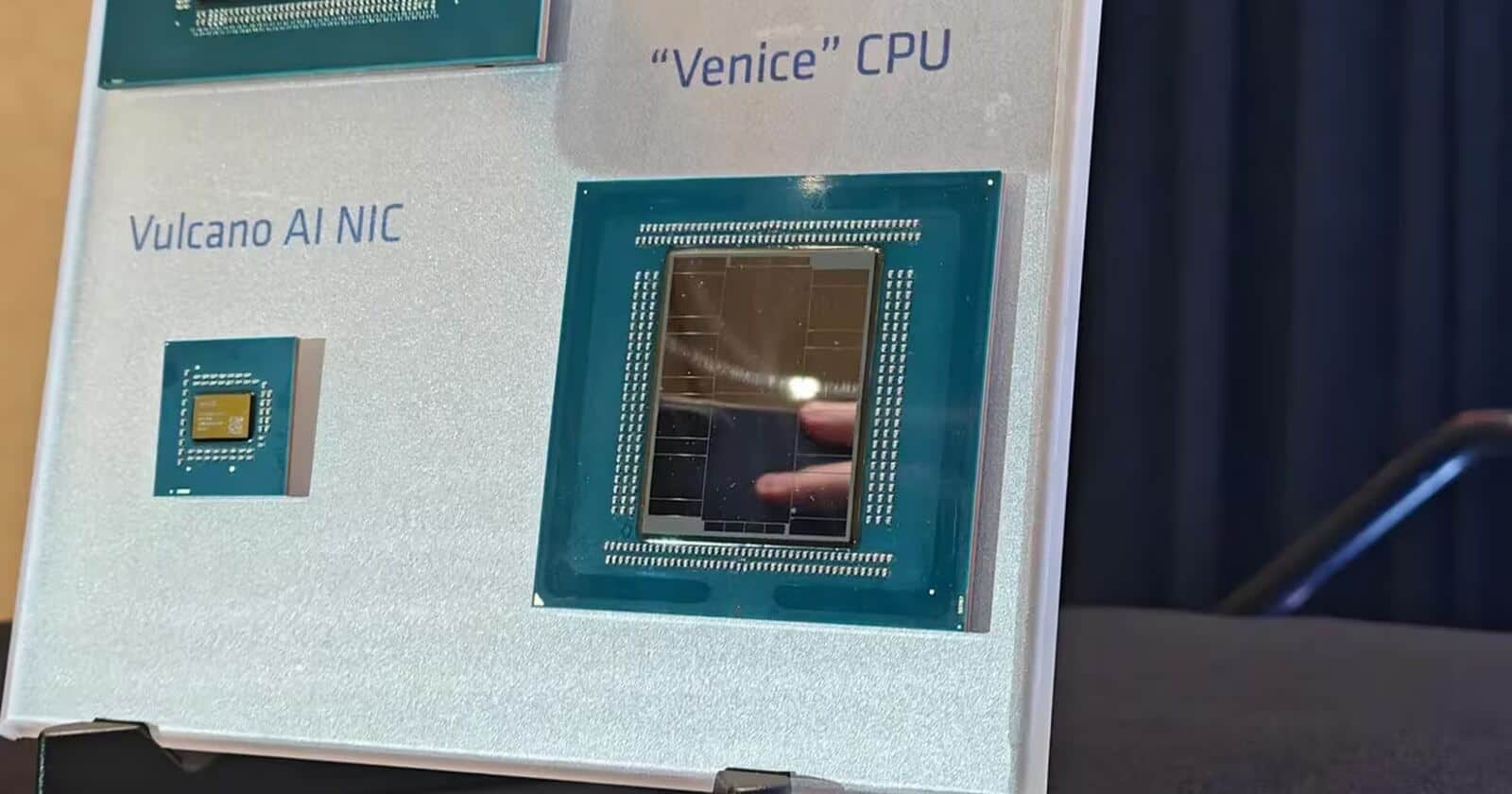
Image: ITzine
AMD says its upcoming EPYC Venice server processors, based on the Zen 6 architecture, already outperform Nvidia’s future Vera CPUs by about 20%. The claim is based on AMD’s own testing rather than forecasts, although the results have not yet received independent certification.
At the Advancing AI 2026 conference, AMD corporate vice president Ravi Kuppuswamy said the company had initially expected a lead of less than 10%. Early results instead showed an advantage of roughly 20%, and Venice has not yet reached final optimization.
EPYC Venice versus Nvidia Vera benchmarks
AMD used the SPEC CPU 2026 benchmark for its comparison. In the overall performance test, it matched a two-socket system built with EPYC 9996 Venice processors—each with 256 cores—against a two-socket Nvidia Vera system using two 88-core CPUs.
According to AMD, the Venice system delivered about 2.2 times the total compute performance. The comparison is not equivalent in every respect: AMD’s configuration has substantially more cores and a higher power envelope, at approximately 600 watts versus roughly 450 watts for the two-socket Vera system.
AMD considers the single-threaded result more revealing. In SPECint, it compared a 96-core EPYC Venice with one Nvidia Vera core and reported an advantage of around 20%. The company argues that this result is less dependent on core count and better reflects architectural performance.
Recommended reading
MacBook Ultra could bring 12 major Mac firsts
There is a significant qualification. AMD’s results have not yet appeared in the official SPEC database or undergone independent certification. They remain estimated figures, meaning the numbers presented at the conference are not equivalent to results from a completed, independent benchmark.
Why Nvidia’s server CPUs matter to AMD
Nvidia has spent years building its business around AI accelerators and is now seeking a position in the broader data-center CPU market. If Vera proves competitive beyond Nvidia’s presentations, it could increase pressure on both AMD and Intel, particularly in a segment where customers focus on performance per watt, system density, and operating costs.
For AMD, the Venice figures establish a performance narrative before the product launches. Zen 6 will need to compete not only with Intel’s current server chips, but also with a new entrant that already has a strong position in AI infrastructure.
The decisive comparison will come after both processors ship and independent results become available. Until then, AMD’s roughly 20% advantage remains an estimate rather than a settled market result.
Computing Editor
Tomas lives in the terminal. He covers chips, laptops, and operating systems with a focus on performance and efficiency. He reads kernel changelogs the way other people read fiction, and he's always on the hunt for the perfect mechanical keyboard switch. If it processes data, Tomas has an opinion on it.
via ITzine