

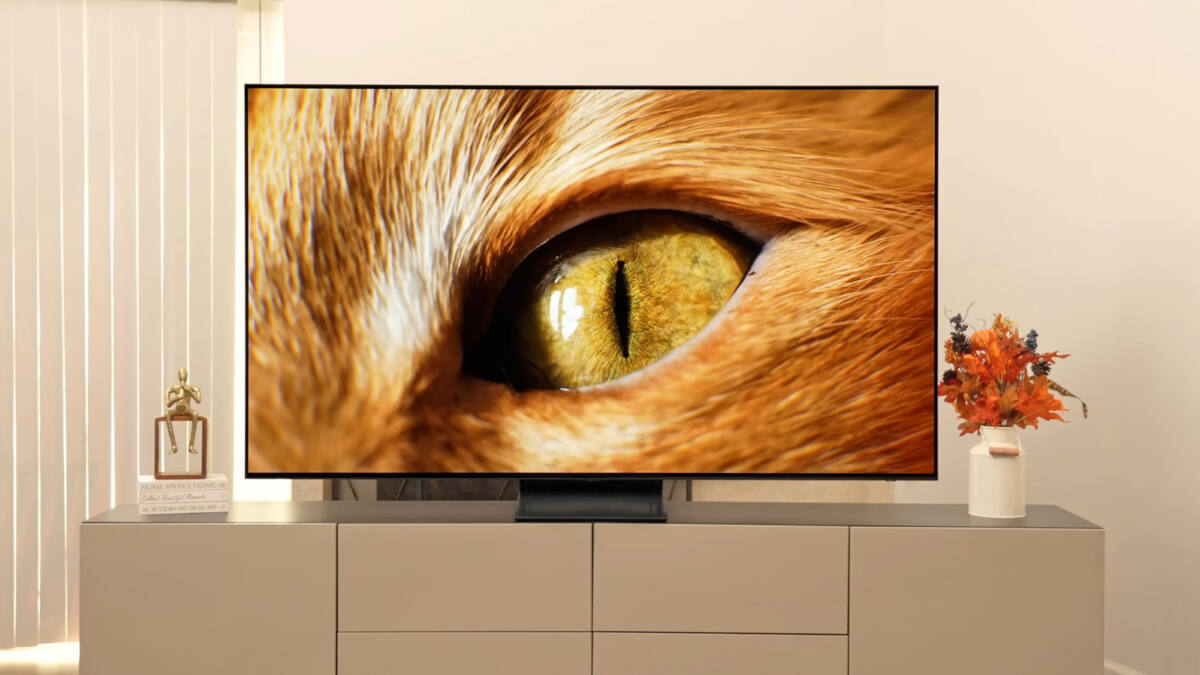
OLED TVs still sit near the top of the picture-quality pile, but they are not the easy recommendation some sales pitches make them sound like. Their self-emissive pixels deliver spectacular contrast, fast gaming performance, and wide viewing angles, yet bright rooms and high prices can still make buyers hesitate. That split is exactly why OLED TVs remain the luxury pick, not the default one.
The technology has come a long way since Sony brought OLED to the TV market in 2004, and the competition has only sharpened the stakes. LG and Samsung now push different versions of OLED in different directions, which means the best screen for movies is not always the best screen for a sunlit living room.
What OLED TVs do better than most TVs
The biggest selling point is still the simplest one: black. Because OLED pixels can shut off completely, dark scenes look genuinely dark rather than dark gray pretending to be black. Samsung’s S95F reached as low as 0.005 nits in low-light environments in 2025 and earned VDE True Black certification, which is exactly the kind of spec that makes LCD sets look a bit embarrassed.
Gaming is another area where OLED earns its keep. Models such as LG’s B5 can hit a 0.1-millisecond response time, and PCMag has tested OLED sets like the Samsung S95H and LG Evo G6 at under five seconds at 1080p 120Hz. That mix of near-instant pixel response and low input lag is hard for conventional LED TVs to beat, even if some high-end mini-LED sets can get close on raw latency.
Color is the third ace. LG’s WOLED approach uses white light with red, blue, and green filters, while Samsung’s QD-OLED uses a blue layer and quantum dots to produce a wider spectrum of colors. The result is rich, precise image rendering, with HDR pushing both approaches even further.
Finally, OLED is unusually good for shared viewing. Wide angles mean the picture holds up even when people are scattered across a room, and that matters more than spec-sheet bragging rights if the TV is going in a family space rather than a solo movie bunker.
- True blacks from individually controlled pixels
- 0.1-millisecond response times on some models
- Strong color performance from WOLED and QD-OLED designs
- Wide viewing angles for larger rooms
Where OLED still trips up
Brightness is the first catch. OLED has improved a lot, but in rooms with lots of daylight, mini-LED still has the cleaner case because backlit panels can simply throw more light around. If you are buying the cheapest OLED you can find and placing it opposite a giant window, you are paying for contrast that the room may blunt before dinner starts.
Price is the other obvious problem. A 42-inch LG C5 is listed at $899 at Walmart, while a 43-inch TCL QLED TV is listed at $198. Once you move into larger, higher-spec OLED sets, prices can climb above $5,000, which is a lot to spend on a TV even before you start worrying about glare, panel coatings, or how often the room gets natural light.
That is the real trade-off here: OLED is the premium choice for people who care most about picture accuracy, motion, and movie-night contrast. For everyone else, brighter LED and QLED sets still make a very strong argument, especially when the budget matters more than bragging rights.
How to decide if an OLED TV is right for you
So the smart move is not ”Should I buy an OLED TV?” but ”Where will I use it, and how much am I willing to pay for perfection?” If the answer is a dark room, gaming, and a healthy budget, OLED is still the class act. If the answer is bright daylight and bargain hunting, the market has already given you a less glamorous but more sensible option.