

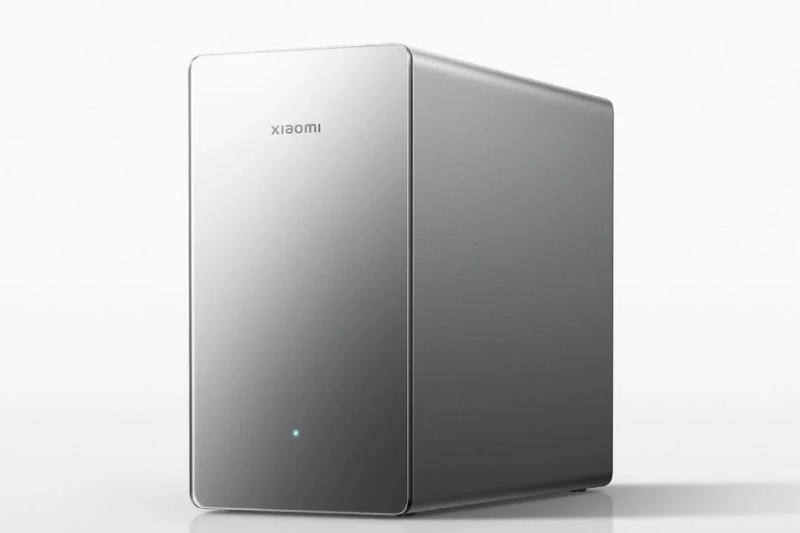
Xiaomi has shown off its first NAS, Smart Storage, in China, but it is taking an unusual route to market: the device will only go on sale if a crowdfunding campaign running from 1 to 8 July hits its target. That makes this less of a standard Xiaomi NAS launch and more of a public test of whether Xiaomi buyers actually want a two-bay home and small-office storage box with the company’s logo on it.
The approach is smart for Xiaomi and mildly annoying for anyone who wants a straightforward purchase page. It also gives the company a way to gauge demand without committing to full-scale production first, a tactic more often used for niche hardware than for a brand this large.
Xiaomi Smart Storage prices and configurations
Xiaomi has confirmed three configurations, all based on two drive bays. Full specifications are still under wraps, but the pricing is already clear:
- Beginner: 4 TB, or 2 x 2 TB, for 2299 yuan during crowdfunding; 3499 yuan at retail
- Advanced: 8 TB, or 2 x 4 TB, for 2899 yuan during crowdfunding; 4499 yuan at retail
- Professional: 16 TB, or 2 x 8 TB, for 4699 yuan during crowdfunding; 6999 yuan at retail
Those launch discounts are doing a lot of work here. On paper, the crowdfunding prices look far more reasonable than the later retail figures, especially for the 16 TB model, which will need to compete not just on capacity but on software polish, app support, and ease of setup.
Why Xiaomi is being cautious
NAS hardware is a crowded category, and buyers usually care less about brand hype than about reliability, RAID options, media features, and how painful the interface feels after month three. Xiaomi has not yet said whether Smart Storage will leave China, which suggests the company is still treating this as a controlled experiment rather than a global product bet.
That caution makes sense. A lot of consumer tech firms have stumbled by shipping storage products that looked attractive on a spec sheet but arrived with half-baked software. Xiaomi says more details on the platform and supported networking features will follow as the campaign gets closer, which is the sort of sentence that can either build anticipation or quietly lower expectations.
What happens if the campaign lands
If the crowdfunding target is reached, Xiaomi will have a low-risk entry into a market that rewards patience and punishes shortcuts. If it misses, Smart Storage may join the long list of interesting products that never got past the prototype stage. Either way, the real story is not the hardware itself but Xiaomi’s decision to ask buyers to fund the experiment first and praise it later.