

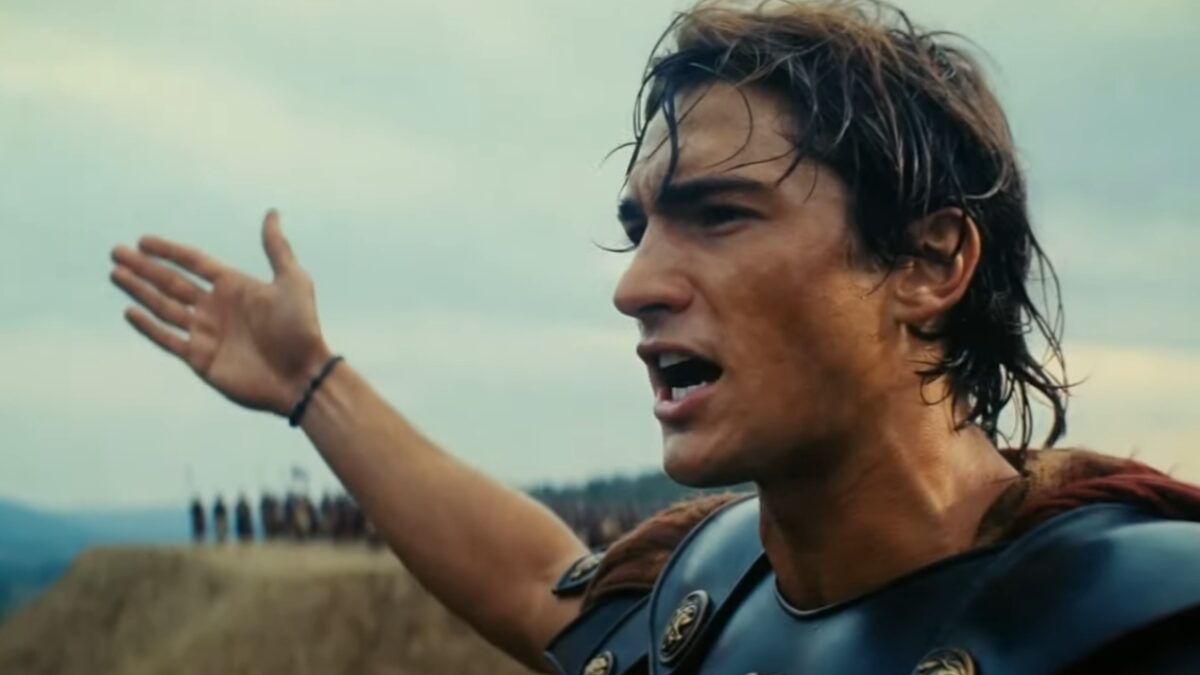
Elon Musk says xAI is aiming to push Grok far enough by the end of 2026 that it can generate full-length films, a sharper target than his earlier comment that truly good AI-made movies would arrive in 2027. The claim came after xAI shared an AI trailer for a ”Homer’s Odyssey” project made with Grok Imagine Video 1.5, a neat bit of self-promotion dressed up as a tech demo.
The trailer runs more than two minutes and includes 36 scenes, with the look intentionally pitched at 1970s Hollywood. That means battle sequences, close-ups, and a deliberate attempt at film grain and old-school editing rather than the glossy, floating look many AI videos still produce. According to the creators, it was generated entirely by the model, without conventional filming.
What Grok Imagine Video 1.5 shows
xAI is clearly trying to frame Grok as more than a chatbot with video tricks. The company says the final version of Grok Imagine Video 1.5 brings faster video generation and more realistic motion physics, which are exactly the pieces a usable synthetic film pipeline would need. The hard part is not making a convincing 10-second clip; it is keeping characters, lighting, and scene logic coherent for long stretches without the whole thing wobbling apart.
- Trailer length: more than two minutes
- Scene count: 36
- Style: 1970s Hollywood cinema
- Claimed production method: fully generated by AI, no traditional shooting
Why the 2026 target is ambitious
Full-length AI film generation is a different beast from the short clips flooding social media from OpenAI, Google, and a growing pack of image-to-video startups. Short-form models can hide a lot of problems behind quick cuts and motion blur; feature-length storytelling needs continuity, performance, and a tolerable level of nonsense across dozens of scenes. That is where the industry usually runs into the wall.
Musk’s new deadline also serves a competitive purpose. If xAI can show credible long-form output before rivals settle on the format, Grok gains a story that is bigger than ”another AI assistant” and closer to a content engine. The bet is obvious: if the model can hold a movie together, the rest of the entertainment business will at least have to pay attention.
The real test is not the trailer
A glossy demo is useful, but it is also the easiest thing to stage. The tougher question is whether Grok can produce a film that survives long runtimes, repeated editing, and actual viewer scrutiny without collapsing into a parade of visual glitches and narrative drift. If xAI hits the end-of-2026 mark, expect plenty of skeptics to ask how much of the film is actually watchable rather than merely impressive in a clip.
For now, the signal is less ”Hollywood is over” and more ”xAI wants to be taken seriously in video, not just text and images.” That is a crowded race, and the companies making the loudest claims usually have the hardest benchmarks to clear.