

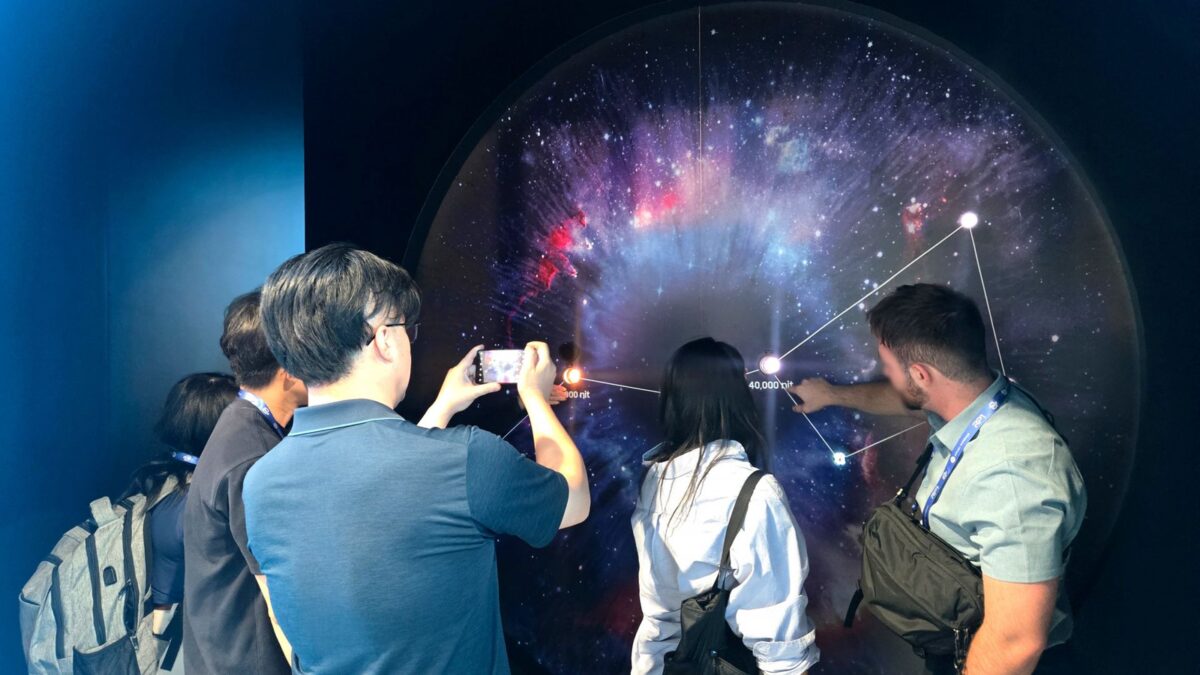
Samsung Display is betting that XR headsets need screens that can cut through bright visuals without killing color or battery life, and its answer is RGB OLEDoS. At its booth, the company is showing a 1.3-inch panel that reaches a peak brightness of 40,000 nits, a figure that makes even high-end phone displays look quaint. Samsung is pitching the technology as a way to push next-generation XR devices past the usual trade-off between brightness, image quality, and manufacturing complexity.
The company’s demo space, nicknamed ”Big Dipper,” includes seven display panels arranged to evoke the constellation. Only two of them use the 1.3-inch RGB OLED panels with the 40,000-nit peak, letting visitors compare them directly with more conventional screens. That kind of side-by-side setup is smart marketing, but it also underlines how aggressively Samsung is trying to frame this as a leap rather than just another panel spec.
Why Samsung is pushing RGB OLEDoS
Samsung says its RGB method avoids the color filter that blocks light in other OLED approaches, which helps improve light output and panel lifespan. That matters in XR, where displays sit close to the eye and every bit of efficiency helps. The company is also leaning on a familiar manufacturing argument: a single-panel design can be simpler to produce, which should help with mass production and cost competitiveness if the technology scales the way Samsung wants.
- Panel size: 1.3 inches
- Peak brightness: 40,000 nits
- Display type: RGB OLEDoS, also described as OLED on Silicon
- Target devices: next-generation XR headsets
Samsung’s cost and production argument
The real contest here is not just brightness, but who can make these displays at scale without turning the headset into a luxury science project. Samsung Display’s pitch is that its experience with OLED manufacturing gives it an edge in both yield and price pressure. That is a familiar playbook in displays: the spec sheet gets the headlines, while the production line decides who actually ships.
The timing is also interesting because premium display benchmarks are getting absurd across devices. Honor has already said its upcoming Honor X80 Pro Max will be the first smartphone with a peak brightness above 10,000 nits, which puts Samsung’s XR panel in a completely different bracket. Phones and headsets are not the same market, of course, but the numbers show where the industry is headed: brighter, denser, and more willing to brag about impossible-seeming figures.
What Samsung’s XR display demo could signal next
Samsung says it will keep developing ultra-bright RGB OLED panels and focus on improving performance. The open question is whether XR makers will want the extra brightness enough to pay for it, because display technology only becomes a business when someone can build a headset around it and still make money. If Samsung can turn this demo into volume production, rivals in micro-OLED and other XR display camps will have a new benchmark to chase.