

A Finnish startup spun out of VTT says it is close to turning wood waste into industrial energy storage, after raising 1 million euros in seed funding from BSV Ventures and securing exclusive patents from the research center. Granarium Technologies is betting that sawdust, agricultural residues, and a lot less metal can do part of the job now dominated by lithium-ion batteries.
The pitch is simple enough to sound almost rude: use cheap local biomass instead of scarce minerals, build modular systems that plug into existing infrastructure, and avoid the capital pain of lithium gigafactories. The catch, as ever, is whether the chemistry scales outside the lab without becoming a very expensive science fair project.
A biochar nanocarbon supercapacitor platform
Granarium’s core material is a biochar nanocarbon framework built around nanocellulose. In practice, that means a structural matrix holds activated biocarbon made from wood sawdust and agricultural waste, creating an energy-dense material that can be assembled into modular storage blocks.
That approach sidesteps the metals that make conventional batteries expensive and geopolitically awkward, especially lithium, cobalt, and nickel. It also fits a broader industrial trend: storage makers are hunting for chemistries that are easier to source locally and less dependent on cross-border supply chains that can get messy fast.
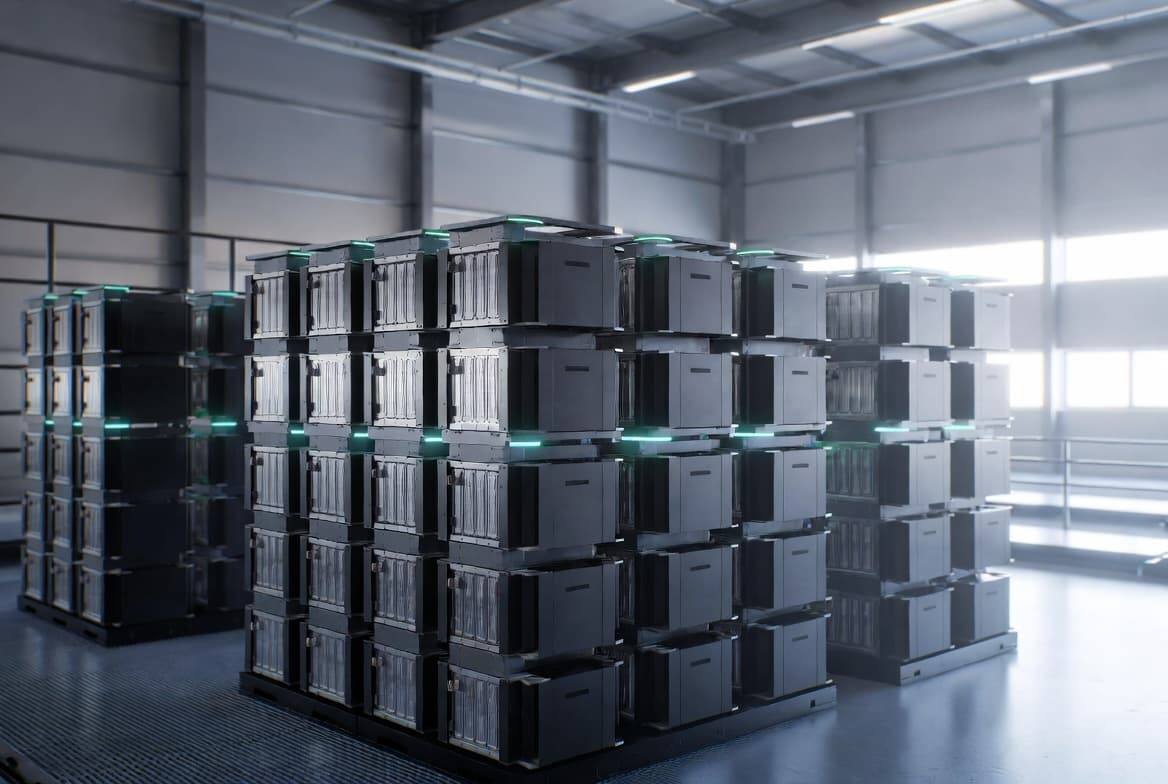
50-100 kWh supercapacitor blocks with lower build costs
The company plans commercial blocks in the 50-100 kWh range, designed to look and integrate much like standard lithium-ion battery systems. Granarium says building them requires roughly 80% less capital than constructing lithium gigafactories, helped by local feedstocks and a simpler production chain.
- Target format: modular 50-100 kWh blocks
- Input materials: wood-processing waste and agricultural residues
- Claimed build cost: about 80% lower than lithium gigafactories
- Production setup: small industrial line with up to 50 heavy modules a year
Not a battery replacement
Granarium is careful not to overplay the technology as a lithium killer. The company says its supercapacitors are meant to work alongside batteries, handling short, high-power bursts and rapid charge-discharge cycles while lithium systems cover longer-duration storage.
That division of labor makes sense for grids with heavy wind and solar penetration, where millisecond-fast stabilization can be more valuable than another hour of energy capacity. Industrial users also stand to gain, since voltage stability and power quality can matter as much as raw stored energy.
First pilots are set for the next six months
Granarium says it already has its first customers and technology partners lined up, with pilot industrial deployments planned within the next six months. The first production will run on a small industrial site, and early installations are aimed at manufacturing plants where unsteady electricity can disrupt output and quality.
If those pilots work, the company wants to use the results to scale internationally through strategic partnerships. That is the hard part, of course: plenty of clean-tech hardware looks elegant until someone asks for repeatable manufacturing, bankable performance data, and a supply chain that behaves like a grown-up.