

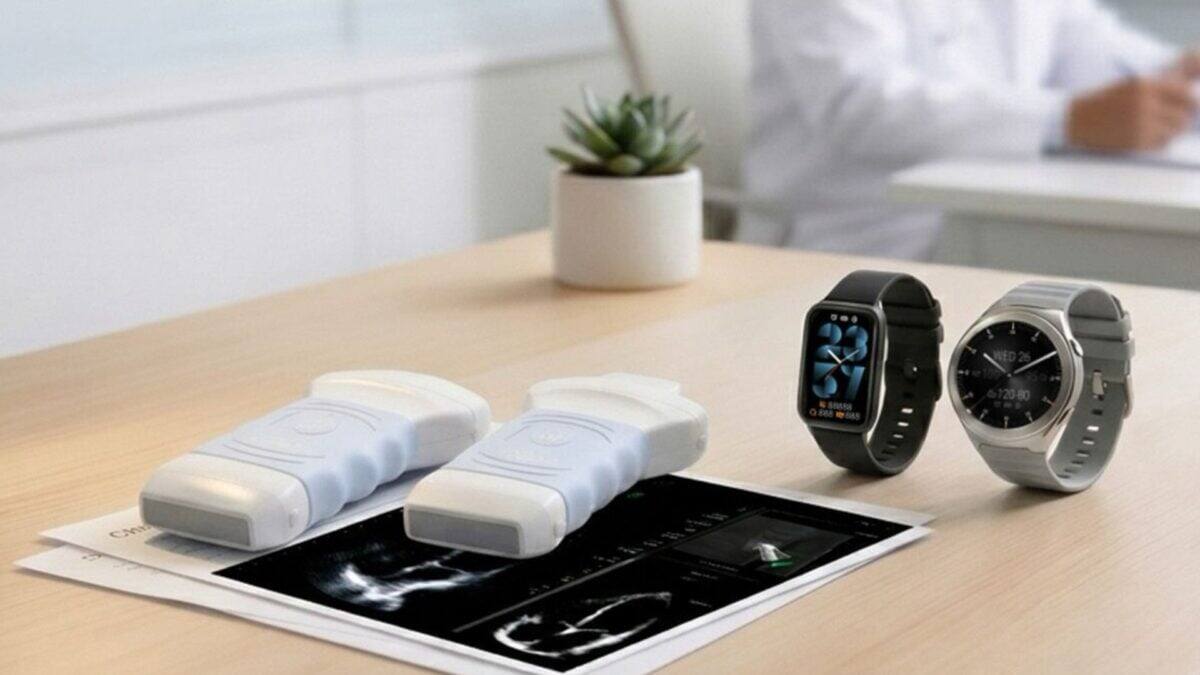
Asus has turned its latest smartwatch into something more ambitious than a notification slab with step counts. The Asus VivoWatch 6 Plus, announced at Computex 2026, sits inside what the company calls an ”AI-powered health care ecosystem” and is designed to pass data from the watch and Asus’ Handheld Ultrasound DuoScan to healthcare providers through an AI Agent. The pitch is bold: turn patient data into instant clinical decisions. The problem is that Asus has not said what data gets sent, when it gets sent, or what the system is actually allowed to do with it.
That vagueness matters because the wearable-health race is already crowded, and the companies involved are taking very different bets. Samsung is leaning on fainting detection and glucose monitoring, Apple already has ECG on the Watch, and Whoop has moved into access to licensed clinicians rather than automating medical action. Asus appears to be going a step further with the VivoWatch 6 Plus, which sounds useful right up until you ask who is making the decision and on what basis.
What the Asus AI Agent is supposed to do
According to Asus, the AI Agent for healthcare analyzes patient data and can ”execute actions in real-time.” That is a much stronger claim than simple wellness tracking, and it is also the kind of phrase that deserves a very raised eyebrow. Long-term monitoring can absolutely help surface trends in blood pressure, sleep, breathing, movement, gait, and ECG readings, but Asus has offered too little detail to show whether this is decision support, automation, or something uncomfortably closer to software calling the shots.
The broader industry context is telling. Wearables have spent years moving from fitness toys to semi-serious health tools, but most of them still stop short of making clinical decisions for you. That caution is there for a reason: once a device starts steering care, the line between a helpful alert and a medical recommendation gets very thin very quickly.
VivoWatch 6 Plus hardware looks familiar in a good way
Strip away the AI buzzwords and the VivoWatch 6 Plus looks like a credible premium watch. Asus says it uses a titanium alloy case, a 1.43-inch AMOLED display, and sapphire crystal glass. It also supports continuous health monitoring through blood pressure and ECG, alongside the sleep and movement analysis that consumers now expect from any serious wearable trying to charge serious money.
- Titanium alloy case
- 1.43-inch AMOLED display
- Sapphire crystal glass
- Blood pressure and ECG monitoring
- Sleep, breathing, movement, and gait analysis
Asus VivoWatch 6 Plus price and rivals
Asus has not confirmed pricing, but the existing VivoWatch 6 costs $299, so the Plus model should land above that. That puts it in the same neighborhood as mainstream flagships like the Galaxy Watch 8 and Apple Watch Series 11, where buyers usually care as much about trust and polish as they do about sensors and materials.
The real question is whether Asus can convince people that its clinical-sounding AI is a feature rather than a risk. The watch itself sounds solid. The AI Agent is the part that needs scrutiny, and probably a few independent reviews before anyone lets it do more than count their steps and nag them to stand up.