

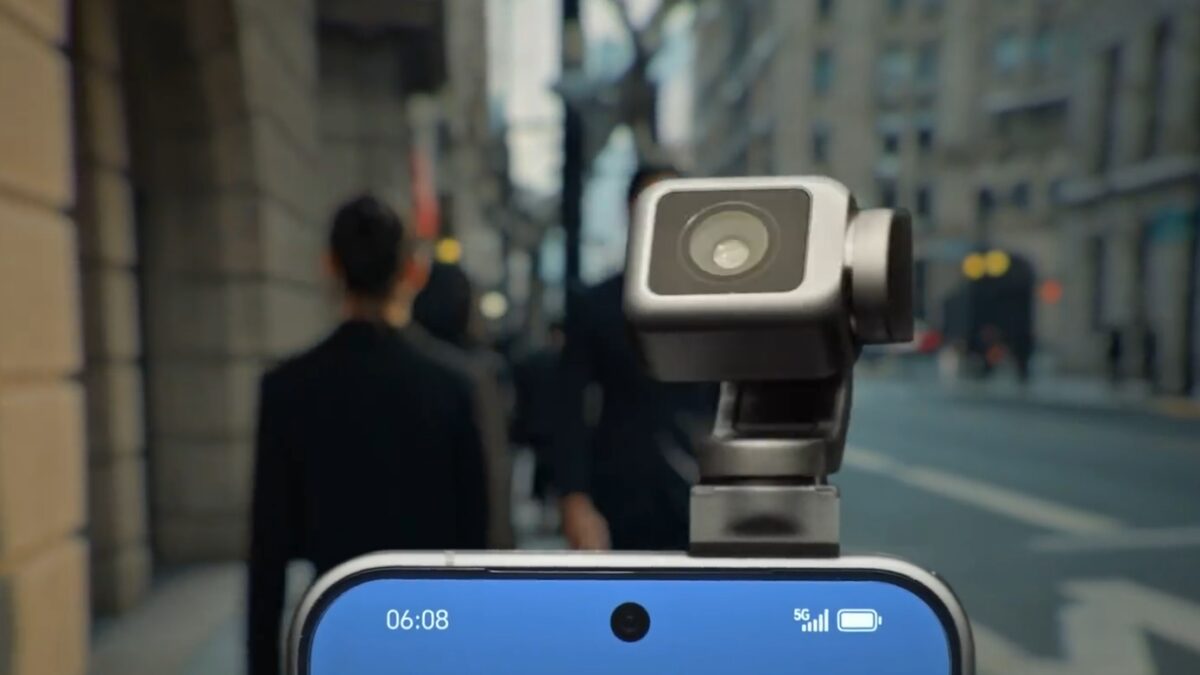
Honor is pushing its upcoming Robot Phone as a video tool first and a phone second, and that is the whole point. The company has now laid out more of the thinking behind the device, which first appeared at MWC 2026, with a motorized camera system, AI-assisted shooting, and a launch window in the third quarter of 2026.
That pitch lands at a good time for Honor. Phone makers keep adding bigger sensors and more software tricks, but most of them still expect users to act like part-time camera operators. Honor is trying a more direct answer: move the camera itself, let the phone do more of the work, and make the results look less like a shaky clip from a concert balcony.
A 200-megapixel gimbal camera on top
According to Honor’s imaging team, the Robot Phone uses a motorized three-axis gimbal camera mounted on top of the handset rather than a conventional fixed module. The camera unit includes a 200-megapixel sensor and can rotate forward or backward depending on the scene, giving the device a more flexible shooting range than a standard slab of glass and metal.
Honor says the design is meant to leave more room for future hardware upgrades and new shooting styles. It also adds a professional wrinkle: the company has partnered with ARRI, the cinema equipment maker better known on film sets than in phone marketing decks.
- Motorized three-axis gimbal camera
- 200-megapixel sensor
- Forward and backward rotation
- AI subject tracking and automated camera movements
- AI-powered video editing tools
Durability is the awkward part
Any phone with moving parts invites the same obvious question: how long before gravity wins? Honor says the first-generation Robot Phone already has drop resistance comparable to its flagship smartphones, but water resistance still needs work. That is a sensible admission, and also a reminder that clever hardware usually spends its first life proving it will survive a pocket, not a product demo.
The company says durability improvements will continue with later generations instead of being treated as a one-off experiment. That is the safer path, especially for a device that is trying to turn a camera mechanism into a defining feature rather than a gimmick.
Honor spent a year refining the mechanism
Honor says the Robot Phone took around a year of engineering work before reaching the current prototype. The team had to build a custom compact motor, balance the gimbal system, and deal with stability and rotational forces, which explains why so many futuristic phone ideas never make it past concept stage. Several design revisions were needed along the way.
For people who do not want to learn camera settings for fun, the Robot Phone is supposed to offer preset shooting templates and automated tracking that can produce smoother, more cinematic clips with minimal input. If Honor pulls this off, the real competition will not just be against other Android flagships, but against the default smartphone habit of making everyone do their own post-production.
Honor Robot Phone launch timing
Honor CEO James Li has confirmed that the Robot Phone is due in the third quarter of 2026. The next question is whether buyers see it as a genuinely useful camera-first handset or as an impressive prototype that belongs in a demo booth. Either way, the company has made one thing clear: it wants the phone camera to move as much as the market does.