

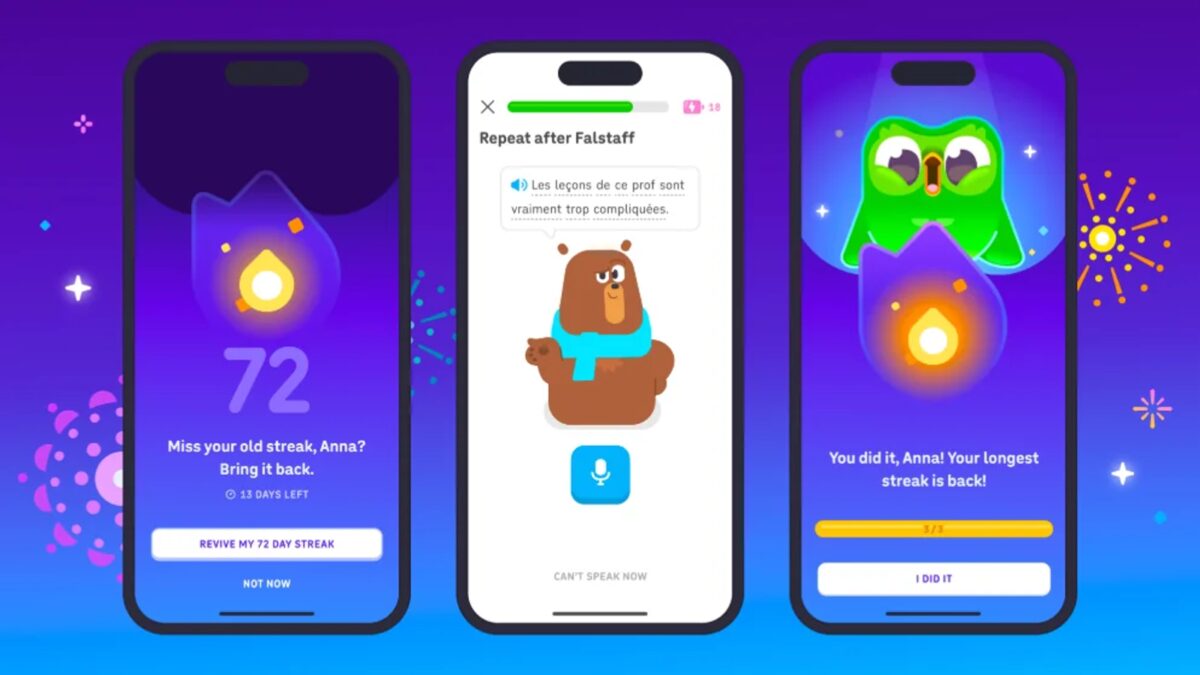
Duolingo is giving some users a rare do-over: if a long learning streak was broken, the app will let them restore the highest lost record in exchange for completing three lessons in a row. The Duolingo streak restoration promotion is available in June, and the catch is pleasantly boring – no gems, no cash, and no need to beg the owl for mercy.
The promotion is aimed at people who missed a few days for reasons outside their control and then lost the momentum that made daily language practice stick in the first place. That is a smart move for Duolingo, because streaks are not just a badge inside the app; they are the habit engine that keeps users coming back.
How Duolingo streak restoration works
To bring back a streak of 30 days or more, users need to finish three lessons back to back. The feature is available in the mobile apps for Android and iOS, and it applies only to one broken streak – the biggest one a user ever reached before losing it.
- Requirement: three lessons in a row
- Eligible streaks: 30 days and up
- Cost: no gems and no real money
- Platforms: Android and iOS
There is one more twist: restored streaks do not merge with an existing run. So if someone once reached 1,000 days, lost it, and later built a new 200-day streak, the offer would restore the old 1,000-day record rather than turning it into 1,200. That limitation sounds harsh, but it also keeps the feature from becoming a numbers loophole dressed up as kindness.
Why Duolingo is doing this in June
Duolingo says the idea is to remove a motivation killer. Lose a long streak, and some learners simply stop opening the app altogether. By turning June into a one-time recovery window, the company is trying to convert disappointment into another shot at the habit loop.
It is also a neat bit of product design. Duolingo has spent years training users to care about streaks, and now it is monetarily forgiving enough to admit that life happens. Competitors in language learning have leaned on reminders and subscription perks; Duolingo is leaning on psychology, which is usually cheaper and often more effective.
Russian-language courses on Duolingo
For users studying from Russian, Duolingo currently offers English, German, French, Spanish, Italian, Chinese, Japanese, Korean, and Portuguese. The app also lists music, math, and chess courses, which is a reminder that Duolingo has long outgrown the ”just languages” label.
People who never lost a streak will not see the offer at all, so this is not a broad rewards program. It is a targeted repair tool – and one that may quietly win back more lapsed learners than any banner ad ever could.