


Apple’s next Pro iPhone chip may be doing more than the usual year-to-year polish. The rumored A20 Pro for iPhone 18 Pro and iPhone Ultra is said to pair a move to TSMC’s 2-nanometer process with a new packaging method that could tighten performance, efficiency, and AI muscle in one shot.
The iPhone 18 Pro A20 chip could mark a bigger leap than Apple’s recent annual upgrades. Apple has spent years turning its A-series chips into a quiet advantage: a little faster, a little cooler, a little more efficient, then repeat. This time, the jump sounds less incremental and more like the sort of foundation shift that lets Apple squeeze more out of the same battery and the same chassis.
A20 Pro is expected to be Apple’s first 2nm iPhone chip
The first upgrade is the cleaner headline: A20 Pro is rumored to be Apple’s first iPhone chip built on TSMC’s 2-nanometer process. That is a meaningful shift from the current 3nm era, and it should give Apple more room for performance gains without ballooning chip size. Samsung and Qualcomm have both been pushing advanced node work too, but Apple’s habit of locking in early access often means its chips get the prettiest toys first.
There’s a catch, of course: node shrinks rarely arrive as magic. They usually translate into a mix of better efficiency, higher sustained performance, or both, depending on what Apple chooses to prioritize. For the A20 Pro, the company has not said which areas will get the biggest boost, but the extra headroom is the point.
Wafer-level multi-chip packaging could change the game behind the scenes
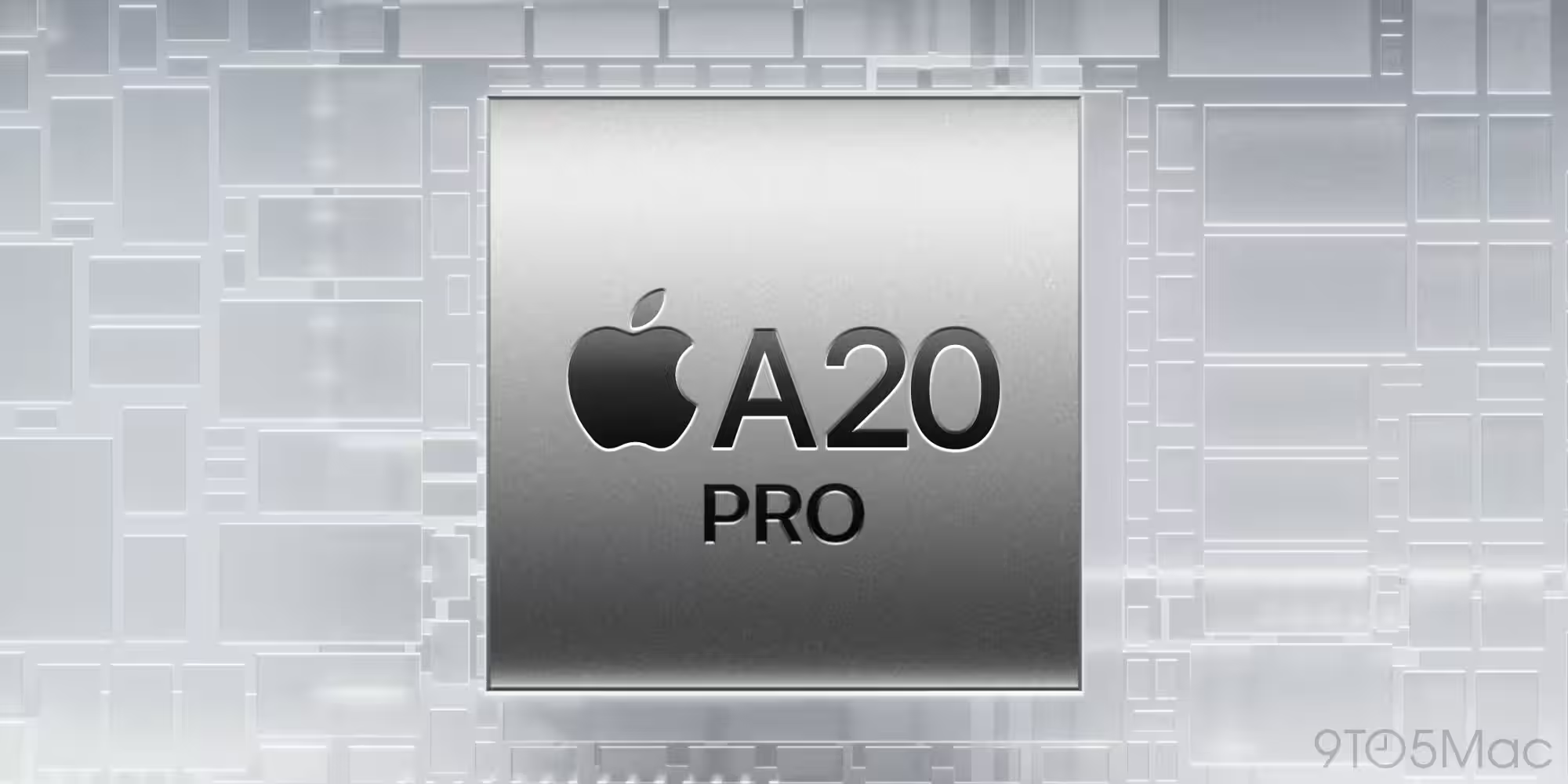
The second rumored upgrade is more esoteric, which is tech journalism code for ”this is probably the interesting part.” Apple is expected to use Wafer-Level Multi-Chip Module packaging for the first time in an iPhone processor. In plain English, that means the SoC and DRAM can be brought together earlier in the manufacturing process, with no interposer or substrate getting in the way.
That kind of packaging can improve thermal behavior and signal integrity, and it also shortens the distance between compute and memory. If Apple pulls it off, the payoff should show up in workloads that hate inefficiency: AI features, graphics-heavy games, and anything else that wants speed without draining the battery like a tiny vampire.
It also fits the broader direction Apple seems to be taking with its software. Rumors around iOS 27 point heavily toward AI features, so a chip designed to move data faster and more efficiently would be a sensible foundation rather than a marketing flourish.
What iPhone buyers should watch for next
- 2nm process for the A20 Pro
- Wafer-Level Multi-Chip Module packaging
- Better AI and gaming performance potential
- Lower power use, if Apple balances the design that way
The real question is whether Apple uses this headroom to make the iPhone feel dramatically faster or simply to make it last longer and run cooler while looking politely unchanged. Apple has usually preferred the second option, then let benchmarks do the bragging. If the A20 Pro does both, competitors will have a very annoying autumn.