
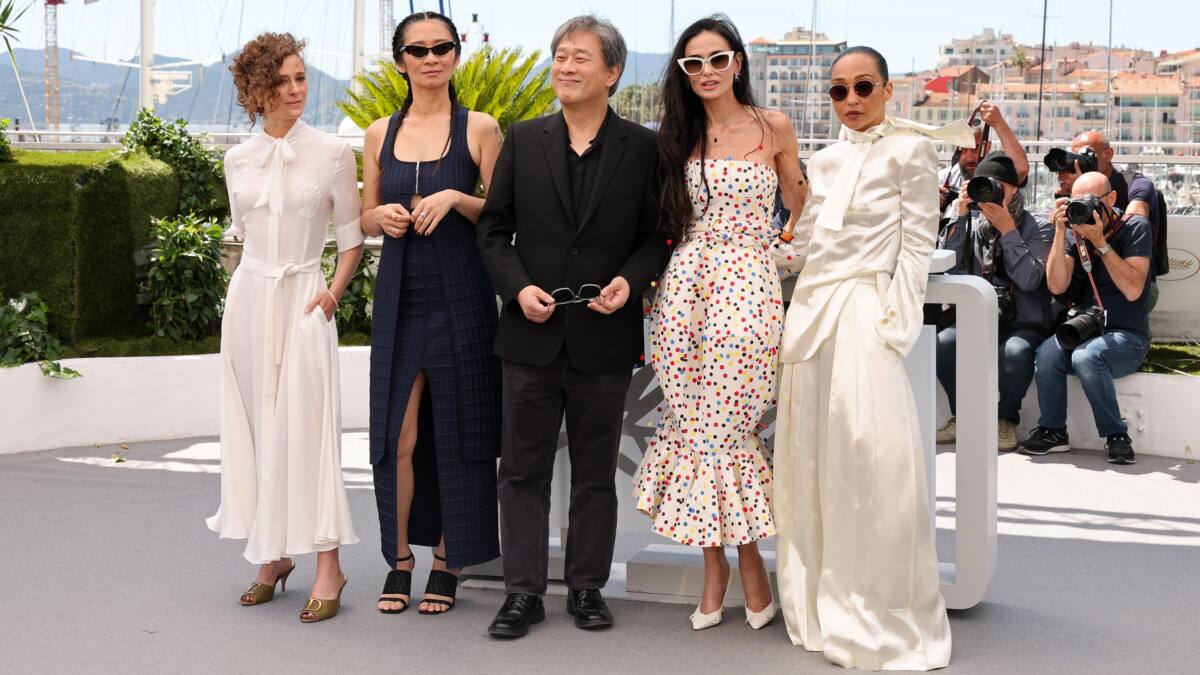
Cannes opened its 79th edition with an unusually direct defense of politically engaged cinema. Demi Moore and jury president Park Chan-wook both pushed back against the idea that art should tiptoe around politics, while also warning that a message still has to be made with enough craft to avoid turning into propaganda.
That tension is the real story here: Cannes is trying to look like a festival of films, not slogans, at a moment when the industry keeps getting dragged into culture-war arguments. The line between provocation and preaching is thin, and the jury’s opening remarks made clear that the festival does not intend to pretend otherwise.
Park Chan-wook backs political films without the sermon
Park said politics and art should not be split into opposing camps, arguing that a film with a political statement should not be treated as an enemy of cinema. He also warned that political force alone is not enough; if the work is not expressed artfully, it slides into propaganda pretty fast.
That is a familiar argument at Cannes, which has long rewarded films that wear their politics on their sleeve as long as they do it stylishly. It is also a subtle rebuke to festivals that have sometimes acted as if any explicit stance is either taboo or sufficient on its own. Neither is true, which is why audiences keep arguing about the films and the juries keep pretending not to enjoy it.
Demi Moore pushes back on self-censorship
Moore was equally firm, saying artists should not censor themselves in order to avoid discomfort. She framed expression as the core of creativity and said that is where art can discover truth and answers. On AI, she took a more cautious line: the technology is here, she said, and the smarter move is to figure out how to work with it rather than pretend it can simply be wished away.
Her warning was less futuristic than practical. Hollywood has already spent years debating labor protections, likeness rights, and the economics of synthetic content, so Cannes is arriving late to a fight that was already underway. Moore’s view may be measured, but it still lands on the side of adaptation instead of denial.
Paul Laverty takes the sharpest aim at AI power
Paul Laverty, the Scottish screenwriter and longtime Ken Loach collaborator, went further than the rest of the jury. He argued that the companies and tech billionaires behind major AI services should be treated with deep skepticism because they control the algorithms that increasingly shape daily life.
Laverty also tied the issue to sustainability, water use, and working conditions, which is the sort of unglamorous reality the AI hype machine tends to skip over. The message was blunt: if a handful of powerful owners set the rules, everyone else gets to live with the consequences.
- Cannes jury size: nine members
- Competition films: 22 features
- Palme d’Or winner to be announced on Saturday, May 23
Cannes jury and competition lineup
Park’s jury is packed with filmmakers and performers who are unlikely to treat the competition as a diplomatic exercise. Alongside Moore and Laverty are Chloé Zhao, Stellan Skarsgård, Isaach De Bankolé, Ruth Negga, Laura Wandel, Diego Céspedes, and the screenwriter Paul Laverty, giving Cannes a panel with enough artistic range to produce real disagreement.
That matters because Cannes has never been just a parade of premieres; it is a place where taste gets institutional power. The festival opens with Pierre Salvadori’s ”La Vénus électrique,” and the first thing heard from the jury was not a safe platitude but a reminder that cinema still wants to talk back to politics, not simply decorate it.
The open question is whether this year’s festival can keep that balance: political enough to feel alive, formal enough to avoid self-congratulation. Cannes usually prefers both. The tricky part is making the audience believe it.