

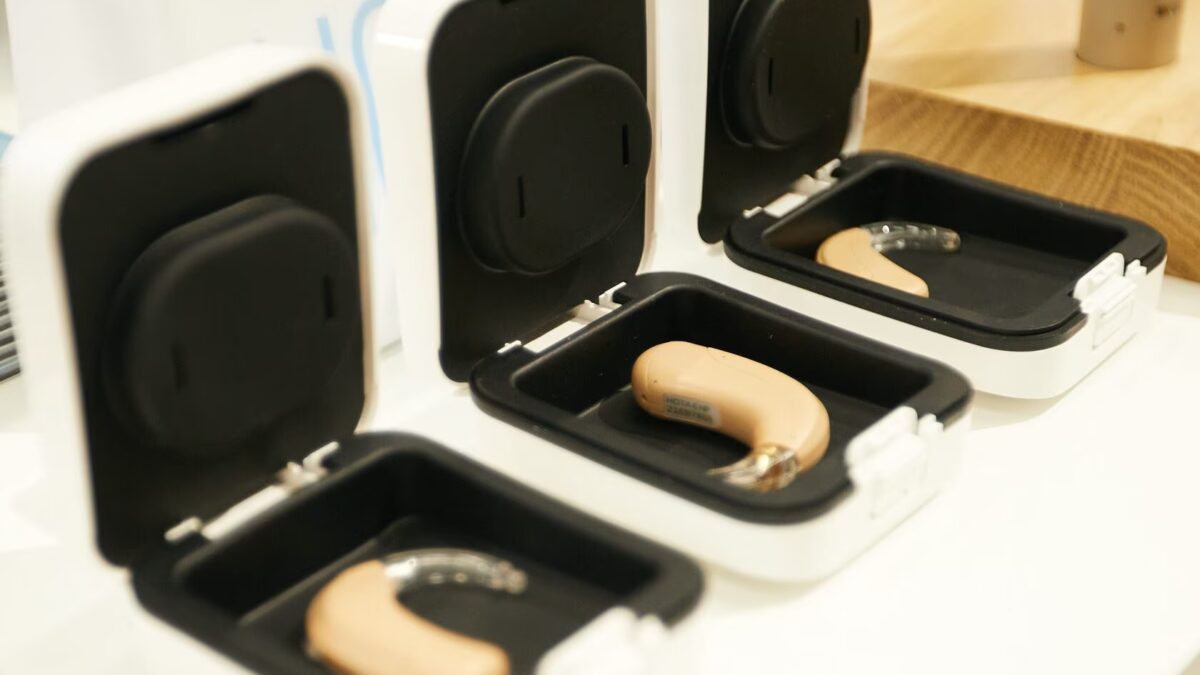
Tula-based Octava DM, a technology partner of Russian state corporation Rostec, produces the NOTA line of digital hearing aids-12 models designed to address various degrees of hearing loss. These devices are distributed nationwide through the Social Fund’s branches. In 2026, Octava DM secured key supply contracts in Saint Petersburg, Bashkortostan, and Chuvashia, and initiated its first international exports to Saudi Arabia.
- The NOTA range includes 12 models across three power levels, covering mild to profound hearing loss (grades I-IV).
- Updated NOTA2 and NOTA3 models with Bluetooth support will launch in summer 2025.
- According to Russia’s Federal State Statistics Service, over 5 million people in the country live with hearing impairments.
Evolution from Soviet-era analog to modern digital hearing aids
Octava’s roots trace back to the 1980s when its Tula factory produced analog hearing aids. Production paused for years until Octava DM revived manufacturing in 2022 at the same facility, now focusing on digital devices. The NOTA hearing aids process audio through 6, 8, 12, or 16 channels depending on the model, featuring acoustic environment analysis, speech signal focus, automatic noise reduction, and fast adaptation technologies for user comfort.
The upcoming 2025 NOTA2 and NOTA3 models introduce Bluetooth connectivity, wireless tuning, enhanced dust and water resistance, and expanded tools for audiologists to fine-tune fittings.

Domestic contracts and first international exports
In 2026, Octava DM secured tenders to supply hearing aids to the Social Fund offices in Saint Petersburg, the Republic of Bashkortostan, and Chuvashia, involving thousands of units under contract.
In February 2026, at the Innoprom Saudi Arabia industrial exhibition in Riyadh, Octava DM finalized agreements for its first overseas shipments. The hearing aids were showcased at a joint Rostec booth, highlighting Russia’s push to develop domestic medical technology amid ongoing import substitution efforts.
”In the current climate of import substitution, it’s especially important to develop and manufacture our own high-quality products, primarily in the medical devices sector,” said Lyubov Stalnova, CEO of Octava DM.
Stalnova emphasized the company’s close collaboration with the medical community to integrate expert feedback into device development.
Russia’s domestic hearing aid industry remains small compared to global giants like Apple’s AirPods Pro with Hearing Aid Compatibility or Samsung’s and Google’s newer offerings. Octava DM’s move to update its product line with Bluetooth and expand exports to markets like Saudi Arabia signals growing ambition to establish a foothold in both local and international hearing health sectors.
Looking ahead, the success of the NOTA2 and NOTA3 models-especially their ability to compete with globally established brands on features and price-will be key to Octava DM’s expansion. Furthermore, securing regulatory approvals and distribution partnerships in additional countries will determine how broadly these Russian-made hearing aids can reach users beyond national borders.