

Zoox’s autonomous robotaxi faces a surprisingly human challenge: passengers smoking, vomiting, and vandalizing the interior during test rides. The company discovered that sensors and autopilot couldn’t prevent the kind of bad behavior common in taxis. Testing in Las Vegas and San Francisco revealed that passenger misconduct forced Zoox to rethink its vehicle interiors entirely.
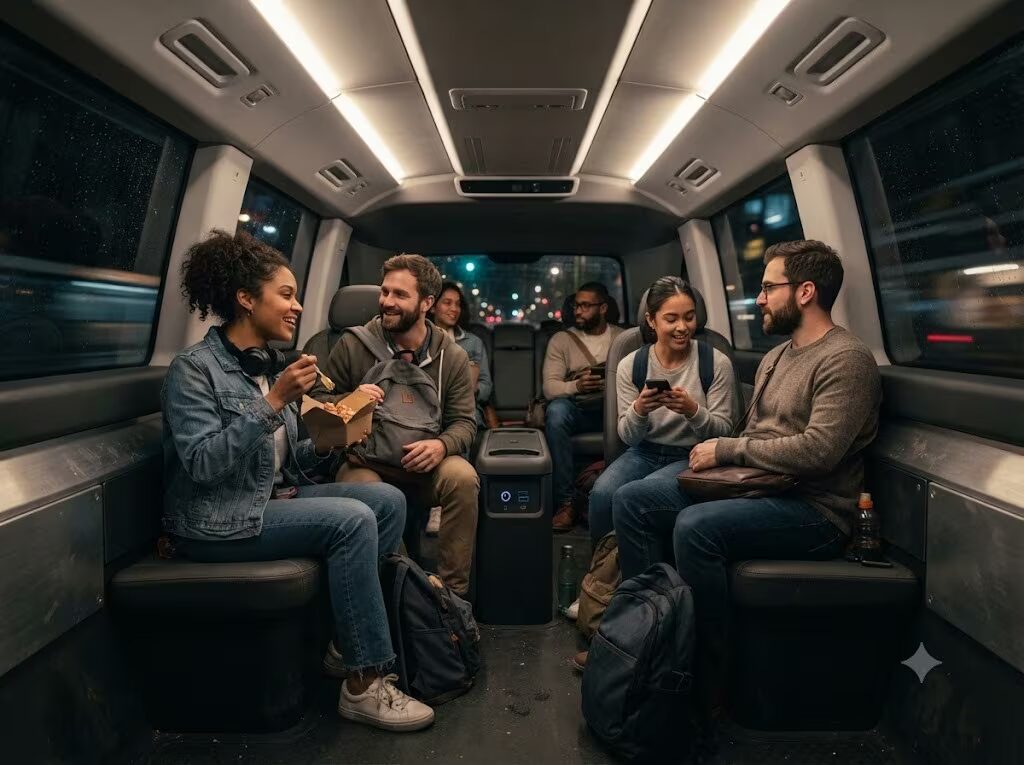
Since launching in September, Zoox’s driverless pods have transported over 500,000 riders. But as Chris Stoffel, the studio’s design director, explained, smoking bans are frequently ignored inside the cabins. Unlike conventional cars, Zoox’s vehicles lack steering wheels and driver seats-instead, passengers face each other in a compact cabin more like a small train car than a typical taxi. This layout may contribute to looser passenger discipline.
The most troublesome issue is passengers vomiting inside the cabins. Messes get trapped in seams and hard-to-clean crevices, making cleanup laborious and slow. For Zoox’s upcoming paid robotaxi services in Austin and Miami, the company is switching to water-resistant materials and surfaces that repel odors and withstand aggressive cleaning without damage.
For Zoox-which was acquired by Amazon in 2020 for over $1.2 billion-this represents a tough learning curve. The company designs its robotaxis from the ground up, not adapting existing models, aiming to eliminate the traditional driver’s seat entirely. This approach gives them more freedom to reimagine vehicle layouts but also removes the human element that typically monitors and manages passenger behavior during rides.
Other players in autonomous ride-hailing have encountered similar challenges. Alphabet’s Waymo has also reported incidents of passengers misbehaving in its robotaxis. As driverless services scale up, passenger conduct is shifting from a minor nuisance into a serious design and operational concern. Future vehicle designs will have to prepare for the realities of unruly passengers, not just handle complex driving algorithms.