

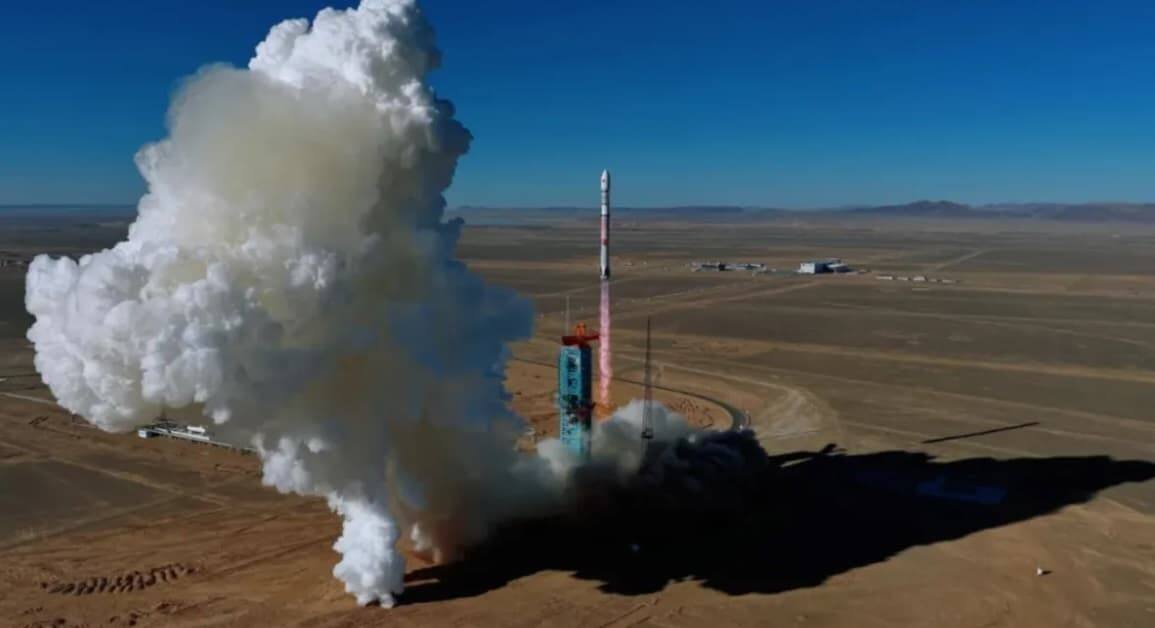
China’s private rocket builder LandSpace has cleared a key checkpoint for Zhuque-3 Y-2, a reusable methane-fueled launcher that has completed static fire testing in northwestern China. The milestone doesn’t put the rocket in orbit, but it does move the vehicle one step closer to the flight tests that will decide whether China’s answer to reusable heavy lift can actually land its first stage upright.
For readers searching for the latest Zhuque-3 static fire test update, the answer is simple: LandSpace says the ground test is done, and the next stage is flight testing. Reusable rockets are no longer a novelty in China; they are becoming part of the country’s broader push for large satellite constellations. That puts Zhuque-3 in familiar company with a global industry that now treats reusability less like a demo and more like a business requirement.
What Zhuque-3 is built to do
LandSpace says Zhuque-3 is 66.1 meters long, has a launch mass of 570 tons, and generates more than 750 tons of thrust. It uses liquid oxygen and methane, a propellant mix that has become popular with companies chasing cleaner engine reuse and lower operating costs than older kerosene-based designs.
- Length: 66.1 m
- Launch mass: 570 tons
- Thrust: more than 750 tons
- Fuel: liquid oxygen and methane
Why the Zhuque-3 static fire test mattered
Static fire testing is the dress rehearsal before a launch: the engines light while the rocket stays on the ground, letting engineers check the vehicle, the pad, and the way the two work together. LandSpace says that work has now been completed for Zhuque-3 Y-2 in the Dongfeng commercial space innovation pilot zone.
That kind of ground test is routine, but the stakes are not. The first Zhuque-3 launch on 3 December 2025 reached the target orbit with its second stage, yet the first stage failed to make a soft landing. For reusable rockets, that’s the whole game; reaching orbit is nice, but recovery is what makes the economics sing.
The landing test is the real milestone
The coming flight tests should answer the real question: has LandSpace fixed the landing problem, or is Zhuque-3 still in the awkward phase where the rocket works almost perfectly right up until the part that matters most? If the answer is yes, China gets a more credible contender in the reusable heavy-lift race. If not, it gets another reminder that making a rocket fly is one thing; getting it back in one piece is the expensive bit.