

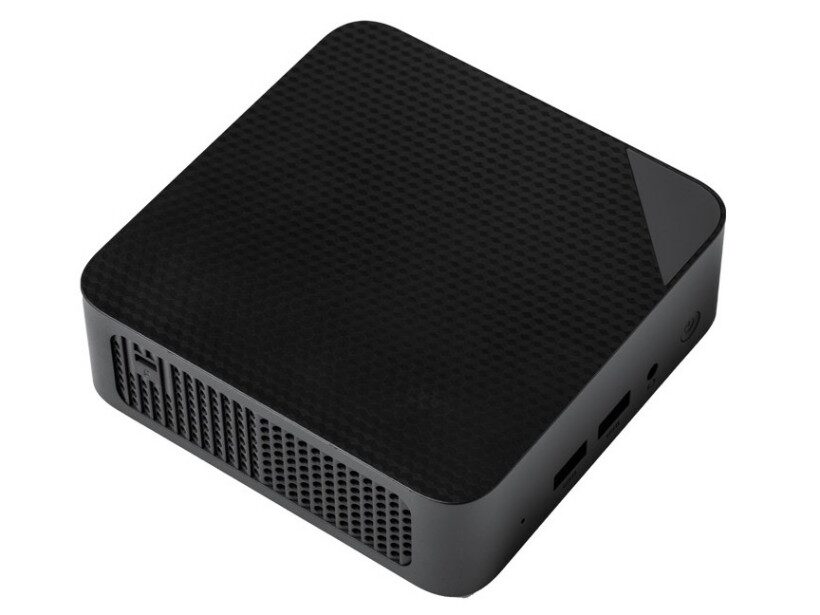
Maxtang has introduced the MUC-FP551, a compact industrial mini-PC built on AMD’s Zen+ Picasso platform and aimed at users who need a small machine that can handle more than light office duty. It ships with several processor options, including Ryzen 7 3700U, Ryzen 5 3500U, plus Ryzen Embedded R2314 and R2514 variants.
The formula is familiar, and that is the point: industrial and embedded PCs often trade novelty for predictability, wider temperature tolerance, and flexible I/O. Maxtang is leaning into that playbook with a chassis that measures 112.4 x 112.4 x 35.5 mm, support for 19 V power, and a configurable TDP range of 15-35 W.
Maxtang MUC-FP551 hardware and size
The MUC-FP551 is built around a compact metal case designed to operate between 0 and 50 °C. That makes it a better fit for kiosks, signage, controls, and other fixed installations than for the average living-room desk setup.
Inside, Maxtang gives buyers two DDR4 SO-DIMM slots for memory, an M.2 2280 slot and an M.2 2242 slot for storage, and an M.2 2230 slot for a wireless module. In other words, it is small, but not stingy.
Ports on the front and rear
The port selection is where the machine starts looking properly industrial rather than just ”mini”. Up front there is USB-A at 10 Gbps and a combined audio jack, while the rear panel adds USB-C ports at 10 Gbps and 5 Gbps, extra USB-A ports, two HDMI outputs, and gigabit Ethernet.
- Processor options: Ryzen 7 3700U, Ryzen 5 3500U, Ryzen Embedded R2314, Ryzen Embedded R2514
- Dimensions: 112.4 x 112.4 x 35.5 mm
- Operating temperature: 0 to 50 °C
- Power: 19 V, TDP 15-35 W
- Expansion: two DDR4 SO-DIMM slots, M.2 2280, M.2 2242, M.2 2230
Maxtang MUC-FP551 pricing and availability
Maxtang has not announced pricing for the MUC-FP551, which is the annoying little detail that determines whether a box like this is a tidy embedded buy or just another spec-sheet exercise. The hardware mix suggests a product built for system integrators rather than impulse shoppers, and that market is crowded with familiar players using Intel and AMD parts in equally compact shells.
If Maxtang wants the MUC-FP551 to stand out, it will need to compete on availability, long-term support, and board-level flexibility, not on raw speed. That is where these machines usually win or lose.