

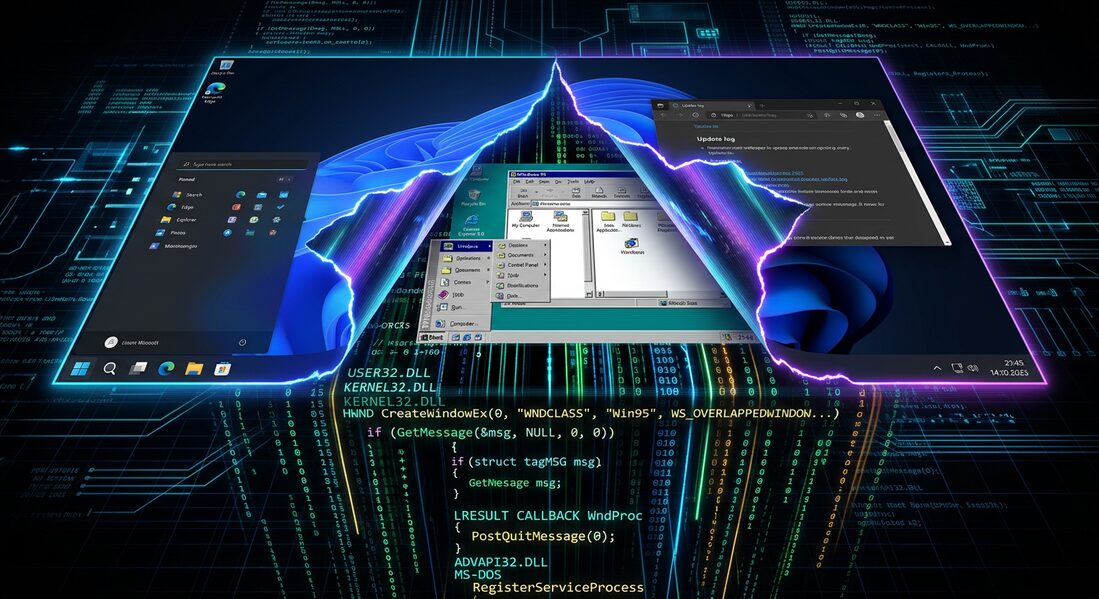
Windows 11 may look polished and modern, but Microsoft has now said the operating system still leans heavily on Win32, the application layer that traces back to the Windows 95 and NT era. That is less a confession than a reminder: compatibility is the feature that keeps the Windows empire stitched together, even if it means old code refuses to retire.
Microsoft Azure chief technology officer Mark Russinovich publicly acknowledged that Win32 remains the foundation for many apps, technologies, and entire user ecosystems in Windows 11. In other words, the company is still paying the bill for a decision made decades ago, and doing so because the alternative would break far too much software for far too many people.
Why Win32 still sits at the center of Windows 11
Russinovich did not frame the old layer as a mistake. He pointed to its broad compatibility and the sheer amount of software built around it, which is the kind of boring engineering reality that usually beats cleaner architecture in the real world. Microsoft has tried to move developers toward newer APIs and platforms, including WinRT, but none of those efforts fully displaced Win32.
- Win32 dates to the Windows 95/NT era.
- Windows 11 still depends on it for major parts of app support.
- Microsoft has tried newer APIs, including WinRT, without fully replacing it.
Microsoft has tried this before
This is also classic Microsoft: the company repeatedly promises a cleaner future, then discovers that the past is loaded into every enterprise machine on the planet. Apple can force more transitions because it controls a tighter stack; Microsoft has to keep legacy software running for businesses that still care more about stability than elegance.
Russinovich’s point lands because it strips away the usual marketing gloss. The old code is still there not because nobody noticed, but because too much of Windows depends on it to simply switch off.
What the Win32 admission means for Windows 12-era ambitions
The bigger question is how far Microsoft can modernize Windows without making Win32 less central. The company wants a more modular future, but every attempt has to survive the same test: will customers accept a prettier platform if it breaks the software they already trust? So far, Windows keeps answering that question the same way.