

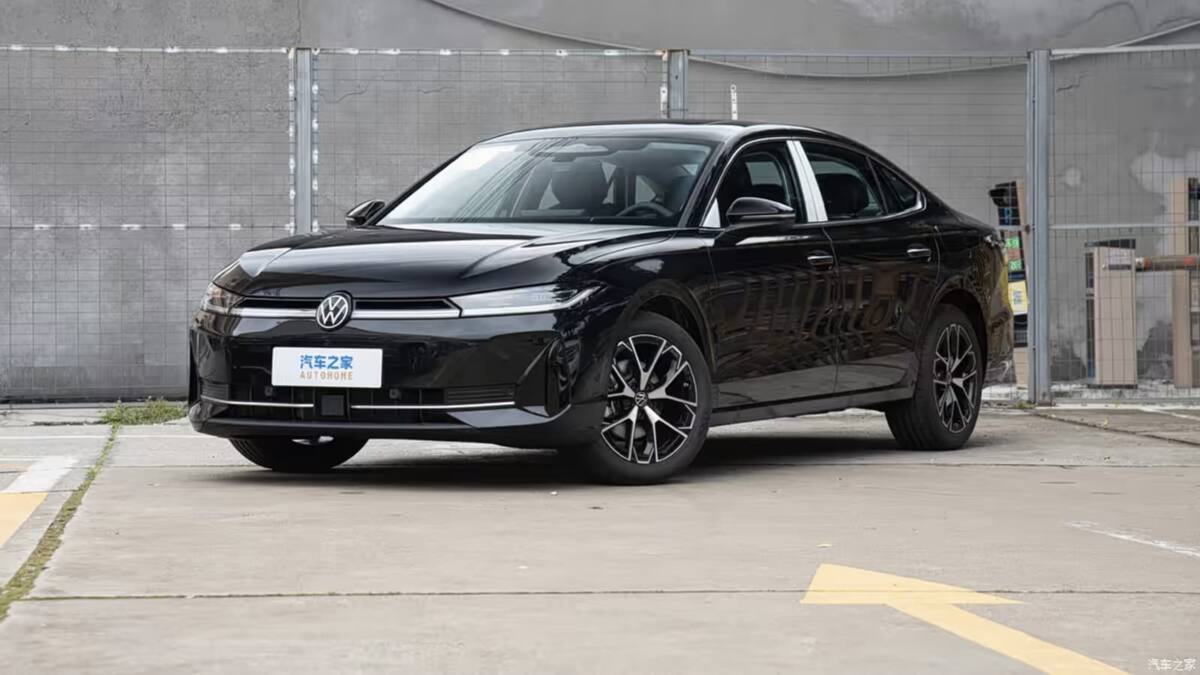
Volkswagen’s Chinese joint venture SAIC Volkswagen is lining up two plug-in hybrids for a debut on 29 May: the Passat ePro and the Tiguan L ePro. Both are Volkswagen PHEVs with the same hardware recipe, but the Passat is the longer-legged one on paper, claiming 1,468 km of total range to the Tiguan’s 1,423 km. The headline is not just distance; it’s how aggressively Volkswagen is using tech-heavy cabins and hybrid efficiency to keep its best-known nameplates relevant in a market where buyers now expect both low fuel use and a lot of screens.
Under the skin, the two cars are closely related. Each uses a 1.5-litre turbocharged EA211 petrol engine, one electric motor, a TQ251 transmission, and a 22 kWh traction battery. The combustion engine produces 129 hp, while the electric motor adds 197 hp, a combination that should do the heavy lifting in city driving and on shorter commutes where plug-in hybrids usually make the most sense.
Shared hybrid hardware under the bonnet
That setup also reflects a broader industry pattern: legacy brands are leaning on PHEVs as a bridge between full combustion and full EVs, especially in China, where the fight is fierce and product cycles move fast. Volkswagen is not alone here, but it is clearly trying to make these cars feel more modern than the average ”efficient family car” badge on the market shelf.
Passat ePro gets the bigger reboot
The Passat ePro has had the more dramatic visual overhaul. It gets new headlights, a continuous LED strip across the front, and an illuminated Volkswagen logo, plus dimensions of 5,017 x 1,850 x 1,489 mm and a wheelbase of 2,871 mm. In other words, this is not a light facelift dressed up as innovation; it is the sort of redesign that tells existing buyers Volkswagen wants the car to feel visibly newer from a glance across the car park.
Inside, the cabin follows the current trend toward screen-heavy dashboards. Volkswagen is fitting three displays on the front panel, including a 10.3-inch digital instrument cluster and a 12.9-inch media screen. That is hardly a shock in 2026, but it is the kind of detail that still matters because Chinese buyers often judge ”newness” by the number and size of screens before they even test the seat cushioning.
Tiguan L ePro keeps the same formula
The Tiguan L ePro follows the same design language, with revised LED lighting, a full-width light bar, and an illuminated VW badge. Its body measures 4,744 x 1,842 x 1,684 mm, with a 2,791 mm wheelbase, putting it squarely in the midsize SUV bracket. The cabin mirrors the Passat’s three-screen setup and adds a new steering wheel, along with a more comfortable front passenger seat – the sort of small interior tweak that matters more than marketing copy would like to admit.
For Volkswagen, the real question is whether this blend of range, familiar badges, and digital flash is enough to keep pace with domestic rivals that have turned plug-in hybrids into a spec-sheet arms race. The 29 May launch will show whether SAIC Volkswagen has built a convincing answer or just a more polished version of an old playbook.