

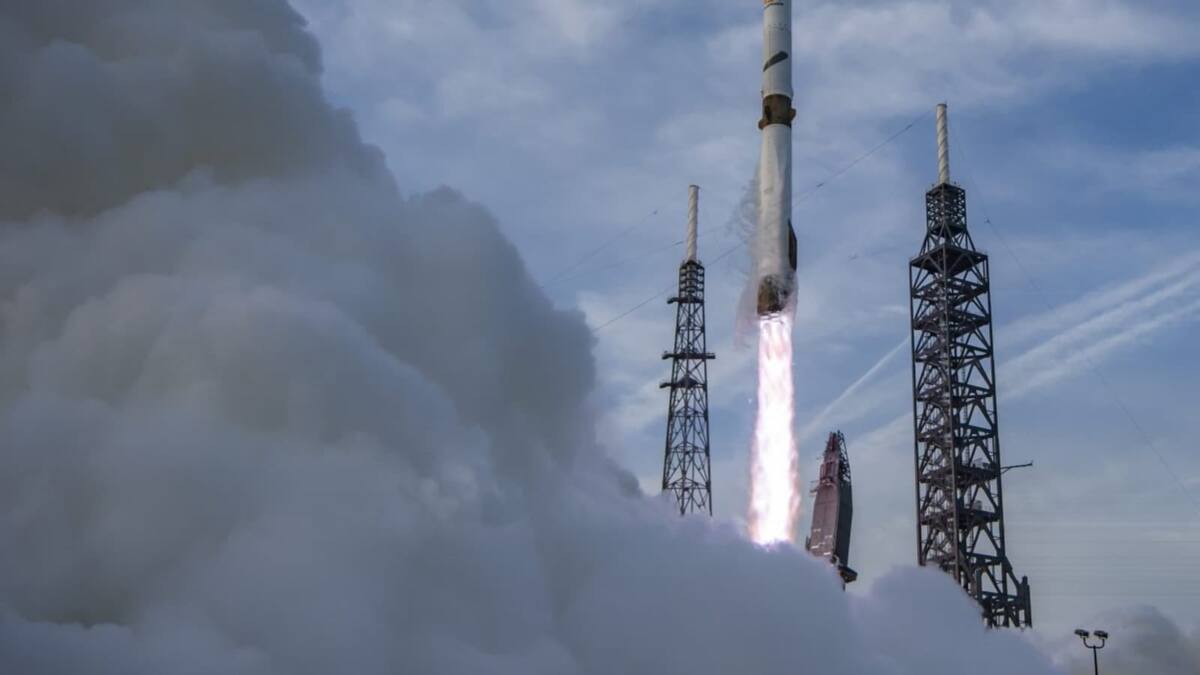
Blue Origin has cleared New Glenn for flight again after regulators signed off on the company’s investigation into the NG-3 failure. The decision restores the path to the next launch campaign, with New Glenn’s next mission now centered on NG-4. It also underlines how unforgiving orbital test programs are: one bad thermal event can turn a planned satellite deployment into expensive debris management.
The Federal Aviation Administration accepted and closed the final mishap report tied to the 19 April mission, which lost AST SpaceMobile’s BlueBird 7 after the second stage failed during its second planned engine burn. Blue Origin said the problem started with abnormal temperature conditions before that burn; FAA officials later said the direct cause was a leak of cryogenic propellant that froze part of the hydraulic system and triggered an engine-thrust anomaly.
What went wrong on NG-3
NG-3 had reached the point where New Glenn’s second stage, known as GS2, was supposed to do the careful work that turns a rocket launch into a satellite delivery. Instead, one of the two BE-3U hydrogen-oxygen engines did not reach full thrust, leaving the payload stranded in too low an orbit to recover. That kind of failure is especially costly because it happens late in the mission, after the hard part of launch has already been paid for.
- Mission: NG-3
- Date of incident: 19 April
- Failed component: GS2 second stage during its second planned burn
- Payload lost: BlueBird 7 from AST SpaceMobile
Nine fixes and a regulator watching closely
Blue Origin says its engineers identified nine corrective actions to prevent a repeat. The company has not disclosed the details, which is predictable in a competitive launch market where failure analysis is both a technical exercise and a bit of strategic secrecy. FAA approval is not a ceremonial rubber stamp here either: the agency said it will personally verify those nine items before New Glenn gets another launch clearance.
That extra scrutiny makes sense. New launch systems often spend their first few flights discovering edge cases the clean-room presentation never mentions, and heavy-lift vehicles are especially sensitive because upper-stage reliability is what separates a successful test from a ruined mission.
Blue Origin is already aiming at NG-4
Blue Origin is now preparing NG-4. Chief executive Dave Limp recently posted a video showing the rocket being transported and installed at the launch site, and said the next major step will be a full static-fire test on the pad. The company has not revealed the launch date or the payload, which keeps the suspense high but also tells you the schedule is still flexible.
AST SpaceMobile, meanwhile, has already moved on operationally. Three more BlueBird satellites are in Florida for a June launch on Falcon 9, which is the sort of pragmatic hedge satellite operators make when a new launcher stumbles. The company still is not walking away from Blue Origin, though, and says the next New Glenn flight for its network would carry four heavy communications satellites.
AST SpaceMobile keeps both doors open
That is the real commercial story: AST is not betting its entire constellation on a single rocket, and Blue Origin cannot afford more lapses if it wants customers to treat New Glenn as more than a promising science project with a big fairing. Space launch buyers remember reliability faster than marketing slogans, and the next flight will tell us whether this investigation was a reset or just a pause.