

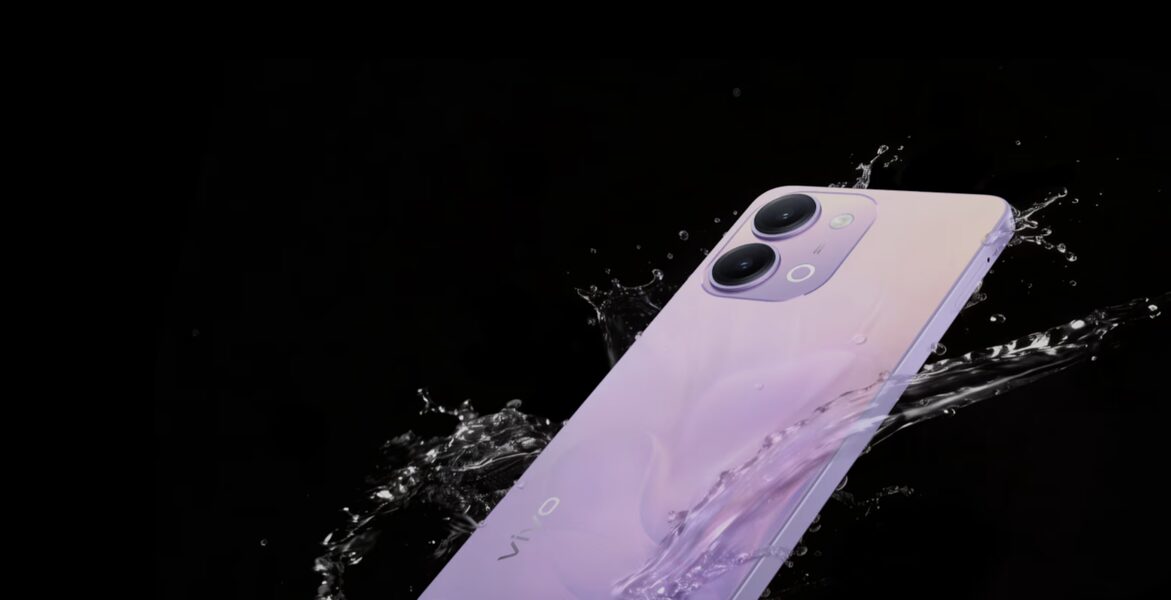
Vivo has launched the Y60 as a budget 5G phone that throws in a few specs usually reserved for pricier devices: a 120 Hz display, a 6500 mAh battery, and an IP65 rating. At a starting price of about 1799 yuan, or around $265, it is clearly aimed at buyers who want endurance and modern extras without paying midrange money.
The Vivo Y60 uses a 6.74-inch LCD panel with a 1600 x 720 resolution and refreshes at up to 120 Hz, which is still a neat trick in this price bracket. Power comes from Snapdragon 4 Gen 2, paired with 6 GB or 8 GB of RAM and up to 256 GB of storage.
Vivo Y60 specs and battery
- 6.74-inch LCD display
- 1600 x 720 resolution
- Up to 120 Hz refresh rate
- Snapdragon 4 Gen 2
- 6 GB or 8 GB RAM
- Up to 256 GB storage
- 6500 mAh battery
- 15-watt charging and reverse charging
That battery is the real headline. Vivo is also adding reverse charging, which is a handy extra for a phone that is likely to spend more time being used as a power bank than showing off benchmark scores. In the budget segment, battery size often beats raw performance in day-to-day appeal, and Vivo seems to know it.
Android 16, dual SIM 5G, and old-school extras
The phone runs OriginOS 6 based on Android 16 and keeps the camera setup simple: 13 MP on the back and 5 MP on the front. It also supports dual SIM with 5G, USB-C, a 3.5 mm headphone jack, an IR blaster, and a side-mounted fingerprint scanner.
Vivo is clearly leaning into the ”more for less” formula here. The company has packed in features that some larger brands have quietly trimmed away, while the low-resolution panel and basic cameras remind you where the savings went. Still, for shoppers in the affordable 5G segment, the Y60 looks built for battery life first and bragging rights second.
IP65 protection and the starting price
Beyond the usual checklist, Vivo says the Y60 carries IP65 protection and SGS certification for drop resistance. That combination is not common at this price, and it gives the phone a sturdier pitch than the average budget slab with a big battery and little else.
The question is whether rivals respond with the same mix of endurance and extras, or simply cut prices harder. In a segment where every yuan is contested, the Y60’s challenge will be simple: prove that a 120 Hz screen and a 6500 mAh battery are enough to make a $265 phone feel less cheap.