

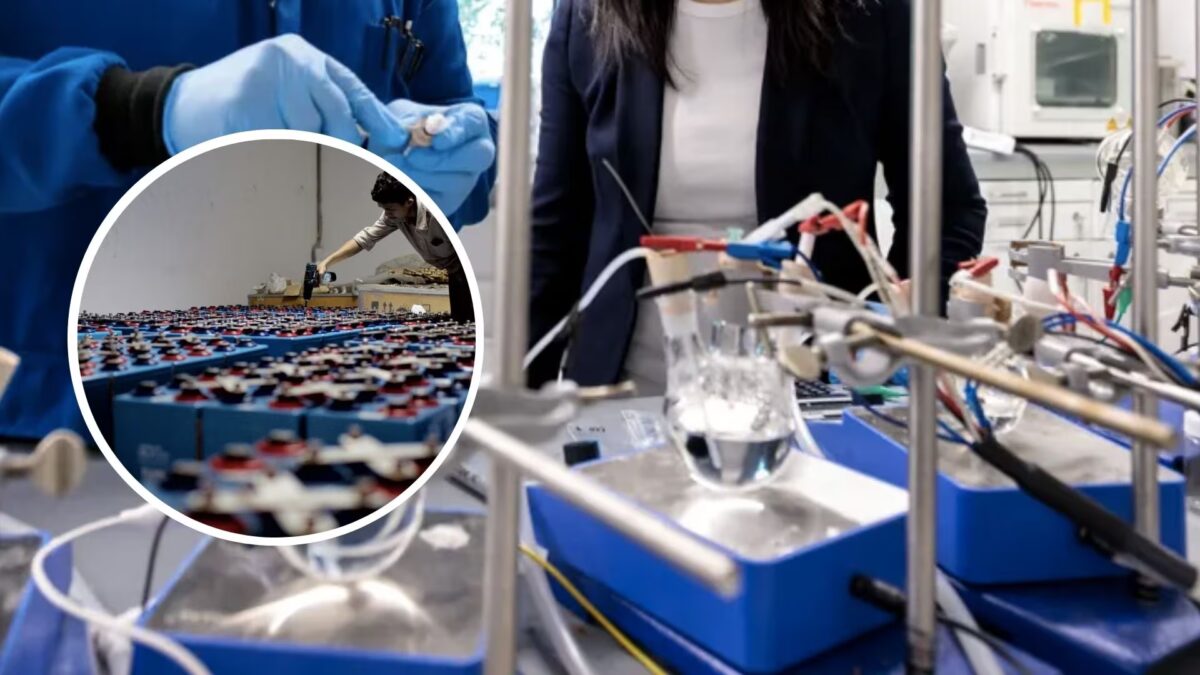
Researchers at the University of Chicago have unveiled an electrochemical technique that extracts lithium with approximately 99% purity, even from solutions heavily dominated by sodium ions. These challenging mixtures typically contain roughly 1,000 sodium ions for every lithium ion, a ratio that traditionally undermines selective separation. If scalable, this approach could simplify lithium production from brines and recycled materials, reducing reliance on harsh chemicals and lengthy evaporation processes.
Electrochemical lithium extraction using cobalt oxide
The core of the method is electrochemical: under an applied current, lithium ions integrate into the layered structure of a host material-in this case, cobalt oxide. The difficulty lies in sodium ions, which closely resemble lithium in size and charge, often competing for the same insertion sites and compromising purity.
Instead of inventing a new chemical reagent, the researchers tweaked the kinetics of the ion insertion process. By optimizing the particle size of the cobalt oxide and slowing down ion penetration, they allowed lithium ions to embed firmly while nearly excluding sodium ions. This delicate balance yielded high-purity lithium even from heavily sodium-laden solutions.
Impact on lithium extraction from brines and recycled materials
This breakthrough addresses a significant pain point for lithium extraction. Today, lithium production from salty brines mostly depends on aggressive chemical treatments or massive evaporation pools, which extend extraction times to months. Companies like Lilac Solutions, Standard Lithium, and ExxonMobil are developing direct lithium extraction technologies aimed at cutting water use, land footprint, and processing time.
Rising lithium demand drives innovation in extraction methods
The surge in lithium demand, driven by electric vehicles and stationary energy storage, is accelerating research in this area. The International Energy Agency estimates that lithium consumption by the battery sector has multiplied over recent years and will rise substantially by 2030. Methods that efficiently separate lithium from sodium and magnesium in complex brines attract strong investor and industrial interest.
For the University of Chicago team, the next challenge is scaling up beyond lab conditions to test economic viability on industrial-grade inputs and large volumes of sodium-rich solutions.