

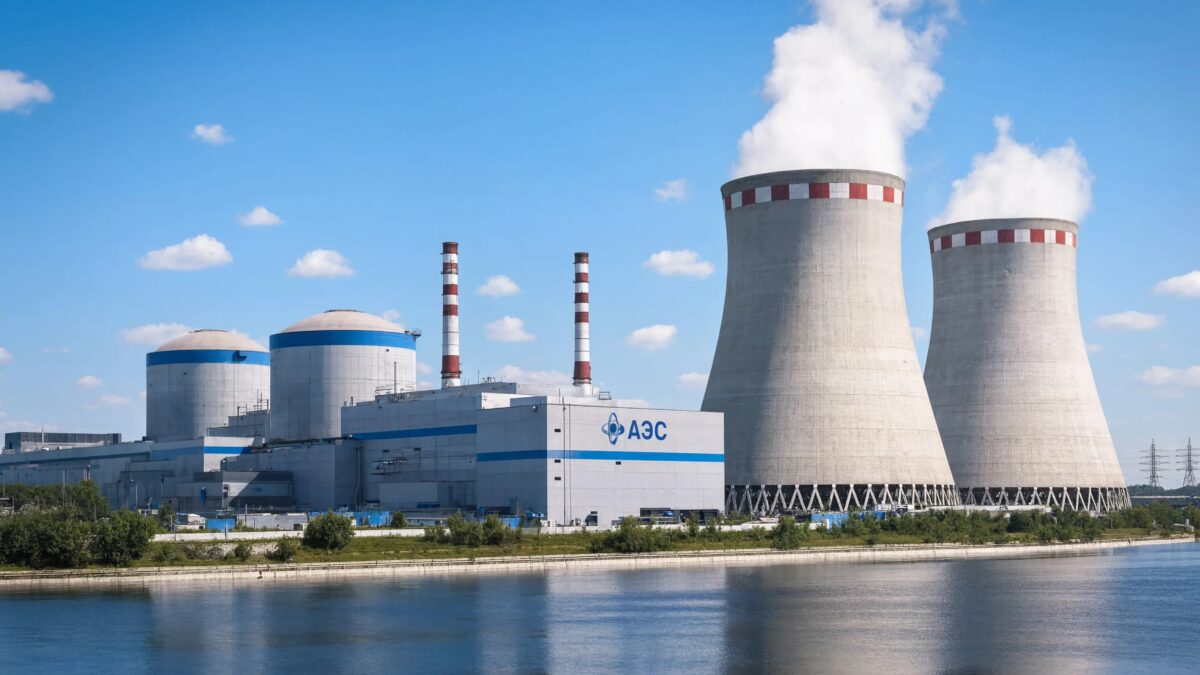
Scientists from the University of Manchester, the UK’s National Nuclear Laboratory, and Clemson University have discovered a surprisingly straightforward way to trap radioactive strontium-90 from water-using crushed concrete leftover from dismantled nuclear plants. By treating this concrete rubble with phosphates, they enhanced its ability to capture up to 98% of strontium-90 within just 48 hours, offering a novel method to repurpose nuclear construction waste instead of simply disposing of it.
Strontium-90 is a notoriously troublesome byproduct of nuclear fission, with a half-life of roughly 28.8 years. It easily leaches into groundwater and accumulates in ecosystems because it chemically mimics calcium. Contamination by this isotope has been documented at sites like Sellafield in the UK, Hanford in the US, and in major nuclear disaster zones such as Chernobyl and Fukushima Daiichi.
In the experiments, researchers ground down concrete debris from nuclear facilities and immersed it in synthetic groundwater containing strontium. Under oxygen-rich conditions, the material removed approximately 82% of the radioactive contaminant over three months. This works because oxygen triggers the formation of calcite in the concrete, into which strontium ions are incorporated, effectively locking them into the mineral’s crystal structure.
Without oxygen, the efficiency plummeted to about 14%, far too low for practical water remediation. However, when the concrete was treated with phosphates, performance soared: in an aerobic environment, the modified concrete bound up to 98% of strontium-90 in just 48 hours. This phosphate treatment creates additional chemical sites on the concrete’s surface that strongly hold the radioactive ions.
How phosphate-treated concrete captures strontium-90
- Crushed concrete from nuclear plant dismantling is ground into fine particles.
- The concrete rubble is treated with phosphate compounds to enhance sorption sites.
- When immersed in oxygen-rich, strontium-contaminated water, calcite formation incorporates strontium ions.
- The phosphate treatment further increases chemical binding sites, boosting strontium capture efficiency.
- Within 48 hours, up to 98% of strontium-90 is trapped from the water.
Advantages of using treated nuclear concrete for radioactive cleanup
- Transforms low-level radioactive construction waste into an effective remediation tool.
- Significantly reduces the volume of radioactive waste sent to landfills.
- Offers a cost-effective alternative to specialized materials like zeolites and apatite minerals.
- Utilizes abundant waste material from increasing nuclear facility decommissioning.
- Potentially streamlines cleanup operations in countries with large-scale nuclear projects.
The significance here goes beyond the impressive 98% capture rate. The International Atomic Energy Agency forecasts a surge in nuclear facility decommissioning over the coming decades, leading to a growing volume of low-level radioactive construction waste. Conventional methods for strontium removal rely on zeolites, phosphate-based sorbents, and apatite mineral barriers. This new approach flips the script: instead of discarding concrete waste, it transforms it into a cost-effective cleanup tool.
Current international efforts to manage radioactive liquid waste often focus on specialized materials that can be expensive or limited in availability. Repurposing demounted nuclear concrete not only taps into an abundant resource but could also streamline cleanup operations worldwide, especially in countries facing large-scale nuclear decommissioning challenges.
Future testing and implications for radioactive waste management
Going forward, it will be important to test this phosphate-treated concrete under real-world conditions, including variable water chemistry and in situ oxygen levels. Success could usher in a new class of sustainable sorbent materials derived from nuclear industry byproducts, reshaping radioactive waste management strategies in the decades ahead.