

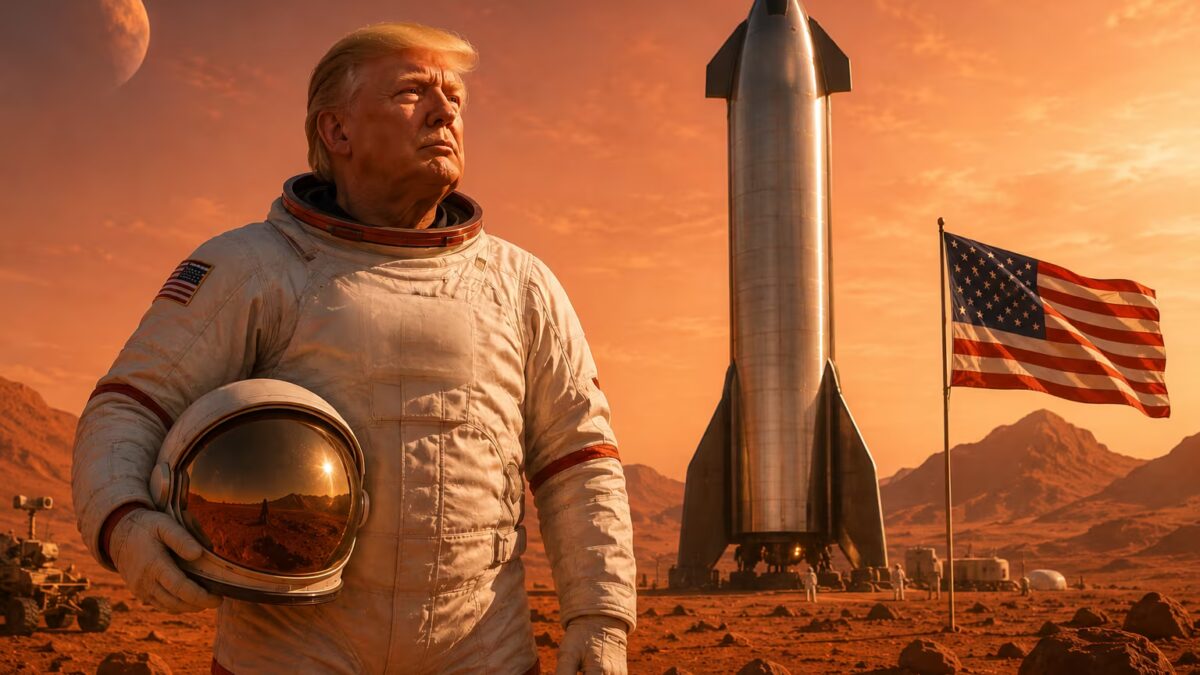
Donald Trump declared that a U.S. mission to Mars could launch ”very soon,” but made it clear that returning humans to the Moon comes first. Speaking in Washington at an event marking the 250th anniversary of the Declaration of Independence, the president emphasized a lunar comeback before aiming for the Red Planet. The U.S. space agency NASA, central to these plans, currently prioritizes the Artemis program as the next step.
During his speech, Trump said, ”We will go to Mars very soon,” then immediately added, ”We are going to the Moon first, and then beyond.” He framed the effort as part of catching up and surpassing rivals, noting that the U.S. had previously ”lost to China and Russia in space,” but is now moving ”forward by leaps and bounds.”
NASA’s Artemis program focuses on returning humans to the Moon
No specific timelines or new milestones came from the White House, making the comments feel more like political grandstanding than an update on space policy. The nearest official target remains NASA’s Artemis program, which aims to send astronauts around the Moon on Artemis II, with the lunar landing delay pushing Artemis III to at least 2027.
Timeline estimates for crewed missions to Mars
Public estimates from NASA officials for Mars missions remain much further out. NASA administrator Jared Isaacman recently mentioned plans to deploy a crewed lunar base by 2032 and suggested human missions to Mars before 2040. Experts agree that a manned Mars expedition requires breakthroughs in several areas:
- Heavy-lift rocket technology
- Moon-based infrastructure
- Long-duration life support systems
- Radiation shielding
Competition with China drives US lunar and Mars ambitions
In the context of a growing space race with China, Trump’s statement fits a broader competition narrative. Beijing aims to land taikonauts on the Moon before 2030 and is constructing lunar infrastructure through its Chang’e missions. The U.S. counters with Artemis and partnerships with private companies like SpaceX, but when it comes to Mars, NASA still lacks a ”very soon” timeline for crewed flights.
Challenges facing NASA’s Mars mission schedule
As Washington pushes its lunar agenda, the big question remains how quickly NASA can turn Mars ambitions into a concrete schedule. With international rivals advancing and technical challenges mounting, the coming years will test whether the White House’s promises can translate into missions beyond Earth’s orbit or remain aspirational rhetoric.