

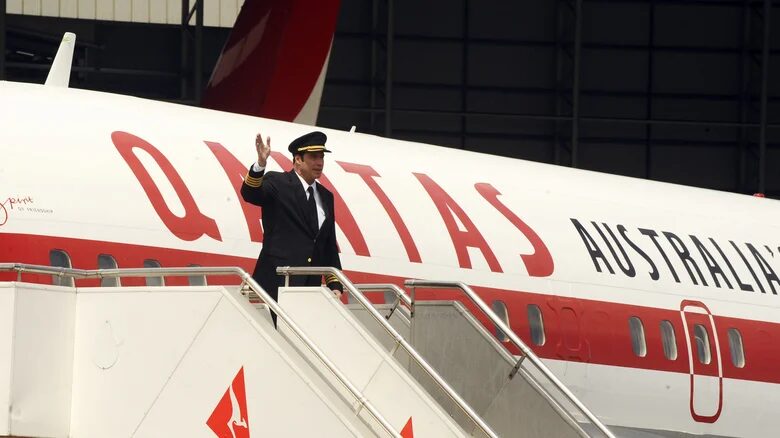
John Travolta’s Boeing 707-138B has spent years as one of aviation’s great parked celebrities, but the Boeing 707 is now on the move at last. The aircraft, once owned by Frank Sinatra, is reportedly headed to Australia for restoration after a drawn-out saga involving U.S. regulators, a pandemic delay, and a plan that switched from flying the plane to shipping it in pieces.
That makes the old Qantas bird more than just a rich-guy toy with a better wardrobe. It is a 1964 Boeing built as one of only 13 examples for Qantas, with a shorter fuselage than standard 707s so it could serve routes other jets could not.
A celebrity Boeing 707 with airline history
The 707-138B later flew with Braniff International Airways before Sinatra bought it in 1972. Travolta acquired it in the late 1990s, used it for family travel, and eventually repainted it in Qantas colors as a nod to its origins. The actor, who has held a pilot’s license since he was 22, built up licenses that let him fly everything from small aircraft to large passenger jets.
The plane’s destination is the Historical Aircraft Restoration Society in Australia, an all-volunteer group that runs two museums focused on preserving aviation history. That’s a fitting home for an aircraft with this much backstory, because most celebrity possessions fade fast; this one has airline provenance, film-star glamour, and an actual technical pedigree.
Why the jet had to be dismantled
The original plan was to fly the aircraft from the U.S. to Australia, but U.S. regulators denied that move. COVID-19 added more delay, and the museum ultimately switched to sea freight through Wallenius Wilhelmsen. In early April 2026, the aircraft was seen in pieces as it was loaded onto a ship at the Port of Brunswick.
It is expected to reach Port Kembla in New South Wales in early May before moving on to Shellharbour Airport. CBS News reported that the restoration target is ”taxi condition,” which would be enough to move under its own power and, maybe, take to the sky again. That is a far more realistic goal than rushing for a museum-floor quick fix; aircraft this old do not respond well to optimism.
What the museum plans next
No restoration timeline has been shared, and that silence is probably wise. Projects like this tend to stretch for years, especially when they involve aging airframes, volunteer labor, and parts that stopped being common decades ago.
The society already has other headline-friendly hardware, including a Boeing 747-438 nicknamed ”The City of Canberra,” which members want to keep in service with Qantas, and the world’s last flying Lockheed Super Constellation. If the 707 does fly again, it will join a very short list of classic airliners that survived both celebrity ownership and the scrapyard.
The real question now is whether this trip becomes the beginning of a full revival or just a very expensive relocation. Either way, the plane has already outlasted a lot of people’s careers, and it is not done collecting stories yet.