

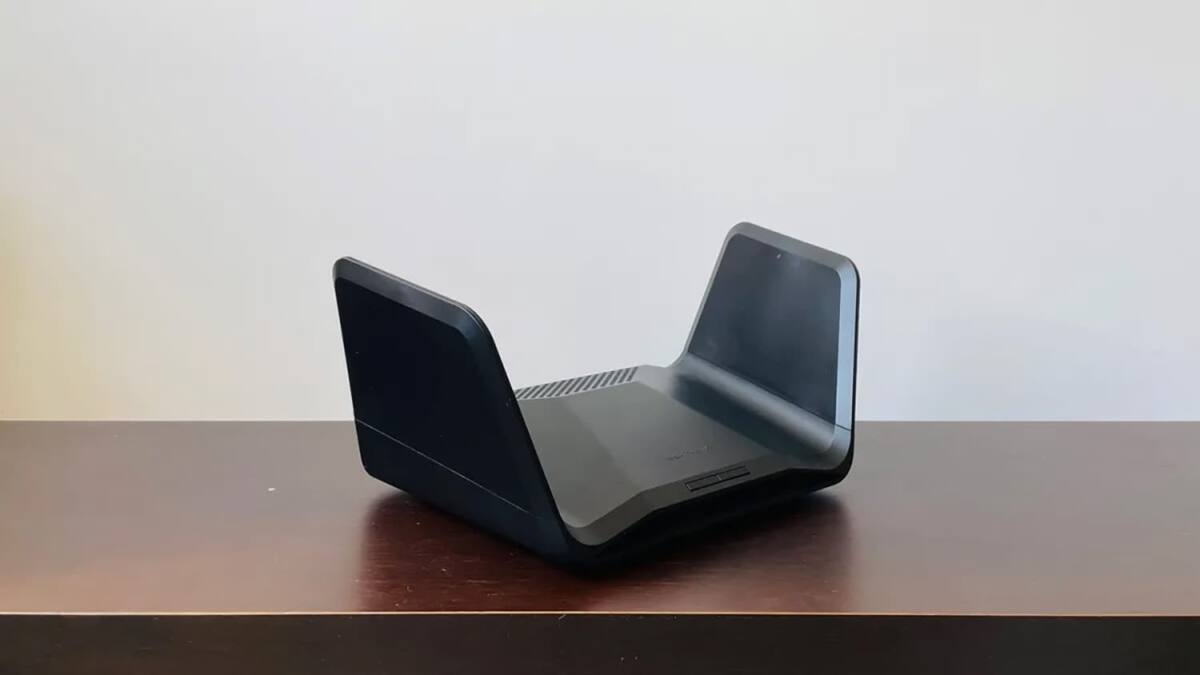
The battle over who gets to call themselves ”American” in the router aisle just got louder. Netgear has countersued TP-Link in federal court in Delaware, accusing its rival of misleading advertising and of dressing up a business still rooted in China as something more U.S.-made than it really is.
The dispute centers on TP-Link’s claim to be an American company, while Netgear argues the brand’s corporate structure, staff, and manufacturing remain heavily tied to China. In the U.S. market, that kind of argument can matter almost as much as download speed claims.
Netgear’s Delaware filing targets TP-Link’s structure
Netgear says TP-Link has been presenting itself as an American company after a corporate reorganization in 2024, even though major parts of the business still appear to be concentrated in China. In the filing, Netgear points to more than 13,000 employees in TP-Link’s Chinese operations in 2024, including about 9,000 at manufacturing sites, versus roughly 350 staff in the United States.
The complaint also says TP-Link’s Vietnam operations are mainly final assembly lines, with almost all components coming from China. That detail matters because assembly is not the same thing as a full manufacturing base, no matter how much corporate language tries to blur the gap.
- Forum: federal court in Delaware
- Main claims: unfair advertising and consumer deception
- Netgear’s argument: key business functions remain heavily tied to China
A fight that started with TP-Link’s own lawsuit
This is not a one-way punch. TP-Link first went to court after saying Netgear had spread false claims and linked the company to cyberattacks that U.S. authorities attribute to Chinese hacker groups. Netgear’s countersuit now flips the script: instead of arguing over security rhetoric alone, it is attacking how TP-Link describes its corporate identity.
That tack is smart legal theater, because corporate nationality is suddenly a hot-button issue in telecoms hardware. Competitors are no longer just fighting over shelves and margins; they are fighting over how regulators, retailers, and buyers interpret the same logo.
U.S. regulators are already watching TP-Link
Netgear’s case lands as Washington is already taking a closer look at TP-Link. The U.S. Department of Defense recently added TP-Link Technologies to a list of Chinese companies it says are tied to China’s defense sector, and other agencies are circling too, including the Department of Commerce, the FCC, the FTC, and regulators in several states.
TP-Link rejects the accusations and says it operates as an American structure, is not controlled by any foreign government, and makes equipment for the U.S. market in Vietnam. The company may win some of that argument in court, but the bigger problem is that ”where is this company really from?” has become a far less technical question than it used to be.
What happens if the court starts unpacking supply chains
If this case keeps moving, expect both companies to spend a lot of time on organizational charts, manufacturing footprints, and lawyer-approved definitions of ”American.” The deeper the court digs, the more this looks like a preview of a broader industry problem: consumer networking brands built on global supply chains now have to defend their passports as well as their performance claims.