• 2 min read
Tin oxide cuts indium from 31% solar mini-module
A 31% efficient commercial-size tandem solar mini-module replaces scarce indium with tin oxide, which costs 1% as much.
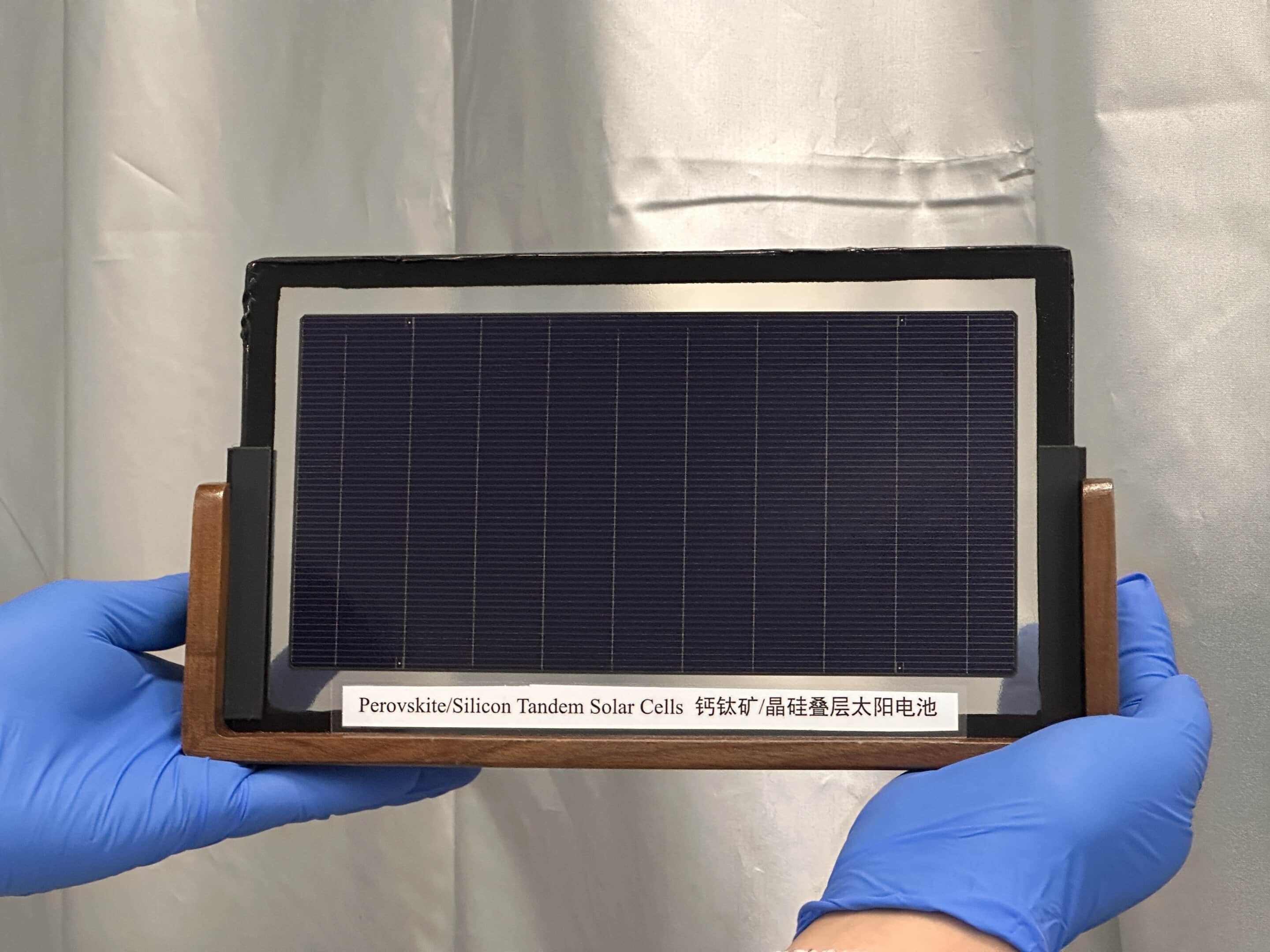
Image: TechXplore
Researchers have built the first commercial-size, high-performance tandem solar cell that avoids indium, a scarce and expensive metal used in many electronics. The international team replaced indium-based oxide with abundant tin oxide, which costs 1% as much, while maintaining strong performance.
The work, published in Science, could help move perovskite tandem solar cells from laboratory demonstrations toward commercial production. Tandem cells combine multiple light-absorbing layers to produce more electricity from the same sunlight than conventional single-junction devices.
A commercial-size indium-free tandem cell
The researchers used a low-damage reactive plasma deposition (RPD) process to produce tin oxide films. The material served as the recombination layer and, later, as the front and rear transparent electrodes.
The resulting mini-module reached a certified efficiency of 31.0% across 207.9 cm². The team also reported a certified efficiency of 33.% on 1 cm², according to Yuan Cheng, a professor at Monash Suzhou and the Department of Materials Science and Engineering at Monash.
“Considering the cost of tin is a mere 1% of that of indium, this breakthrough unveils a new material paradigm and a highly viable engineering route for low-cost, sustainable and scalable tandem photovoltaics.”
The devices also showed improved durability, withstanding heat and humidity and maintaining strong performance during more than three months of outdoor operation. Cheng said exceeding 30% efficiency in a commercial-size tandem module demonstrates that performance can be retained at larger scale without relying on scarce, high-cost materials.
Recommended reading
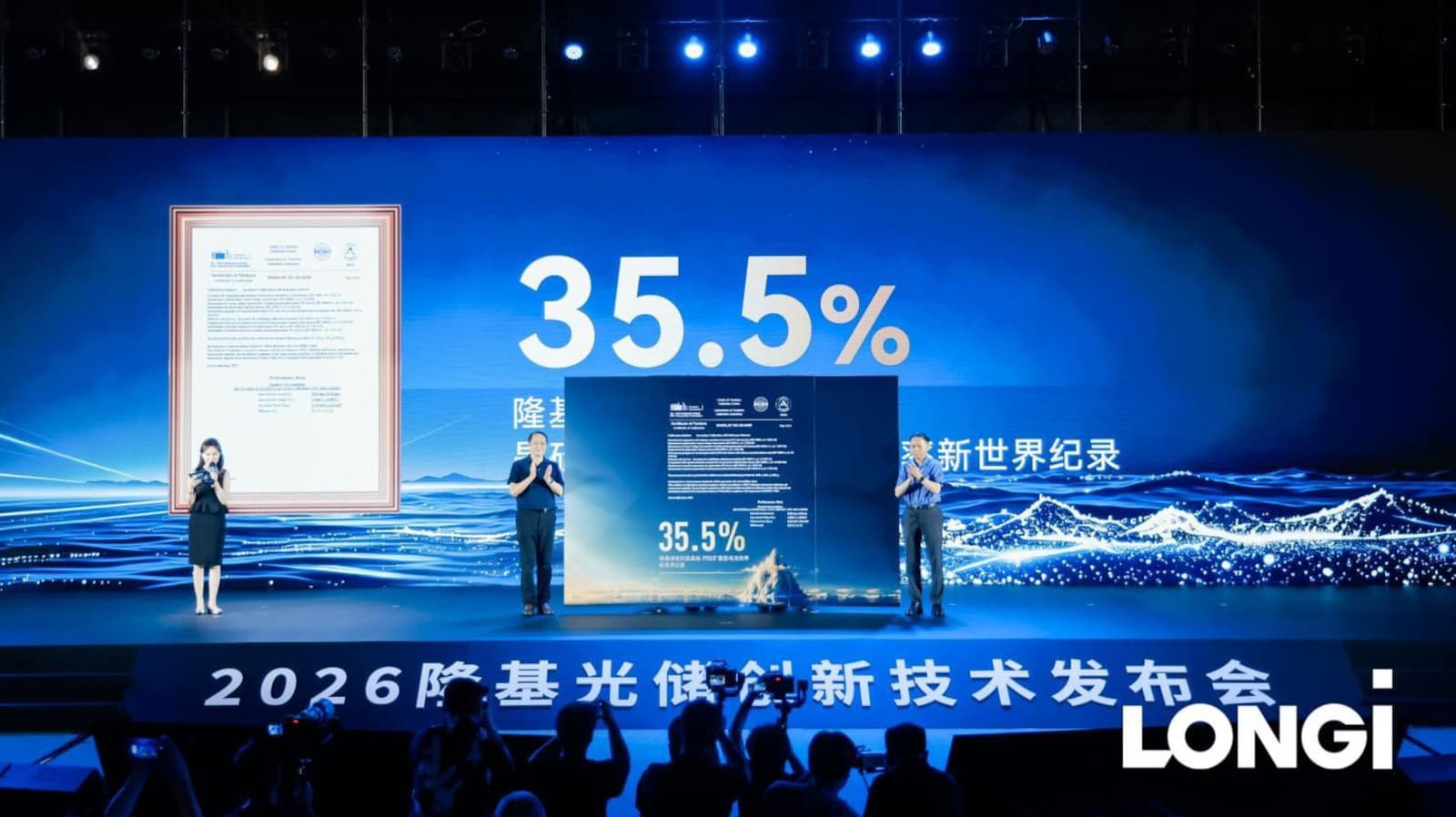
LONGi Claims 35.5% Solar Cell Efficiency
The study is titled “Indium-free perovskite/silicon tandem solar cells with tin oxide recombination layer and electrodes.” It was published by Wei Shi et al. in Science in 2026. DOI: 10.1126/science.aef5355.
Who’s behind this story?
Sadie Harley has a BSc in Life Sciences & Ecology, a microbiology laboratory background and pharmaceutical news experience spanning oil, gas and renewable industries.
Andrew Zinin holds a master’s degree in physics and has research experience. He is a longtime science news enthusiast and contributes to Science X’s editorial work.

Frontier Editor
Dan is our resident futurist, covering electric mobility, space exploration, and the smart home. He's interested in atoms just as much as bits. Whether it's a new battery chemistry, a reusable rocket, or a protocol that finally makes IoT devices talk to each other, Dan breaks down the engineering that pushes humanity forward.
via TechXplore