

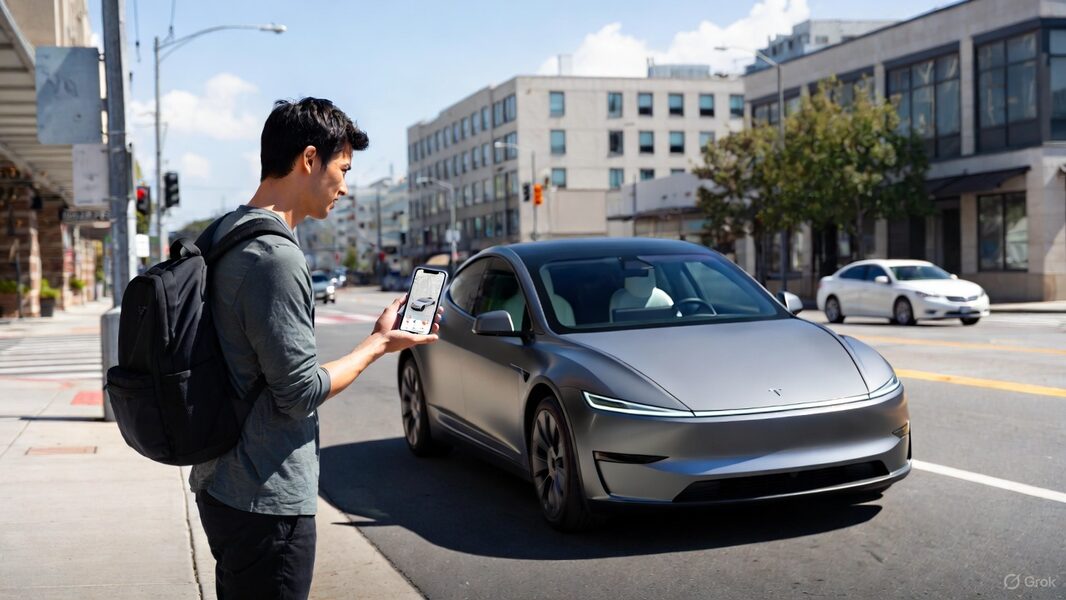
Tesla has brought its Robotaxi app to Android, widening access to a service that was previously limited to iOS. That means hundreds of millions more smartphone users can now summon a Tesla autonomous ride, watch the fare and arrival time, and manage the trip from their phone.
The move is less about bragging rights than scale. If Tesla wants Robotaxi to feel like a real transport product rather than a demo with wheels, Android is the obvious next stop; in many markets, it is the default phone platform, not the exception. Rivals in ride-hailing and autonomy have spent years fighting for that same habit: making the app the place where the service begins, not the car.
After signing in with a Tesla account, a rider can pick a destination on the map, check the price, and book the car. Once it arrives, the passenger confirms the number, gets in, and starts the ride from the screen or the app. It is a tightly controlled flow, which makes sense for a service that still needs to reassure users before it can win them over.
What Tesla Robotaxi lets riders do
- Sign in with a Tesla account
- Select a route on the map
- See the cost and estimated arrival time
- Confirm the vehicle number before boarding
- Control the ride from the in-car screen or the app
- Adjust climate, media, seating, and the drop-off point
- Track the route in real time and rate the trip at the end
Tesla is turning Robotaxi into a broader service
Robotaxi is no longer just a preview of Tesla’s autonomy pitch. The company says the service is already running and expanding in several U.S. cities, while it has also started serial production of a fully driverless two-seat EV with no steering wheel or pedals. Those are the sort of details that suggest Tesla wants the conversation to shift from ”can it work?” to ”how fast can it scale?”
That matters because the competition is not standing still. Waymo has spent years normalizing robotaxi rides in select U.S. cities, and Tesla is trying to answer with a more consumer-friendly software layer that makes the whole experience feel familiar before the first meter starts moving. If it keeps broadening access and tightening the user flow, the app may become the sharpest part of the Robotaxi pitch.
What happens after Android
The next question is whether Tesla can keep the rollout from feeling like a novelty and turn it into a habit. Android gets the audience; reliability, coverage, and wait times decide whether those users come back tomorrow.