• 3 min read
Piaget’s 2026 lineup leans hard on stone dials
Piaget used Watches & Wonders 2026 to do what it does best: mix slim cases, precious metals, and decorative stones, then charge accordingly. The Piaget 2026 lineup ranges from a relatively restrained Polo Date to a handf
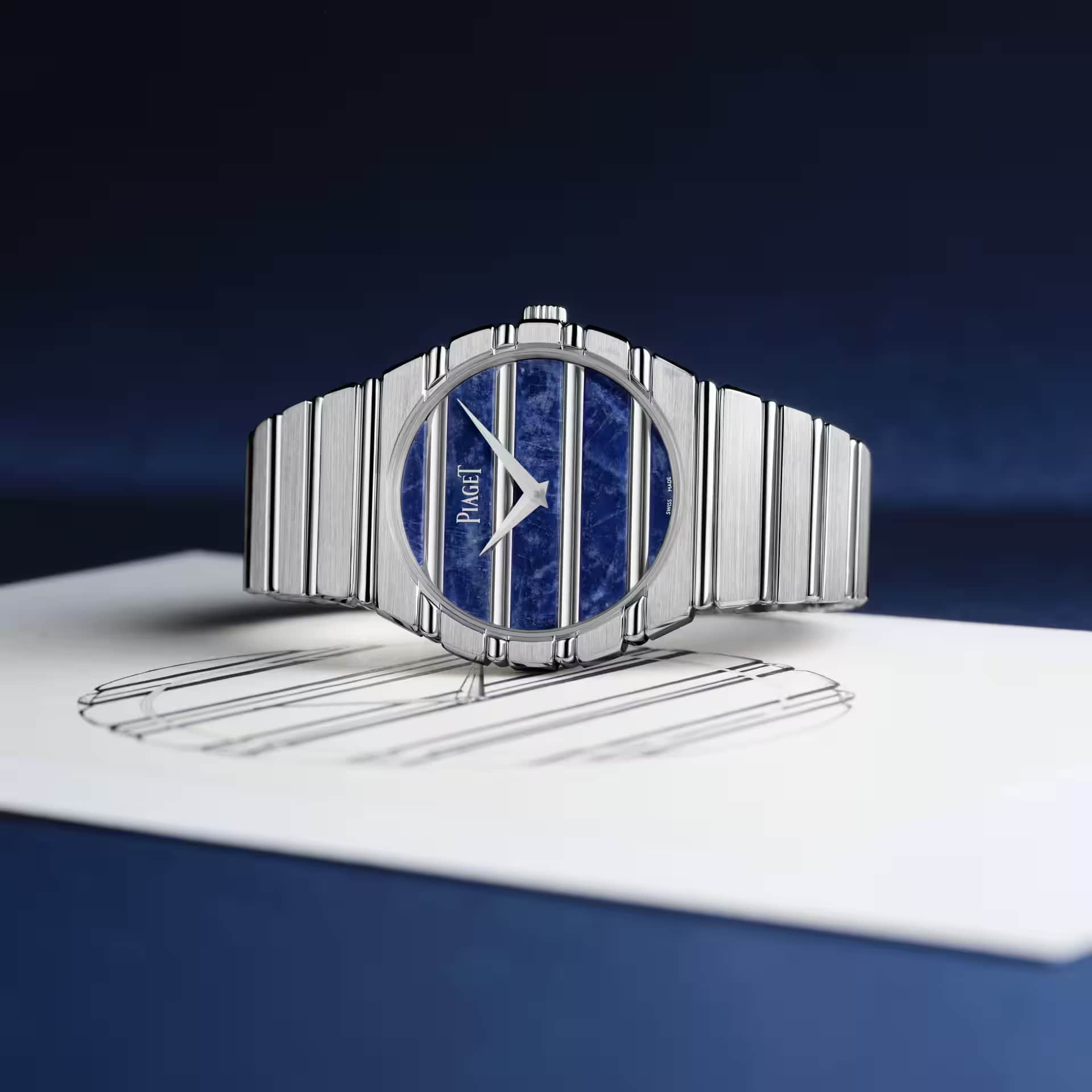
Image: pandatells.com
Piaget used Watches & Wonders 2026 to do what it does best: mix slim cases, precious metals, and decorative stones, then charge accordingly. The Piaget 2026 lineup ranges from a relatively restrained Polo Date to a handful of models that feel like jewelry first and timepieces second – which, for this brand, is hardly a criticism.
Piaget Polo 79 and Polo Signature Date 42
The headline act is the Piaget Polo 79 with a sodalite dial and a white-gold case measuring 38 x 7.45 mm. Because the stone covers the face, there is no hour scale, and the automatic movement offers 44 hours of power reserve. Piaget says the watch will cost CHF 84,500, which is a polite way of reminding everyone that “sporty” is doing a lot of work here.
Nearby in the catalog sits the Piaget Polo Signature Date 42, a broader family of watches in steel or pink gold.
- Steel on rubber: $14,000
- Steel on bracelet: price not disclosed
- Pink gold on rubber: price not disclosed
- Pink gold with diamond-set bezel: $57,700
The steel models come on either a rubber strap or a bracelet, while the gold versions are paired with rubber and can be ordered with diamond-set bezels; the diamond variant is slightly thicker at 10.1 mm. All versions use blue or silver dials and a movement with a 50-hour power reserve.

Recommended reading
Samsung hints at premium pricing for Galaxy Glasses
Sixtie returns with opal and quartz
Piaget also kept mining its 1970s archive. The Sixtie gets a fresh treatment with opal set into an asymmetrical trapezoid case, decorated by hand in Decor Palace style, while two other versions swap the bracelet for a blue alligator strap and pair pink gold with either a silver dial or a blue quartz dial. It is a neat reminder that Piaget is still happier than most luxury brands when it gets to blur the line between watchmaking and adornment.
Stone dials spread across the Piaget 2026 range
The brand pushed the theme further with Swinging Pebbles, a trio built from tiger’s eye, verdite, and pietersite, each stone hollowed out to hold a manufacture movement and suspended from a gold chain like a necklace. There is also the Andy Warhol Blue Quartz & Bullseye pair in a 45 x 43 x 8 mm pink-gold case, one with stepped polished sides and one with “Paris nails” engraving. Their dials are blue quartz and bull’s eye, the latter being heat-treated tiger’s eye – glamorous geology, but still geology.
At the sharpest end of Piaget’s engineering, the Altiplano Ultimate Concept Tourbillon finally gets stone dials of its own. The 2 mm case, which set a record eight years ago as the world’s thinnest watch, now comes with tiger’s eye, sodalite, jade, or onyx on the dial side. That is a clever move: after you have spent years selling thinness, the next escalation is texture, color, and a good excuse to keep the collectors talking.
What Piaget is really selling here is not one product family but a very old luxury formula: limited surface area, expensive materials, and a clear refusal to look ordinary. Competitors from Cartier to Bulgari have been chasing the same mix of design and jewelry cachet, but Piaget keeps returning to stone dials with a consistency that feels less like a trend and more like doctrine. The only open question is whether buyers want the understated Polo or the full decorative-stone spectacle – and Piaget, naturally, is happy to sell both.
Gadgets Editor
Eli is obsessed with the tangible future. He reviews phones, wearables, and everything with a battery. Known for his rigorous testing protocols and unabashed teardowns, Eli has broken more review units than he cares to admit, all in the name of discovering the truth about durability and repairability.
via pandatells.com