
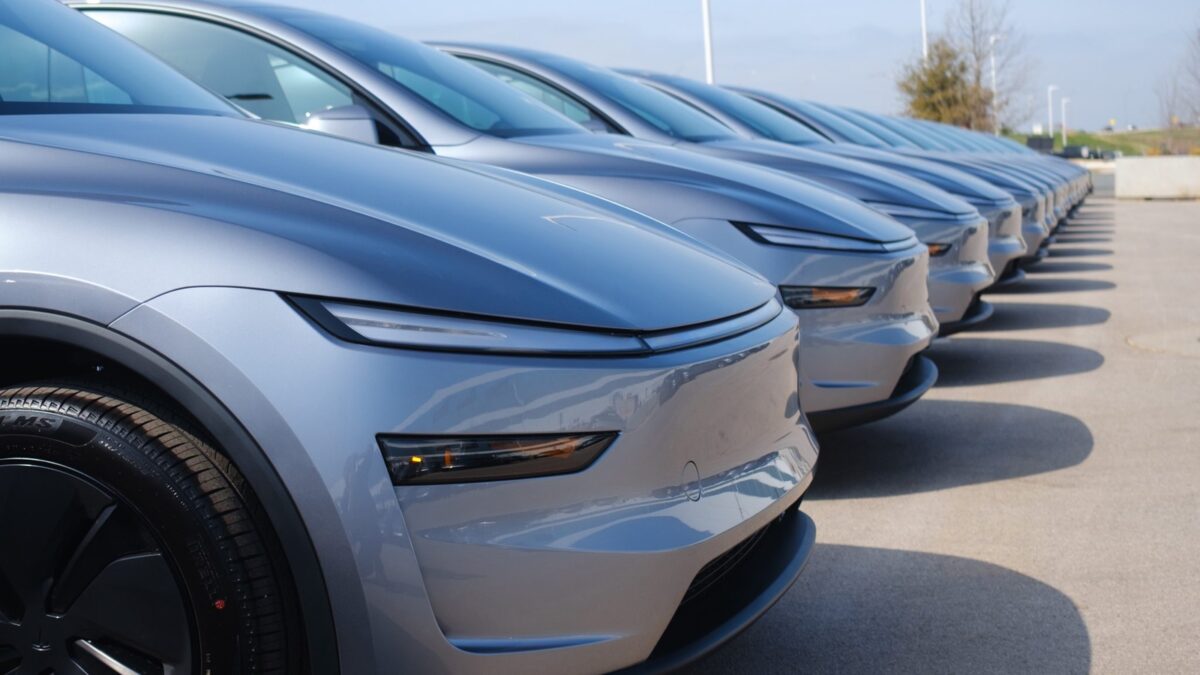
Tesla has grabbed an unlikely clean sweep: the Model Y has become the first vehicle to pass the U.S. government’s new ADAS safety tests, giving Elon Musk’s most mocked feature set an official win. The result matters because these tests are not about marketing jargon or ”self-driving” bravado; they are about measurable performance in systems designed to stop crashes before they happen.
On 7 May, the National Highway Traffic Safety Administration said the 2026 Model Y was the first car to clear the new ADAS test suite under its New Car Assessment Program. Only Model Y vehicles built on or after 12 November 2025 qualify, which is a reminder that software bragging rights often depend on very specific hardware and build dates. For Tesla, that is a clean headline. For rivals, it is a public benchmark they now have to chase.
What Tesla had to pass
The new evaluation checks four added scenarios: automatic emergency braking for pedestrians, lane-keeping assist, blind-spot object warning, and blind-spot intervention. It also keeps the four original ADAS requirements in place: forward collision warning, imminent collision braking, dynamic brake support, and lane departure warning. That is a much tougher filter than simply asking whether a car has the feature list turned on.
NHTSA’s move reflects where the market has been heading for a while. Driver-assistance tech is no longer being treated as a fancy checkbox on an options sheet; regulators are starting to judge how well it works in the situations that actually hurt people. Pedestrian braking targets one of the fastest-growing sources of road deaths, while blind-spot and lane systems address the sort of side impacts and run-off-road crashes that insurers love and drivers definitely do not.
Why this Tesla Model Y test result matters
Jonathan Morrison, who heads NHTSA, called the result an important milestone and said the agency wants tougher, more useful safety ratings for shoppers. That is the interesting part: the government is shifting from ”does it have the tech?” to ”does it actually work?” And that shift should make life harder for companies that have leaned on slick demos, vague claims, or driver-assist systems that are more confident than competent.
There is also a broader industry backdrop here. Tesla’s Full Self-Driving software and its robotaxi push have kept autonomy in the spotlight, but most buyers still live in the messy middle ground of partial automation. In that world, the brands that can prove their systems cut real-world risk will have a sharper sales pitch than the ones that merely promise a future where the steering wheel becomes optional.
ADAS test requirements NHTSA now uses
- Automatic emergency braking for pedestrians
- Lane-keeping assist
- Blind-spot warning and intervention
- Forward collision warning
- Imminent collision braking
- Dynamic brake support
- Lane departure warning
Tesla will wear this as proof that its safety-first pitch has teeth, and fair enough: passing a federal test is better than talking loudly on social media. The open question is whether this becomes a genuine competitive reset. If more manufacturers want top marks, they now know the bar is not just higher – it has a Model Y-shaped target on it.