

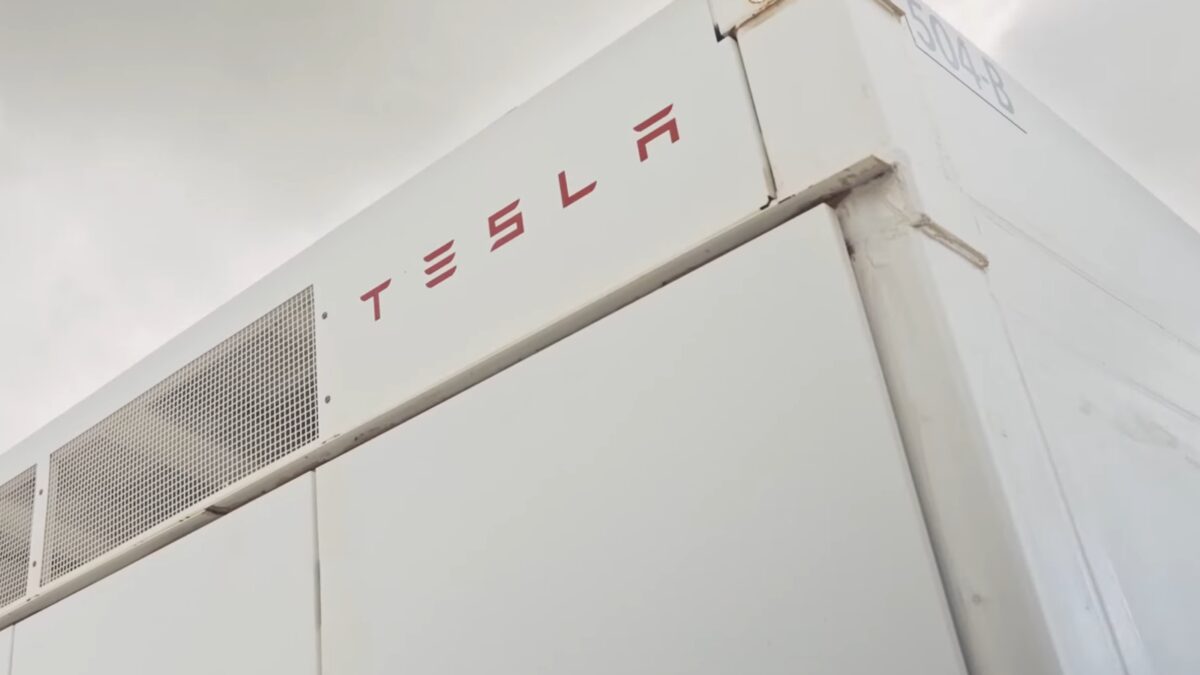
Tesla’s Megapack 3 is heading to Belgium in a big way: SPIE Belgium will install 180 units in a battery park in Ruien, turning a former power station site into one of the country’s largest energy-storage projects. The Tesla Megapack 3 battery project is designed to soak up excess renewable electricity when production is high and send it back to the grid when demand spikes, which is the unglamorous but very practical part of the clean-energy transition.
Construction is already under way. SPIE expects installation and grid connection to start in November 2026, with testing and commissioning due by the end of 2027. The project was developed by Storm, and its scale is enough to put it among the biggest battery parks currently being built in Belgium.
Tesla Megapack 3 battery project targets 700 MWh
SPIE says the battery park will store ”several hundred megawatt-hours” of energy, but the 180 Megapack units point to a system of almost 700 MWh. That is the kind of capacity utilities are leaning on more often as wind and solar output become harder to match with demand on a minute-by-minute basis.
The site choice also makes sense: former industrial land is easier to repurpose than greenfield space, and Europe has been mining that option for years as battery projects grow faster than the grid can comfortably absorb them. Belgium is not alone here; developers across the continent are racing to build storage that can do the boring but profitable job of smoothing the power system.
What Tesla changed in Megapack 3
Megapack 3 is not just a refresh with a new badge. Tesla says it uses larger 2.8-liter battery cells, which lifts energy density to about 5 MWh per unit, up from 3.9 MWh in Megapack 2. The company also simplified the thermal section and cut the number of connections by 78%, a move that should make deployment less fiddly and, ideally, less expensive to maintain.
That matters because big battery projects live or die on installation speed, reliability, and integration costs, not on marketing slides. SPIE’s own project description underlines that point: the challenge is not just dropping containers on a plot of land, but tying them into a high-voltage substation and the wider grid without drama.
Belgium gets an early Megapack 3 showcase
This will be one of the first large-scale Megapack 3 deployments in Europe, which gives Tesla a useful showcase just as competition in stationary storage keeps heating up. For buyers, the appeal is obvious: more capacity per unit, fewer connections, and a system purpose-built for utility-scale grid work rather than consumer-friendly bragging rights.
At current pricing, the 180 units alone could be worth about $169 million before taxes and installation, though that is only part of the bill for a project of this size. The smarter question now is whether the Belgian build becomes a template for other European utilities, or just the first of many giant storage jobs that will quietly make the power grid far less fragile.