

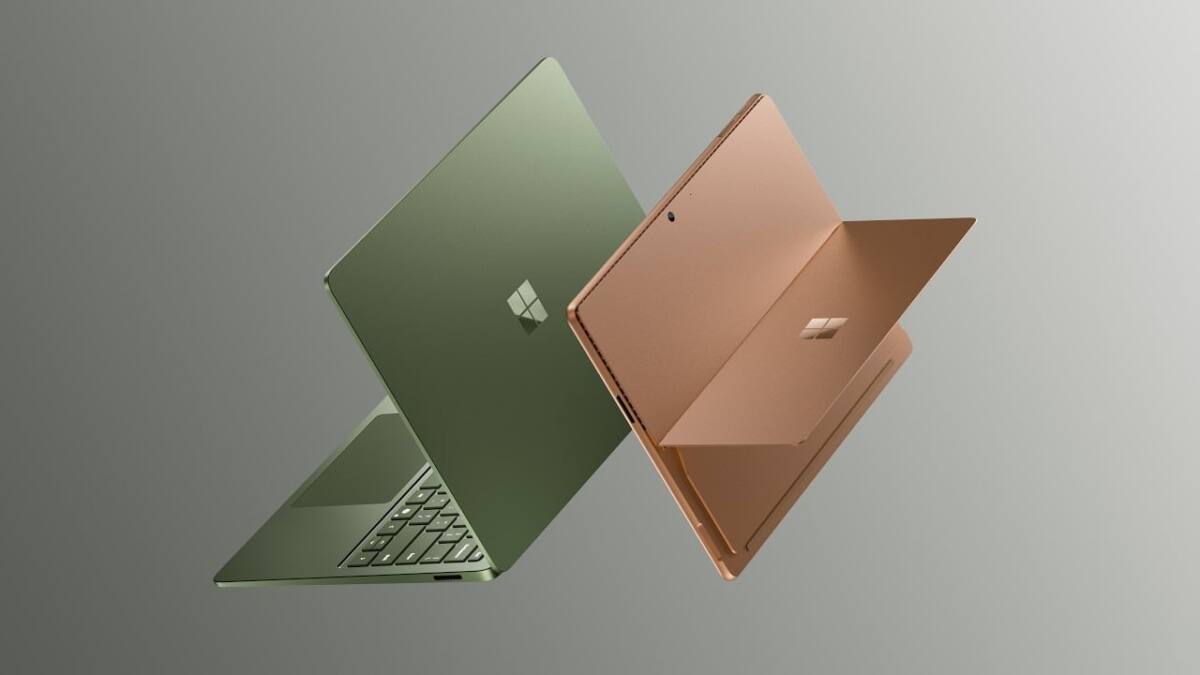
Microsoft has refreshed its Surface lineup with two new Copilot-era machines: the 12th Edition Surface Pro and the 8th Edition Surface Laptop. Both go on sale for consumers starting June 16, while enterprise versions are set for July 14, and both lean on Qualcomm’s new Snapdragon X2 chips instead of Intel or AMD silicon.
That alone tells you where Microsoft wants this category to go. The company is pushing local AI processing hard, and these new Surfaces are built around that bet rather than raw legacy PC muscle. Lenovo and others are still shipping plenty of x86-based business notebooks, but Microsoft is clearly trying to make Arm the default story for its own premium devices.
Snapdragon X2 Plus and X2 Elite power both devices
Both the Surface Laptop and the Surface Pro can be configured with either the 10-core Snapdragon X2 Plus or the 12-core Snapdragon X2 Elite. Qualcomm’s Hexagon NPU is rated at 80 TOPS, which Microsoft says is meant to handle AI tasks on the device itself inside Windows.
- Memory: 16GB to 64GB
- Storage: 256GB up to 1TB
- 15-inch Surface Laptop storage floor: 512GB
Surface Laptop pricing, displays, and ports
The Surface Laptop comes in 13.8-inch and 15-inch versions. The smaller model starts at $1,599, uses a 120Hz LCD panel with 201 PPI, and Microsoft says it can reach up to 20 hours of local video playback. It also comes in a new Jade finish, alongside Platinum, Black, and Dune.
The 15-inch version starts at $1,699 and bumps the display density to 262 PPI. It also adds a MicroSDXC card reader, while both laptops carry two USB-C/USB4 ports and one USB-A port. That port mix is sensible, if not exactly thrilling; at least one company still remembers people own flash drives.
Surface Pro 12 adds OLED and Wi-Fi 7
Microsoft’s 13-inch Surface Pro 12 starts at $1,499 and ships in Platinum, Black, and Dune. The notable upgrade is an optional OLED display, which keeps the 120Hz dynamic refresh rate available on the LCD version.
The tablet also includes a 1440p ultrawide front camera, Wi-Fi 7, and two USB-C/USB4 ports. Microsoft rates battery life at up to 15.5 hours for local video playback, which should help in the usual real-world test: long meetings, too many browser tabs, and pretending the charger is somewhere else.
What Microsoft is really selling here
The hardware update is less about a new shape and more about a new argument. Microsoft wants Surface to be the showcase for on-device AI in Windows, and Snapdragon X2 gives it a cleaner story than a traditional laptop refresh. The open question is whether buyers will pay Surface prices for that promise, or wait for cheaper Copilot Plus PCs from everyone else to catch up.