

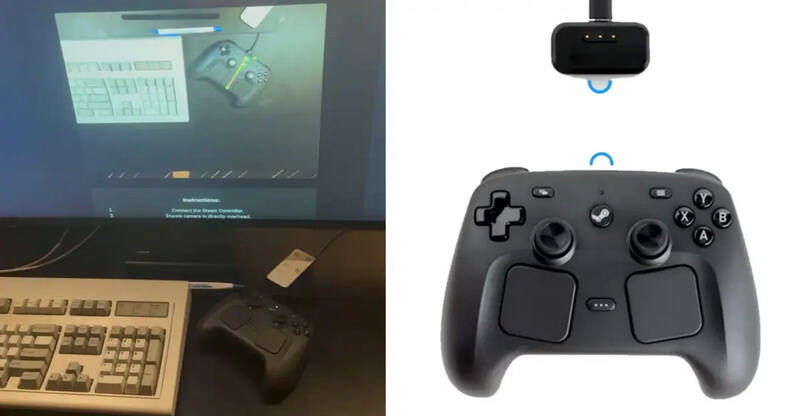
A modder has built a browser-based tool that helps Valve’s Steam Controller crawl back to its charging dock on its own, using a camera to track the controller and its built-in vibration motors to nudge it across a table. The project, called Auto-Charge Tracker, is a neat bit of engineering theater: mildly absurd, technically clever, and just useful enough to feel like a prototype of a real feature Valve probably won’t ship first.
Ray Foss posted a short demo on X showing the controller making its way toward the dock. The tool is available on GitHub, and the basic idea is straightforward: identify tracking points on the controller, then trigger vibration in a way that pushes it toward the charging station. Foss says the markers are a little finicky and that the system tries to remember the target position, which sounds about right for a project that asks a game controller to behave like a Roomba.
How Auto-Charge Tracker works
The setup leans on camera tracking rather than any onboard navigation magic. Once the controller is spotted, the software uses the vibration motors to move it over the table surface until it reaches the dock, though Foss also says it does not always find the charger successfully. In other words: impressive, experimental, and not quite ready for your nightly routine.
Valve’s controller already supports charging through a magnetic puck dock or a USB-C cable, so the mod is solving a problem that is more whimsical than urgent. Still, that is exactly why it is interesting: hardware hackers love taking a missing convenience feature and turning it into a proof of concept, especially when the fix is part robotics demo and part joke.
Why this Steam Controller mod is getting attention
There is a broader pattern here. Controller and accessory makers have spent years adding magnetic docks, wireless charging, and ”drop it here and forget it” convenience, but few consumer devices can actually guide themselves back home. That gap is exactly where mods like this thrive, and why they spread so quickly online: they make a familiar product feel weirdly futuristic without changing the hardware at all.
The obvious next question is whether this becomes a one-off stunt or the start of a more practical auto-docking experiment. If the tracking gets more reliable, the concept could move from novelty to genuinely handy; if not, it will live on as another beautifully unnecessary example of what happens when a controller gets too much ambition.