

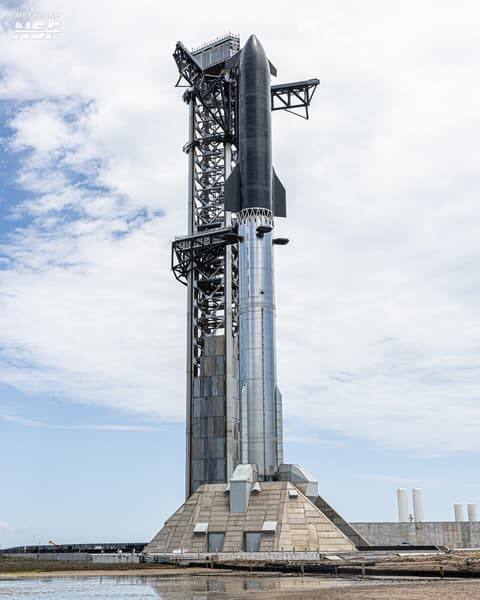
SpaceX’s latest Starship launch was called off after the program changed so much, so fast, that even the pad and the rocket apparently needed a reset. Elon Musk said the canceled night flight was tied to a near-total redesign of the vehicle, its engines, electronics, and launch tower versus Starship V2, and added that the delay should not materially affect the agreed launch schedule. The focus now is Starship V3 hardware at Starbase.
That sounds less like a stumble and more like a standard SpaceX gamble: break the system, rebuild it bigger, then try to keep the cadence alive anyway. The company is also assembling a large number of next-generation Starship V3 ships and Super Heavy boosters at Starbase, although Musk did not give an exact count.
Why the Starship launch slipped
The explanation points to a familiar SpaceX pattern: the company is not just iterating Starship, it is effectively replacing major chunks of the system at once. That makes short-term reliability harder, but it is also how SpaceX has historically compressed development timelines while rivals tend to move more cautiously.
Starship Flight 12 was meant to follow from the second launch site, but the latest hardware clearly brought enough change to justify stopping rather than gambling on an unready stack. For a program that has already become the world’s most watched rocket test series, a missed window is cheaper than a spectacular failure on the pad.
What Starship V3 changes
Musk’s comments suggest the new version is not a trim update but a broad rebuild across the vehicle and infrastructure. That matters because SpaceX is simultaneously pushing its launch tempo and its hardware complexity, a combination that can accelerate progress or expose every weak link at once.
- Rocket version: Starship V3
- Booster: next-generation Super Heavy
- Changed areas: main structure, engines, electronics, and launch tower
Starbase is turning into a factory floor
The new image from Starbase, along with a render shared by insider Sawyer Merritt showing three Starship variants side by side, reinforces the same message: SpaceX is moving from isolated prototypes toward parallel production. That is the kind of setup you build when you want more than test flights; it is what you build when you want a fleet.
The open question is whether the company can keep that manufacturing pace without the launch schedule slipping again. If the V3 rebuild is as extensive as Musk describes, the next few flights should tell us whether Starship is entering a steadier phase or just a more ambitious one.