

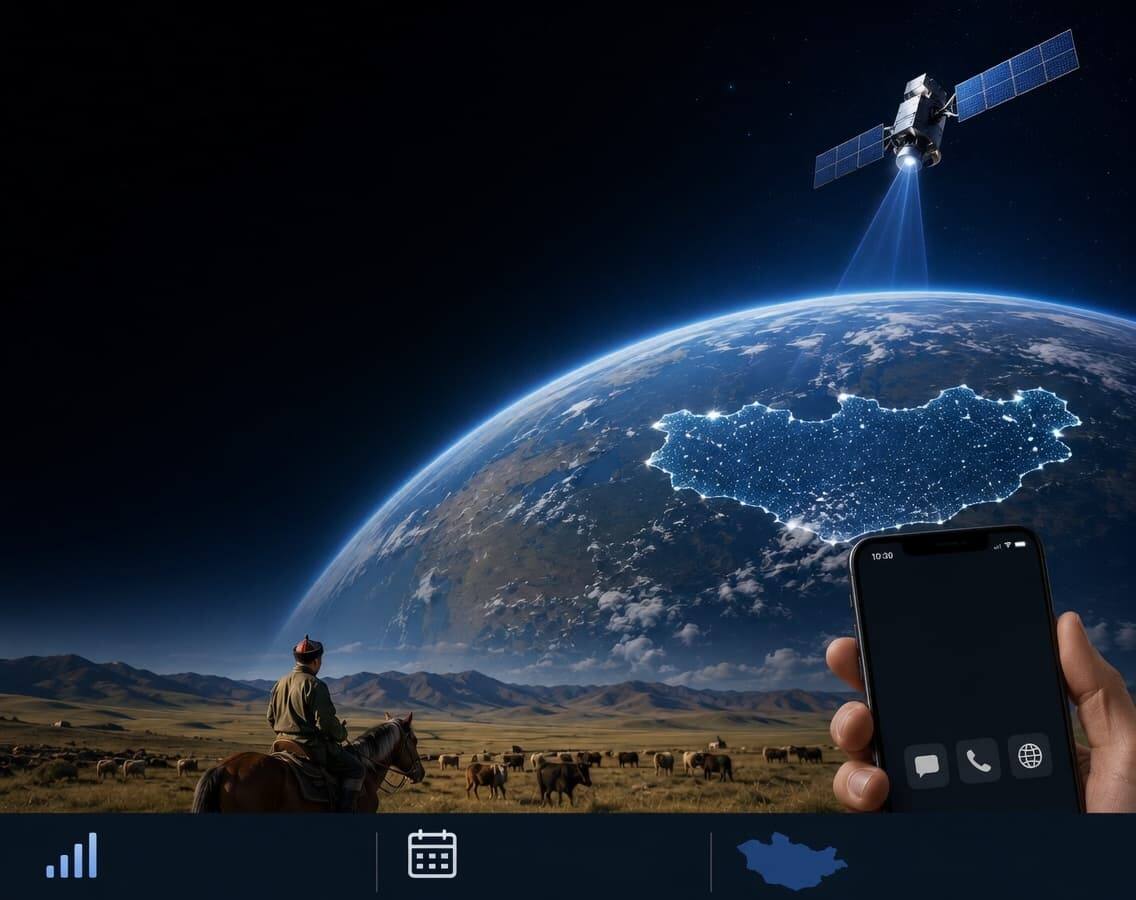
Starlink Mobile is bringing direct satellite phone service to Mongolia, putting basic satellite connectivity into ordinary smartphones. The company says it will launch there through a partnership with GMobile, aiming to keep people connected in places where traditional networks do not reach.
That makes Mongolia a sensible test bed for Starlink Mobile. Vast distances, sparse infrastructure, and a mobile workforce are exactly the conditions that make satellite-to-phone services look less like a gimmick and more like overdue plumbing. If this works as advertised, the first beneficiaries will be the people who spend their days far from cities: herders, mining crews, and field workers who have long treated coverage bars as a form of fantasy.
How Starlink Mobile works on standard smartphones
The key selling point is that users do not need special hardware. Starlink Mobile is designed to let standard smartphones connect directly to satellites, with no external antennas and no dependence on ground towers. In practice, that means the service is meant to fill the boring but essential gap in dead zones rather than replace a full mobile network.
For now, the promise is basic connectivity rather than some sci-fi leap to full broadband in your pocket. Messaging and key apps are the real prize here. That is still a meaningful step, because in remote regions a text that gets through can matter more than all the streaming speed in the world.
Why Mongolia is a smart launch pad for satellite-to-phone service
Satellite-to-phone services are moving from buzzword to business strategy, and several operators around the world are circling the same idea. The appeal is obvious: rural coverage is expensive to build, slow to expand, and hard to justify where population density is low. A satellite layer lets carriers claim reach without waiting for another tower, another trench, or another weather-beaten maintenance run.
There is also a quiet competitive race under the surface. SpaceX has already been pushing Starlink deeper into consumer connectivity, while telecom rivals in other markets are trying to answer with their own direct-to-device plans. Mongolia gives Starlink a chance to show that this is not just a headline-friendly experiment, but something people outside major cities can actually use.
What users in remote regions get first
- Basic mobile connectivity without a cell tower nearby
- Messaging and key applications in remote areas
- No external antenna on the phone
The real question is not whether satellite phones are useful; they obviously are. The question is whether Starlink can make them feel ordinary enough that people stop thinking of them as emergency gear and start treating them as a normal extension of the mobile network. If Mongolia is the opening act, the bigger show is whether other countries with thin coverage follow fast.