

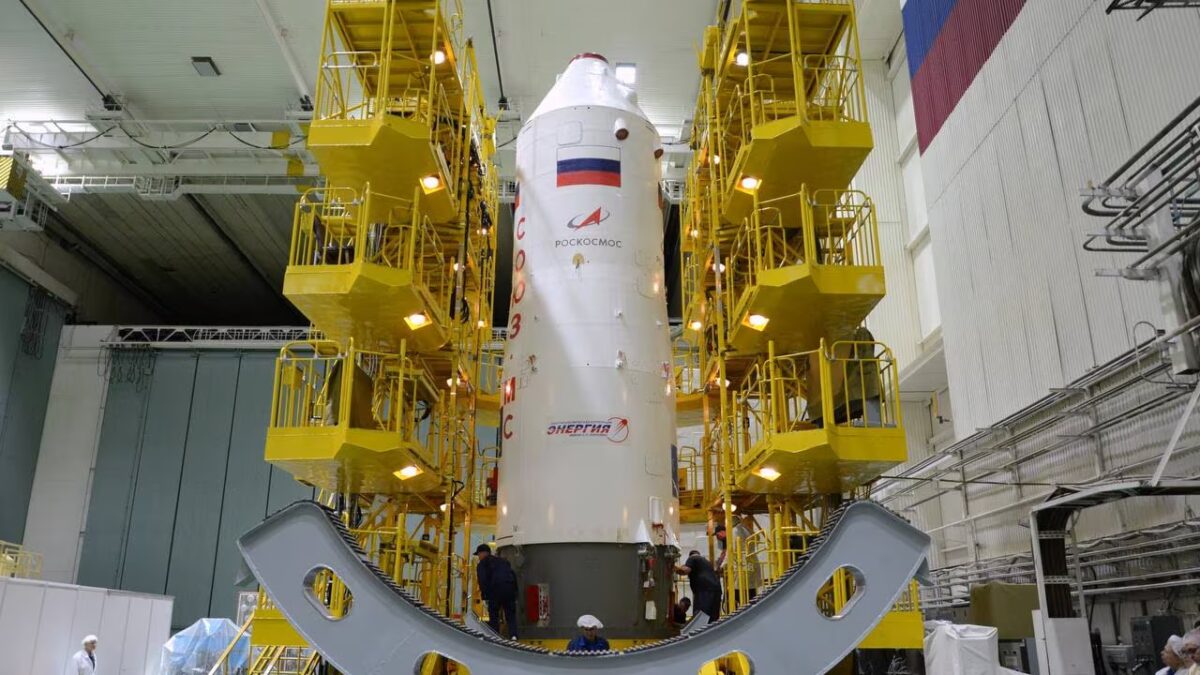
Roscosmos is preparing to launch the crewed Soyuz MS-29 spacecraft to the International Space Station on July 14. The vehicle, stationed at the Baikonur Cosmodrome, is nearly mission-ready after final inspections, the installation of the payload fairing, and assembly-protective unit checks. If all goes as planned, Soyuz MS-29 will dock with the ISS in about three hours, employing a rapid rendezvous profile.
Rapid three-hour rendezvous profile for Soyuz MS-29
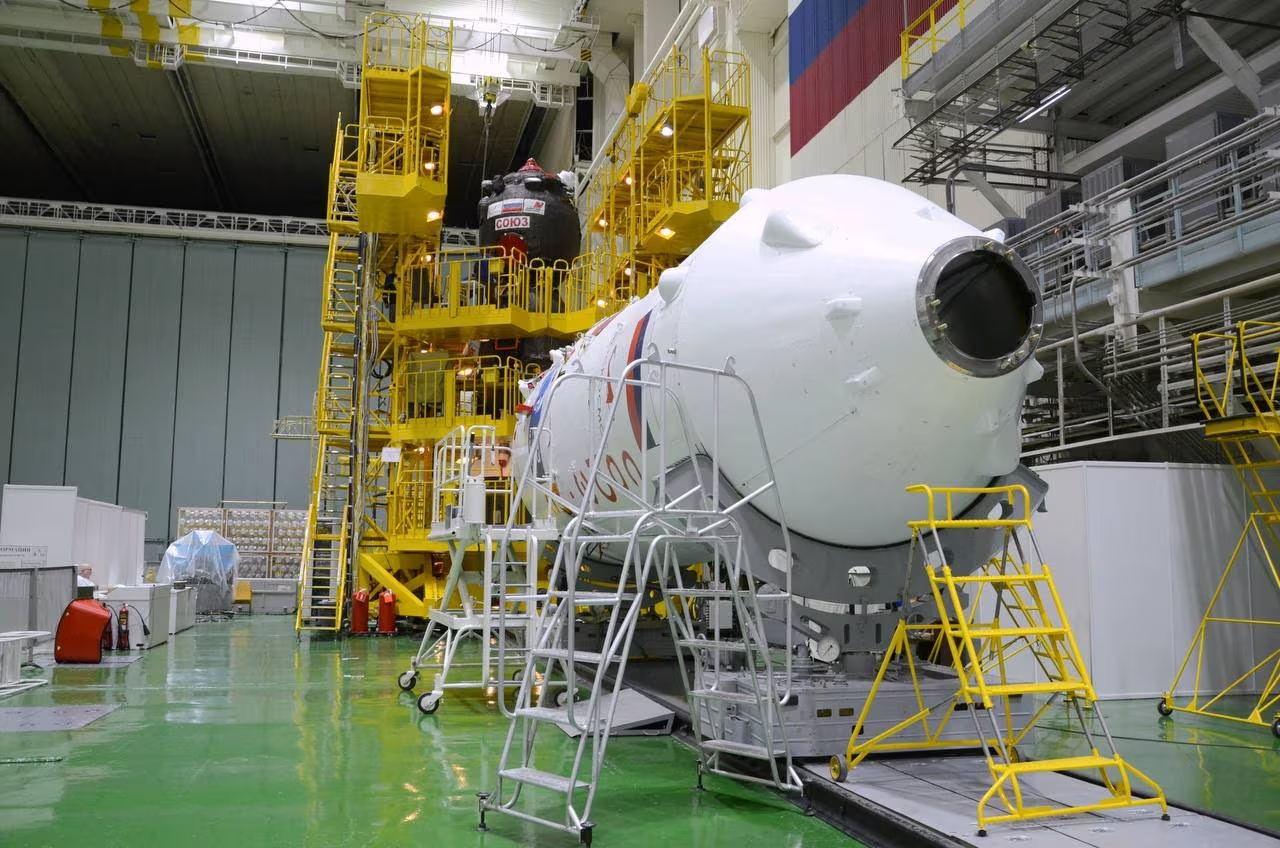
The payload fairing is crucial as it protects the spacecraft from aerodynamic stress and heat during ascent through Earth’s atmosphere. After this phase, the crew-including Roscosmos cosmonauts and NASA astronauts-will conduct final cargo checks and system diagnostics before mating the Soyuz MS-29 to its booster rocket.
The three-hour journey uses a two-orbit rendezvous profile that Roscosmos has implemented for several years. This method is a significant improvement compared to the older approach, which could take nearly two days for docking. The shortened transit reduces the time crew members spend confined inside the spacecraft, enhancing comfort, and provides mission planners with more flexibility to select optimal launch windows for crew rotations.
Baikonur Cosmodrome remains Russia’s primary launch site for crewed missions to the ISS. The Soyuz spacecraft series has been a cornerstone of human spaceflight since the 1960s. Today, it competes with American commercial spacecraft like SpaceX’s Crew Dragon and Boeing’s Starliner, which also focus on rapid and reliable access to orbit. Roscosmos’s adoption of the three-hour launch-to-docking profile aligns with global spaceflight trends aiming to minimize transit times and improve crew comfort.
Looking ahead, Soyuz MS-29’s anticipated success could reinforce Roscosmos’s role in crewed spaceflight amid increasing competition from American commercial providers. The mission also underscores incremental efficiency improvements that benefit astronaut health and mission logistics. It will serve as a critical test of maintaining a tight flight window consistently under operational conditions and integrating smoothly with ongoing ISS activities.