

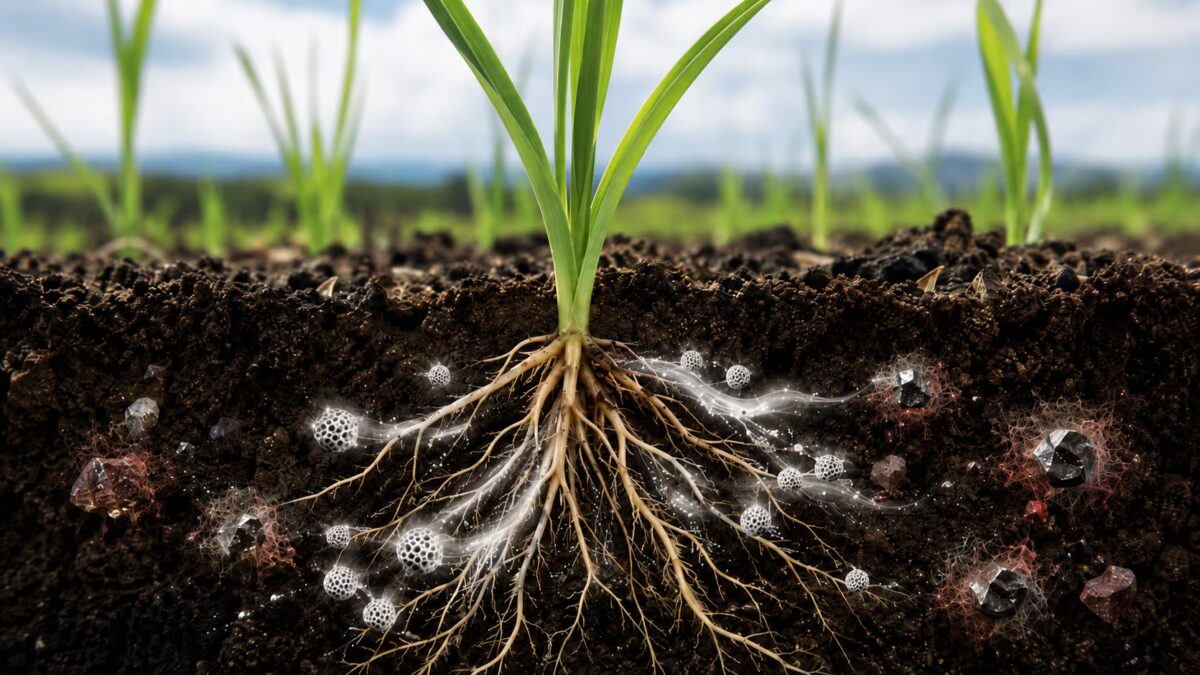
Researchers at Southern Federal University (SFU) in Russia have developed a soil composite that addresses two major agricultural challenges simultaneously: reducing heavy metal toxicity and promoting plant growth. In lab tests on barley, the composite lowered metal toxicity by 46-71% and increased plant growth by 70-80% compared to untreated soil.
The composite features a porous matrix infused with auxin, humic acid, and additives that improve soil-root interaction. Unlike traditional methods that disperse nutrients broadly across fields-often leading to waste-this targeted delivery system ensures that growth stimulants reach plant roots directly, enhancing efficiency.
This dual-function approach is notable because soil remediation and yield improvement are typically addressed separately. Common treatments use sorbents to immobilize hazardous metals such as lead and cadmium and apply fertilizers or biostimulants independently. SFU’s composite integrates both functions, making it especially valuable for farms near industrial sites with contaminated soils where conventional treatments underperform.
Heavy metal contamination in agricultural soils is a global problem that damages crops and limits yields. Meanwhile, the plant biostimulant market is expanding rapidly worldwide, now worth billions and growing faster than traditional agrochemicals. Technologies that reduce chemical inputs while boosting productivity on challenging soils have strong international market potential.
SFU researchers say the composite is nearing practical application, with larger-scale field trials planned. If successful, it could provide farmers with a new tool for improving productivity on marginal or polluted lands where typical fertilizers often fail or are inefficient.