

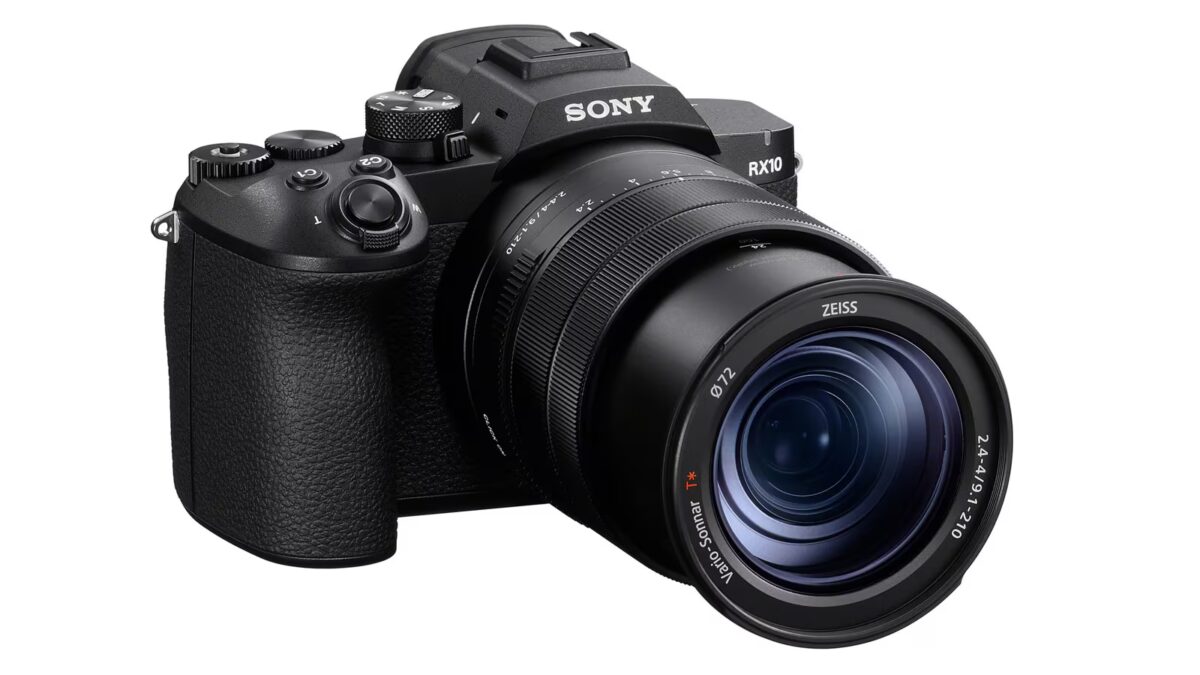
Sony has launched the RX10 V, a high-end superzoom camera featuring a fixed 24-600mm equivalent lens and advanced video capabilities like 4K recording at 120fps. Priced at $2300, it targets enthusiasts who want an extensive focal range without swapping lenses, packing faster burst shooting and improved autofocus into a revamped design.
The Sony RX10 V succeeds the now aging RX10 IV, retaining its 20.1-megapixel 1-inch stacked sensor seemingly unchanged but upgrading the body and primarily focusing on speed and video improvements. The camera’s zoom covers an impressive 24-600mm equivalent range with an f/2.4-4.0 aperture, making it a versatile all-in-one travel or reportage tool without the bulk of interchangeable lenses.
Compared to its predecessor-which maxed out at 24fps burst-the new RX10 V can shoot up to 30fps silently with an electronic shutter and no blackout in the viewfinder. It also introduces a short-term burst speed boost, a feature borrowed from recent Sony mirrorless cameras that allows the camera to reach peak frame rates quickly when the scene changes suddenly.
Sony RX10 V superzoom camera key specifications
- Lens: 24-600mm equivalent, aperture f/2.4-4.0
- Sensor: 1-inch, 20.1 megapixels (stacked CMOS)
- Continuous shooting up to 30fps (electronic shutter)
- Autofocus with 575 points covering 70% of the sensor
- 4K video at 60fps full sensor readout
- 4K video at 120fps with slight crop and Full HD at 240fps
- Battery: NP-FZ100, rated for up to 630 shots
- Connectivity: USB-C, micro HDMI, microphone input, headphone output
Sony has significantly enhanced autofocus capabilities with the RX10 V. The system now detects not only humans and animals but also birds, insects, cars, trains, and airplanes. A dedicated AI processor keeps subjects locked even if they look away or move erratically. Continuous AF/AE calculations have doubled from 30 to 60 per second, with focus points increasing from 315 to 575.
Video capabilities are a real highlight for the RX10 V. It offers 4K at 60fps without pixel binning across the whole sensor, plus 4K at 120fps for slow motion, supported by S-Log3 profiles and LUT loading for on-set color grading previews. Streaming to 4K 30fps via USB is also possible. One downside for video shooters: the rear screen, while now sharper, only tilts and doesn’t flip out sideways, limiting flexible framing angles.
The body has been overhauled with a more angular, modern Alpha camera-inspired design. Handling improvements include a larger grip, joystick, three control dials, a setting wheel, and a dedicated mode dial for photo, video, and slow & quick modes. The electronic viewfinder rises to 3.69 million dots, and the rear LCD offers 1.62 million dots. It supports only a single UHS-II SD memory card slot.
Sony’s RX10 V is priced at $2300 and sits comfortably at the top of the compact superzoom segment. Nikon’s P1100 offers an even more extreme 24-3000mm zoom for nearly half the price but falls behind with a smaller sensor and weaker video capabilities. Fujifilm’s X100VI, priced at $1599, plays in a different league with a fixed focal length lens and no zoom. Sony’s RX10 V is clearly designed for travelers, photojournalists, and users who want one versatile camera instead of juggling multiple lenses.
Compared to offerings from Apple, Google, or Samsung, which focus primarily on smartphone photography, the RX10 V serves a niche that digital cameras still hold strong: superior optical zoom and high-quality 4K video. While Sony’s Alpha mirrorless systems target professionals and enthusiasts with interchangeable lenses, the RX10 V provides an all-in-one solution for users demanding range and speed in a compact package, a combination still rare in a market shrinking under smartphone dominance.
The RX10 V’s success will hinge on how much photographers value its blend of superzoom reach, fast burst rates, and high-end video features at its $2300 price point. It signals Sony’s commitment to maintaining a niche in enthusiast compacts, but with rising competition from both mirrorless systems and smartphone cameras rapidly closing the gap, the RX10 V faces an uphill climb. Watch for how Sony markets it to videographers craving high-frame-rate 4K and travelers who prize one-lens versatility over multiple gear.