

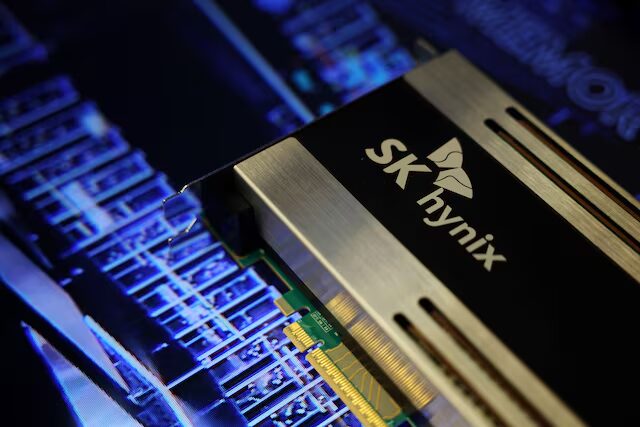
SK Hynix has come within striking distance of a $1 trillion market value after a relentless run powered by AI hardware spending and a market that cannot seem to get enough memory chips. The South Korean company’s shares have climbed more than 200% in recent months, adding to roughly 274% growth in 2025 and turning a business worth less than $100 billion 16 months ago into one of the most expensive names in global tech.
The SK Hynix $1 trillion market value story is not subtle: the AI buildout is eating memory demand for breakfast. High-bandwidth memory, or HBM, has become the prized component for training and running neural networks in server systems, while DRAM remains buoyant thanks to data-center expansion across the world. That combination has been unusually kind to a chip maker that used to live in the shadow of more consumer-facing tech brands.
HBM is turning into the new gold rush
HBM has moved from niche spec sheet bragging rights to a core requirement for AI infrastructure, which is why SK Hynix is enjoying a rerating that would have sounded absurd a couple of years ago. Rivals are chasing the same demand, but the market has been rewarding the suppliers closest to AI server spending, and memory makers are suddenly getting treated less like cyclical parts vendors and more like strategic infrastructure.
That helps explain why the company’s rise has been so violent. Memory businesses are usually famous for boom-and-bust pricing, but the current cycle is being propped up by an unusually durable wave of spending from cloud and AI builders, plus the simple fact that these systems need a lot of chips before they do anything clever.
South Korea now has a second possible trillion-dollar chip giant
Samsung Electronics already crossed the $1 trillion mark, and SK Hynix is now close enough to make a rare two-company milestone look realistic. If it gets there, South Korea would become the first country outside the United States with two firms in that club, a neat symbol of how much the AI supply chain has shifted power toward the makers of the picks and shovels.
For scale, Taiwan’s TSMC still sits at more than $1.8 trillion, which shows just how much room there is at the top of the semiconductor hierarchy. The open question is whether SK Hynix can keep climbing fast enough to join the club, or whether the memory cycle does what memory cycles so often do and makes everyone a little too confident just before pricing cools off.